Saves instantly, no account needed. Already a member? Sign in.
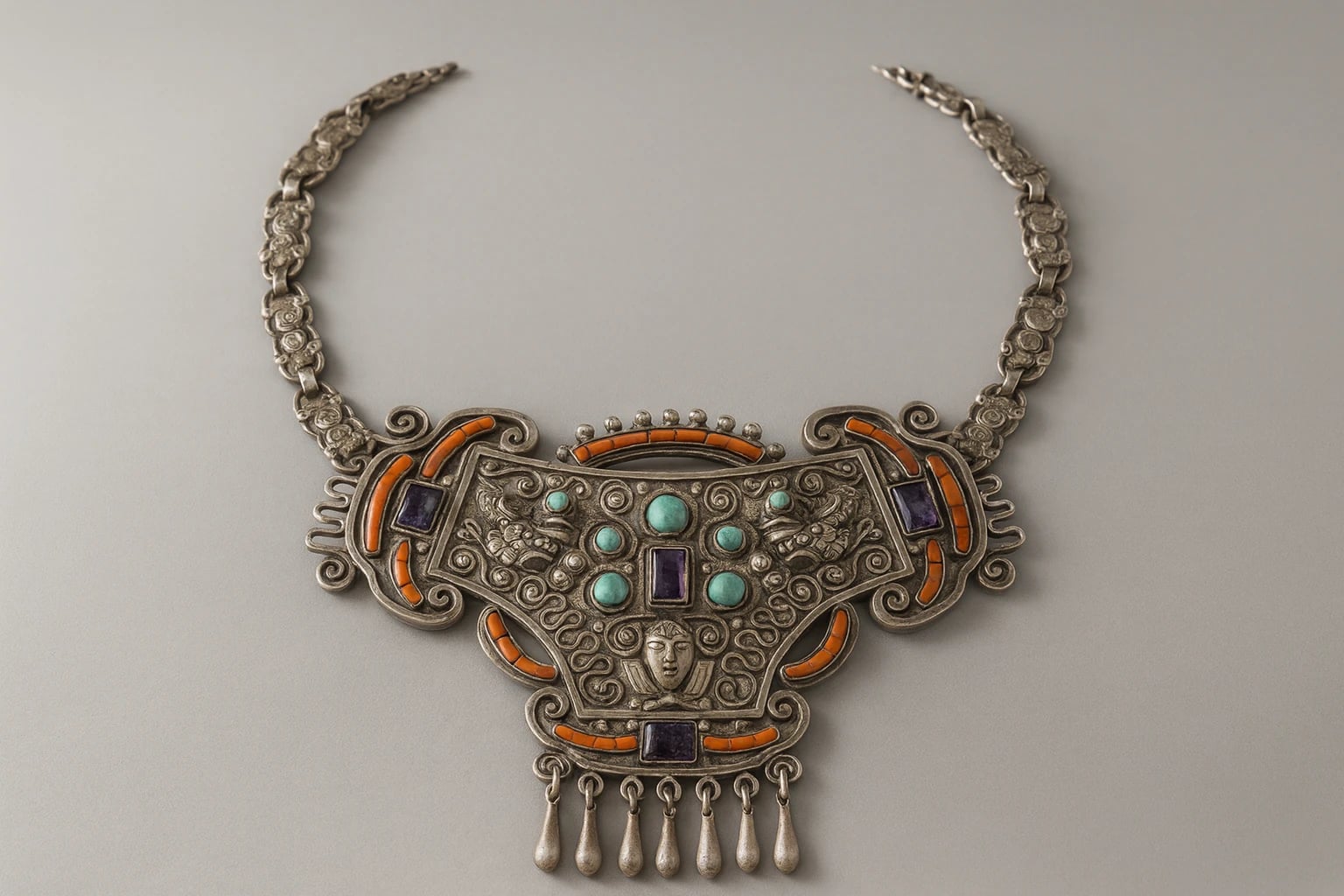
A silver face, framed by turquoise and coral and suspended from a chain of ornamented links, anchors this MATL necklace and organizes everything around it. The mask is the compositional center, a small frontal countenance surrounded by dense scrollwork, beading, and set stones that build outward in symmetrical tiers. Turquoise carries the cool register of the palette, coral the warm, and the two are distributed so that the eye reads the pendant as a single radiant field rather than as separate stones dropped into metal. This is the design language that made the MATL name recognizable: a jeweled, devotional density that draws on Mexican colonial and folk sources and compresses them into a wearable object.
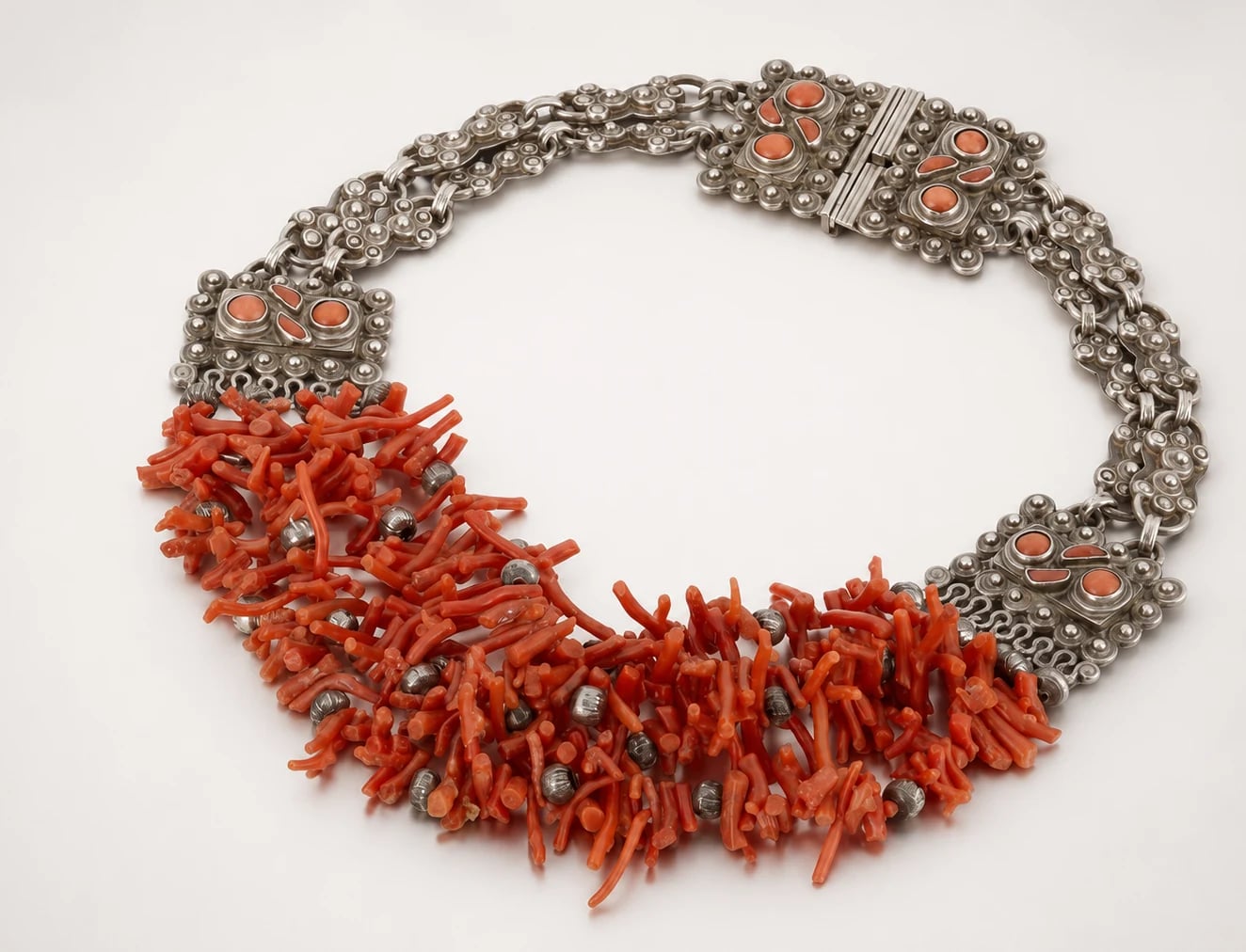
The construction depends on the balance between the ornamental silverwork and the stones it holds. Scrolls, curls, and small silver spheres surround each setting, so the metal is never a plain bezel but part of the decorative rhythm. Turquoise and coral differ in more than color: turquoise reads as opaque and matte, coral as denser and more saturated, and the alternation keeps the surface active without letting any one passage dominate. The mask motif gives the pendant a focal image, a face that returns the viewer's gaze, and the surrounding stonework functions as a kind of halo or frame in the tradition of religious and popular Mexican ornament. Suspended on a chain of similarly worked links, the pendant carries visual weight low on the body while the links distribute the design upward toward the neck.
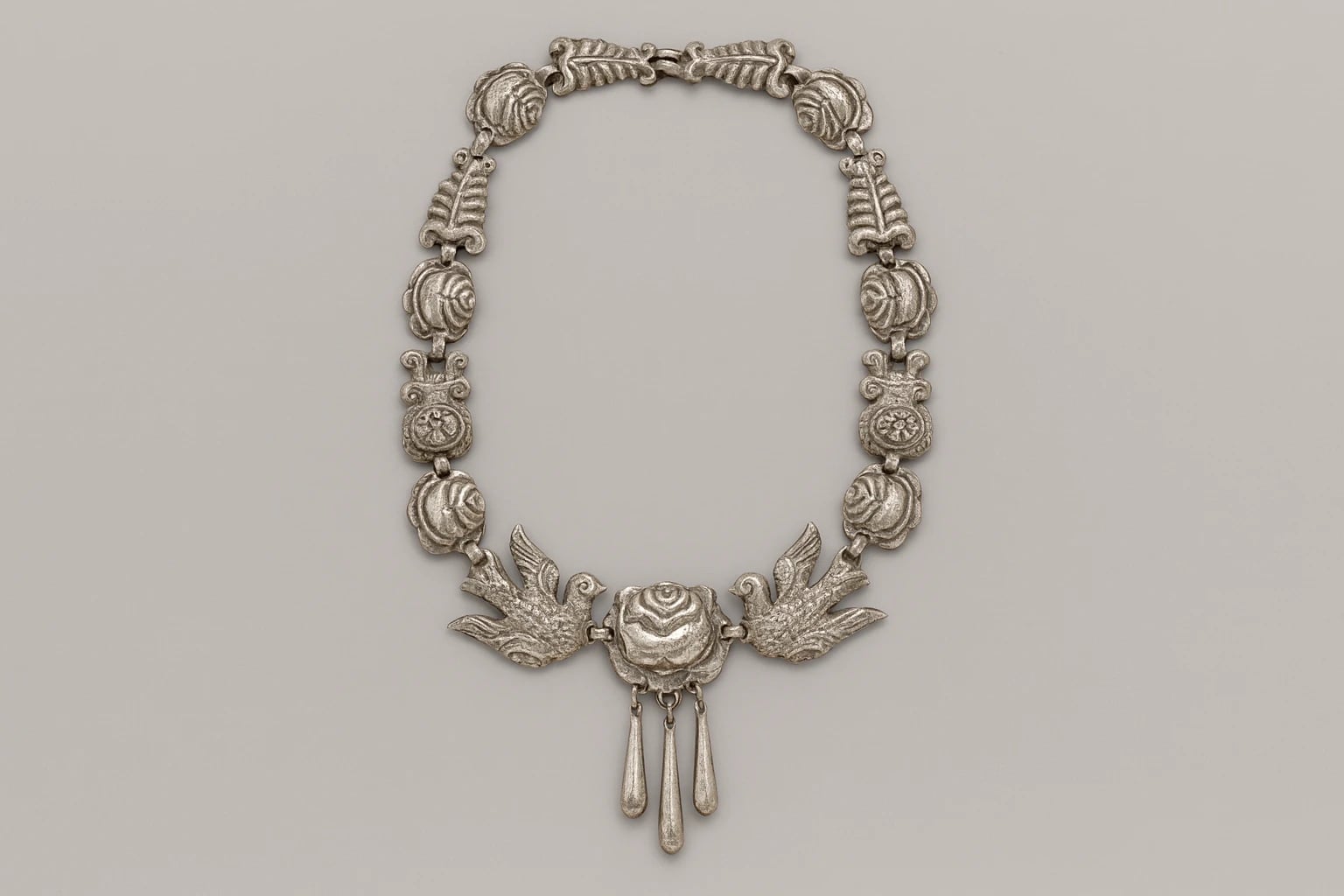
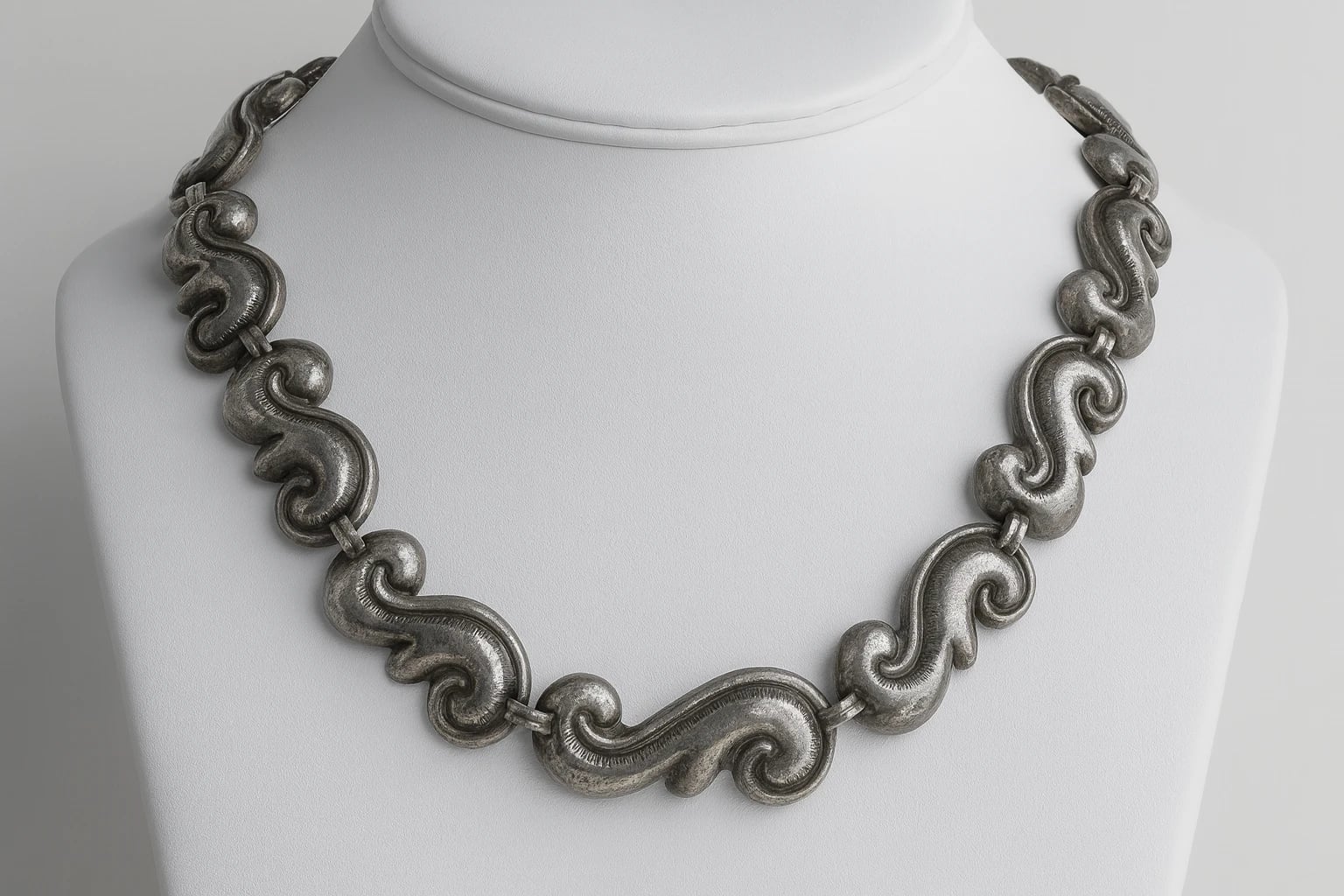
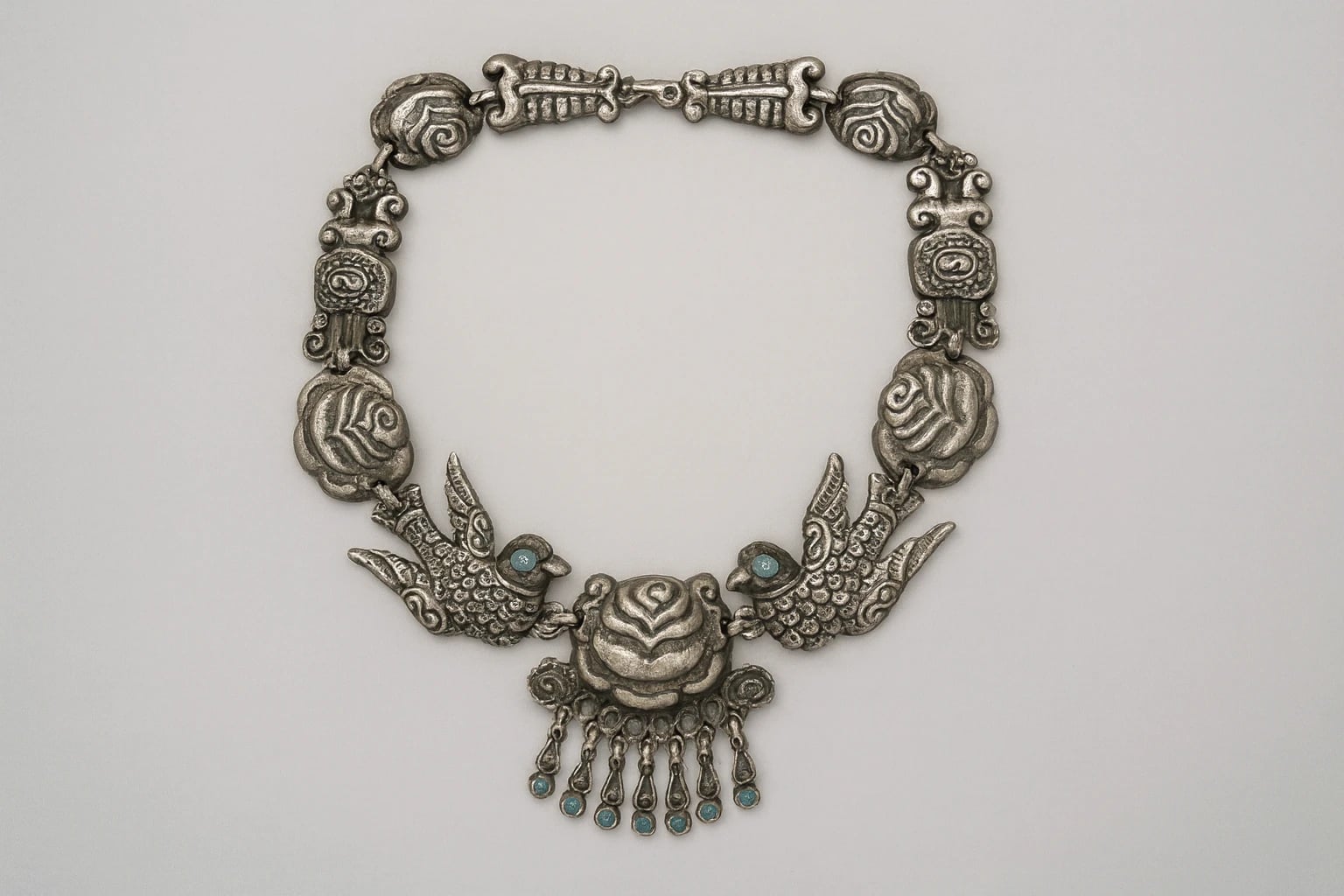
Matilde Poulat trained as a painter and designer at the San Carlos Academy and opened her shop in 1934, registering the trademark "Matl," a variation of an Aztec word for water, under number 142093. Her workshop developed a style distinct from the geometric modernism associated with much of the Taxco School, drawing instead on colonial silver, Catholic devotional imagery, and Mexican folk art, and translating those sources into brooches, necklaces, and pendants dense with birds, flowers, faces, and set stones. The MATL hallmark appears in several documented forms, from early block-letter and script marks with fineness figures to later etched-script marks carrying the registration number, as recorded in Hougart's hallmark reference. After Poulat's death in 1960, her nephew Ricardo Salas continued the MATL designs, at times supervising several dozen silversmiths, and post-1980 pieces bear the MATL mark alongside the Salas registration MS-12. The persistence of the design vocabulary across these hands is part of what makes MATL work legible as a coherent workshop tradition rather than the output of a single moment.
Museum of Mexican Silver. “Mask-Pendant Link Necklace with Turquoise and Coral.” Catalog no. MoMS-002225. https://museumofmexicansilver.com/pieces/matl-mask-pendant-necklace-with-turquoise-and-coral
See something wrong with this record? Suggest a correction and the piece details fill in automatically.
For a museum collection, this necklace documents a current within the Mexican silver renaissance that ran parallel to, and largely independent of, the reductive geometry usually taken to define the period. It shows how a painter's sensibility and a debt to colonial and devotional imagery could produce silver jewelry as ambitious in its ornament as the modernist work was in its restraint. The mask pendant, with its measured distribution of turquoise and coral around a central face, records the visual density and the color logic that gave the MATL name its lasting recognition among those who study Mexican silver.
MATL (Matilde Poulat)
Red Coral Necklace
1935-1948
Sterling silver