Saves instantly, no account needed. Already a member? Sign in.
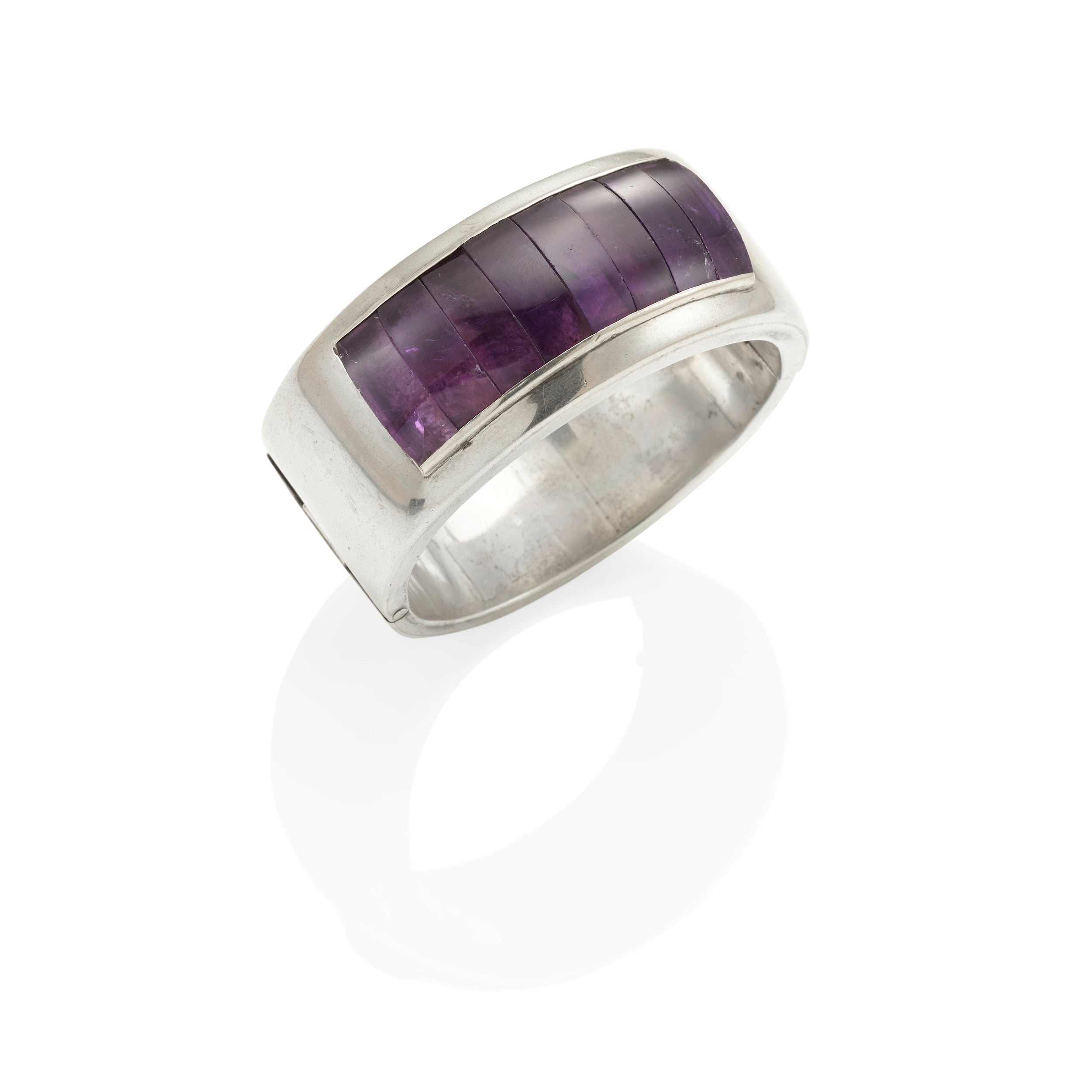
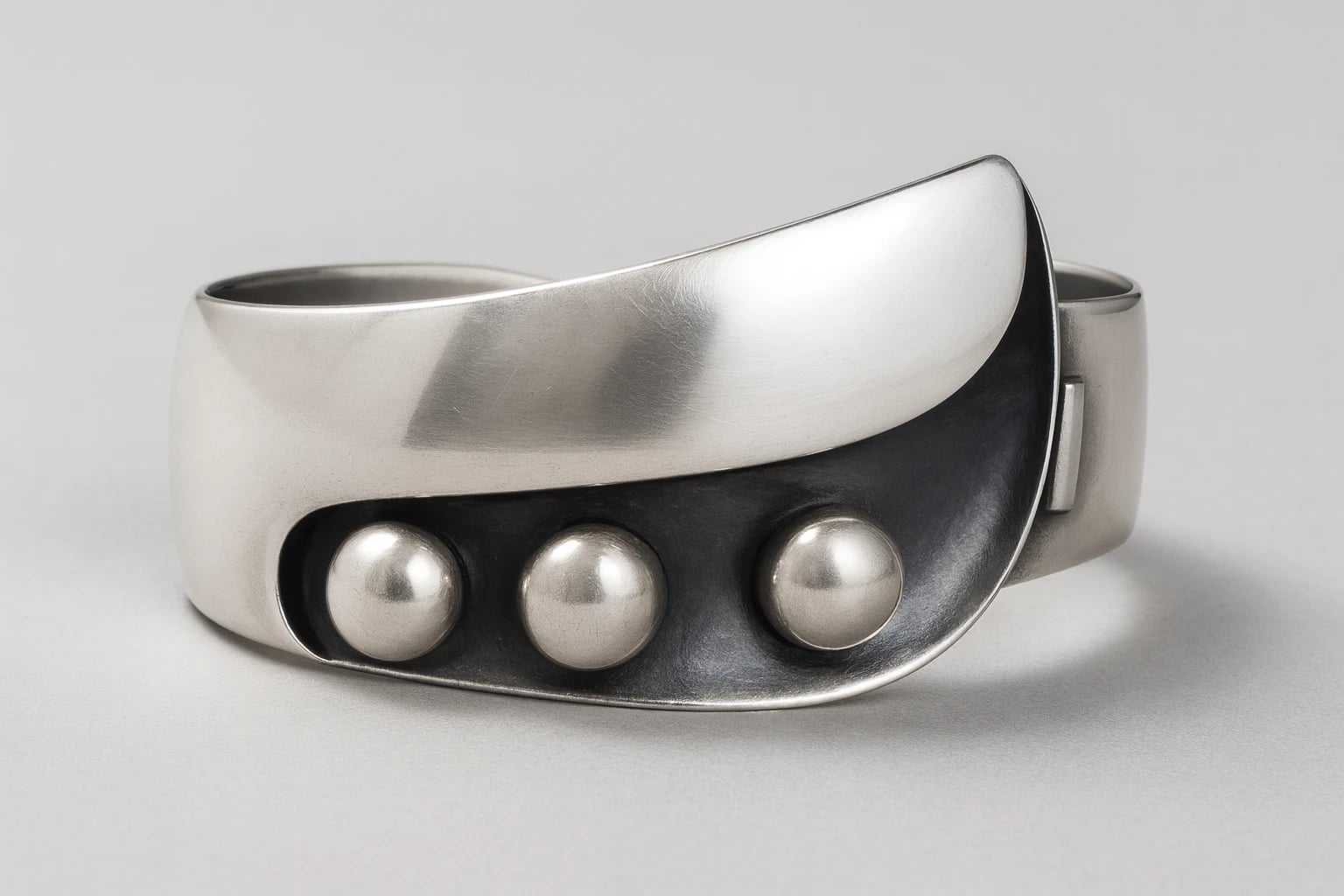
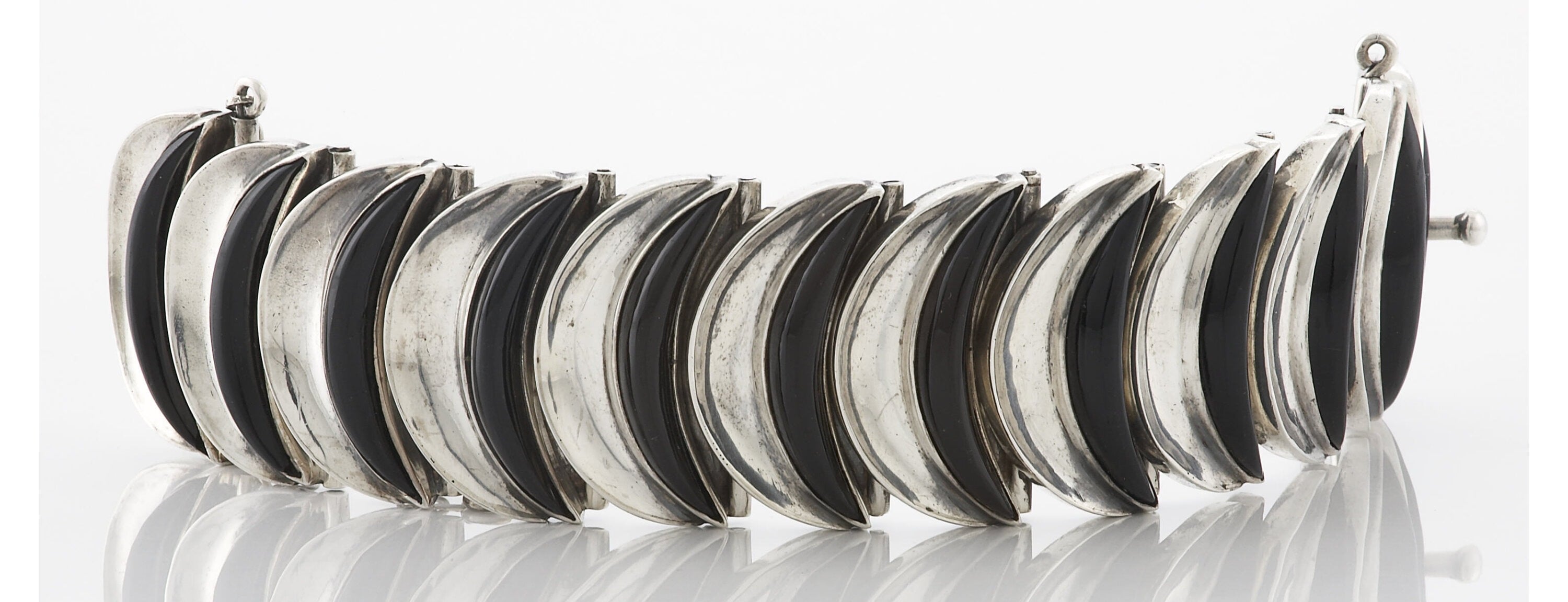
The bold width and substantial heft of this sterling cuff concentrate the formal principles that animated Antonio Pineda's mature practice. Morrill traces that sensibility to his years working under Valentín Vidaurreta in Mexico City, where Pineda came to value what she describes as "powerfully formed but simple shapes in silver" (1996, p. 178) — a lesson that carries through the bracelet's two-inch gauge and its nearly three troy ounces of metal.
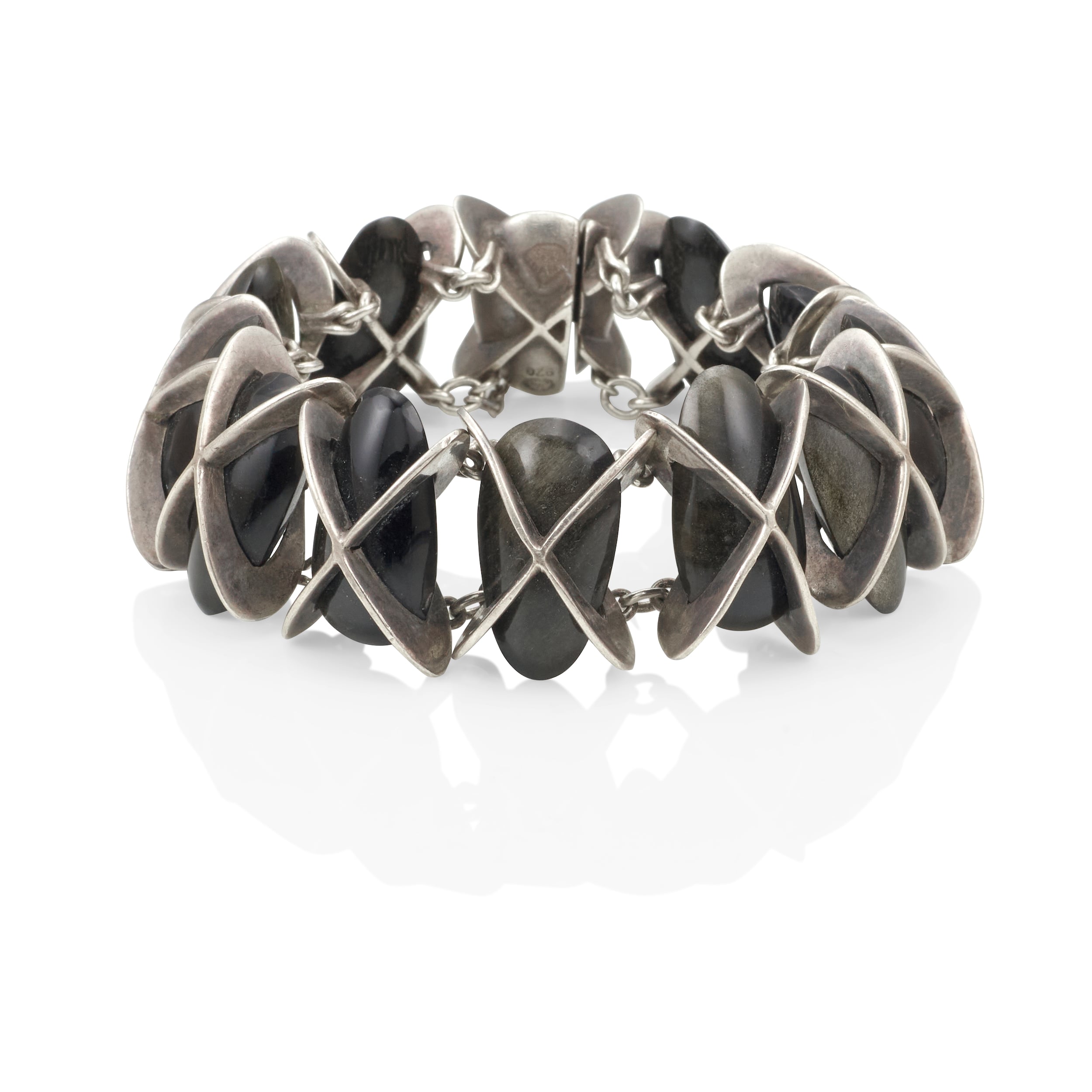
Onyx appears in Pineda's bracelet work in examples Morrill places in the decade around 1955–60, the stone's deep black surface drawing against sterling to produce contrasts that are emphatic without being decorative in any conventional sense. That quality of purposeful material tension aligns with the "boldness and superb craftsmanship" Stromberg identifies as defining characteristics of the Taxco Silver Age (2008, p. 17).
The interior stamps — maker's mark alongside "HECHO EN MEXICO" — are consistent with the marking conventions Morrill documents in Pineda's work from that same period. This bracelet is a clear expression of Pineda's conviction that silver should assert itself through form rather than ornament.
Museum of Mexican Silver. “Silver and Onyx Crescent Bracelet.” Catalog no. MoMS-001929. https://museumofmexicansilver.com/pieces/pineda-modernist-silver-and-onyx-bracelet
See something wrong with this record? Suggest a correction and the piece details fill in automatically.
Antonio Pineda
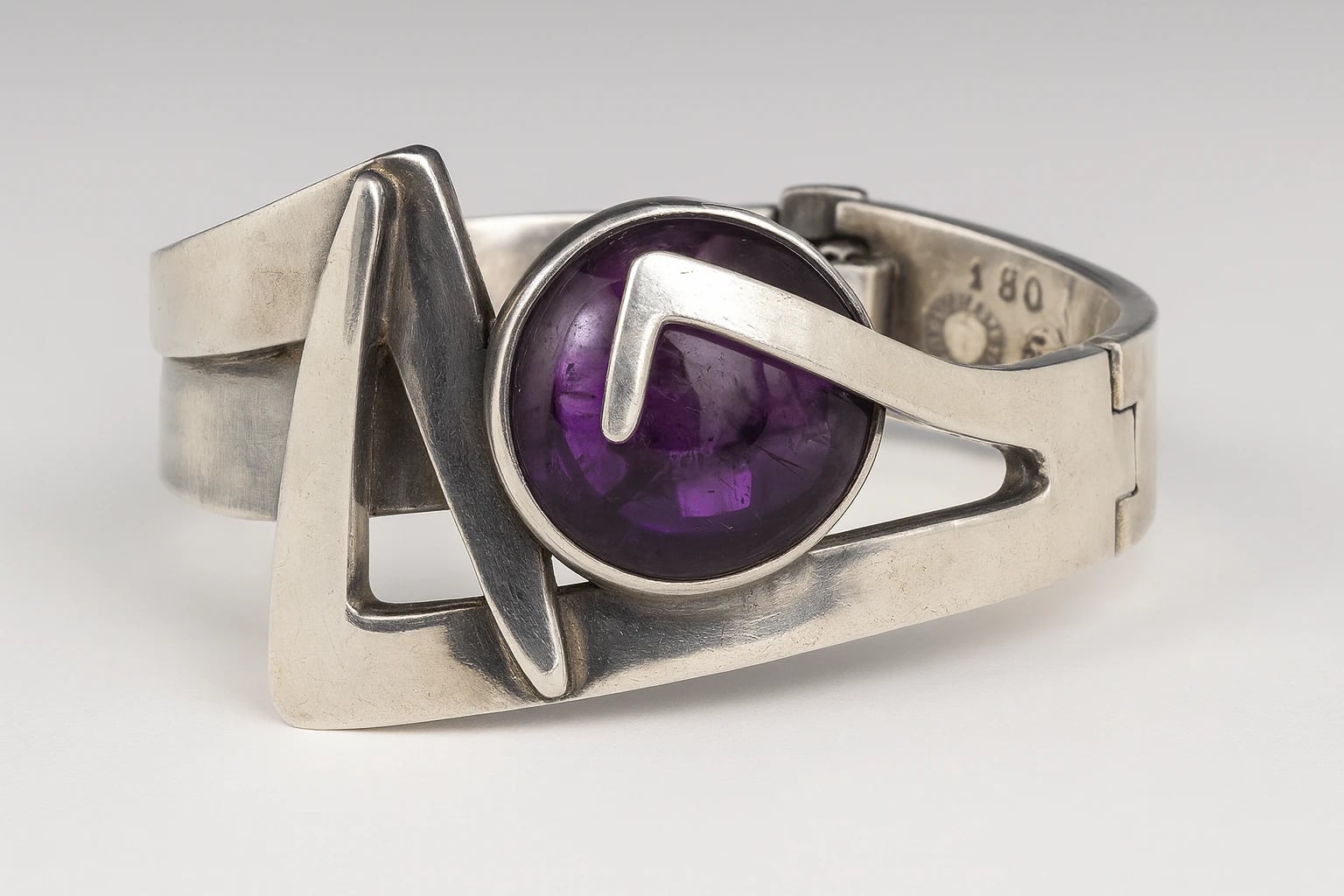
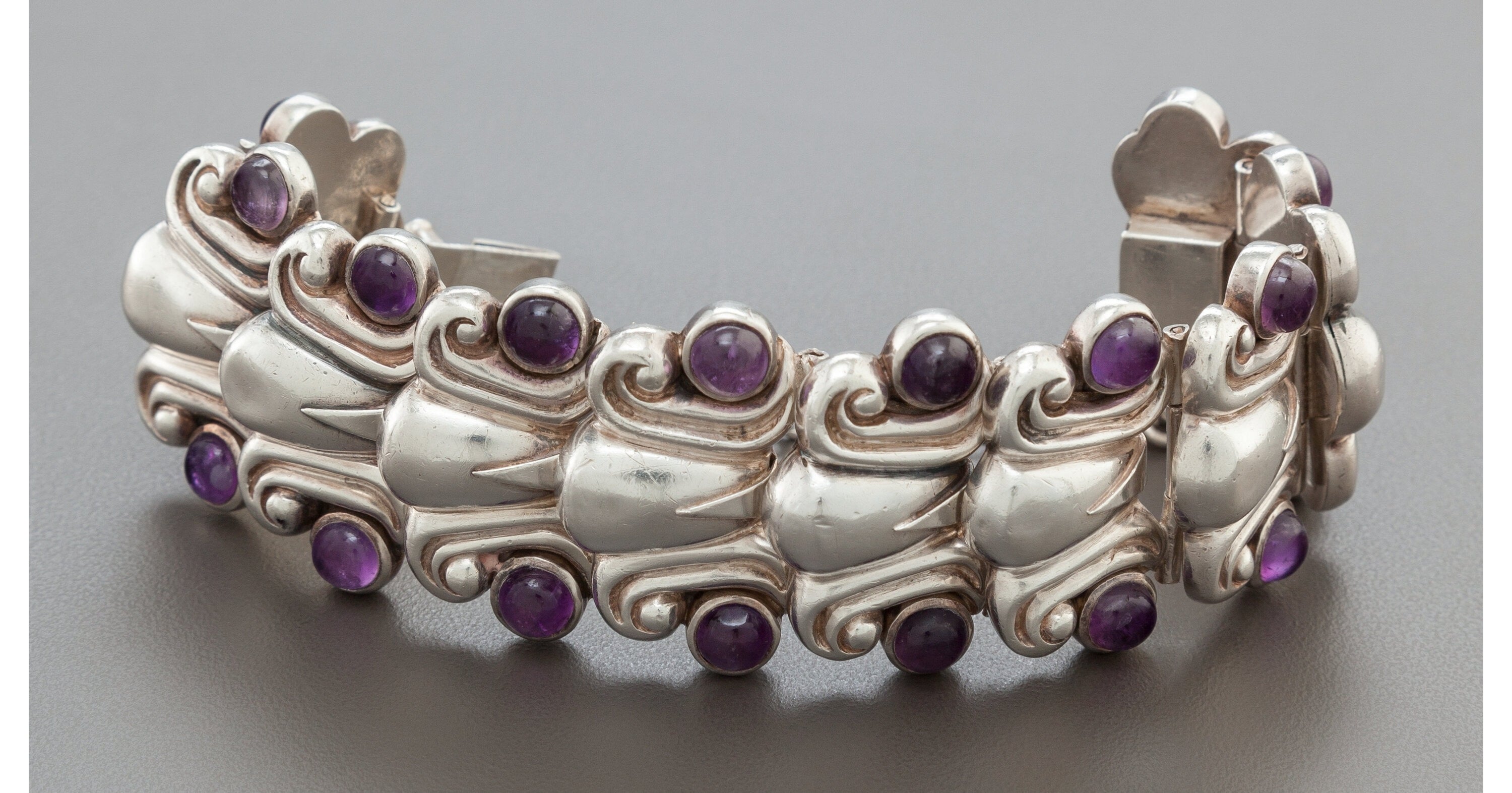
Silver and Amethyst Quartz Link Bracelet
c. 1955
Sterling silver