Saves instantly, no account needed. Already a member? Sign in.
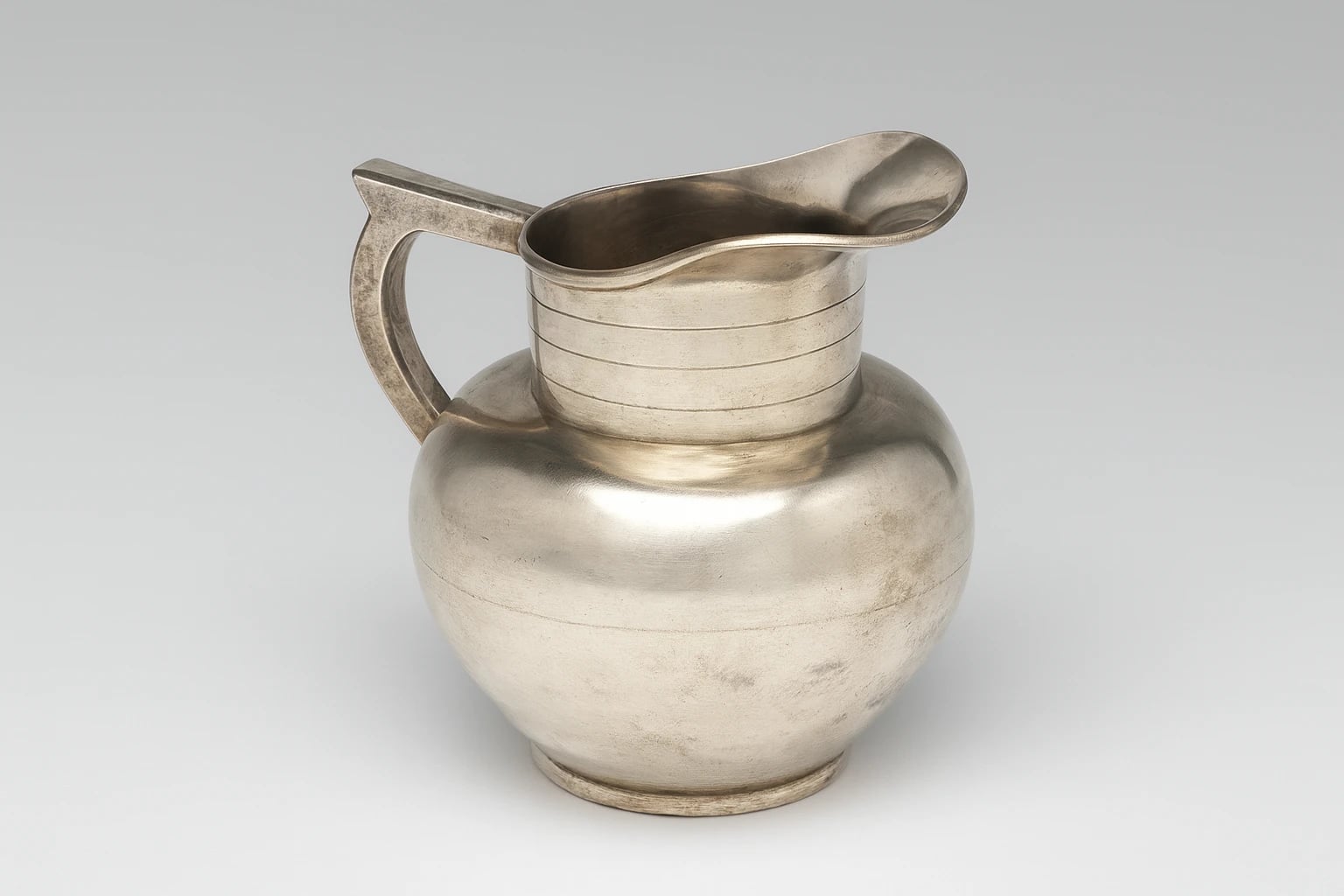
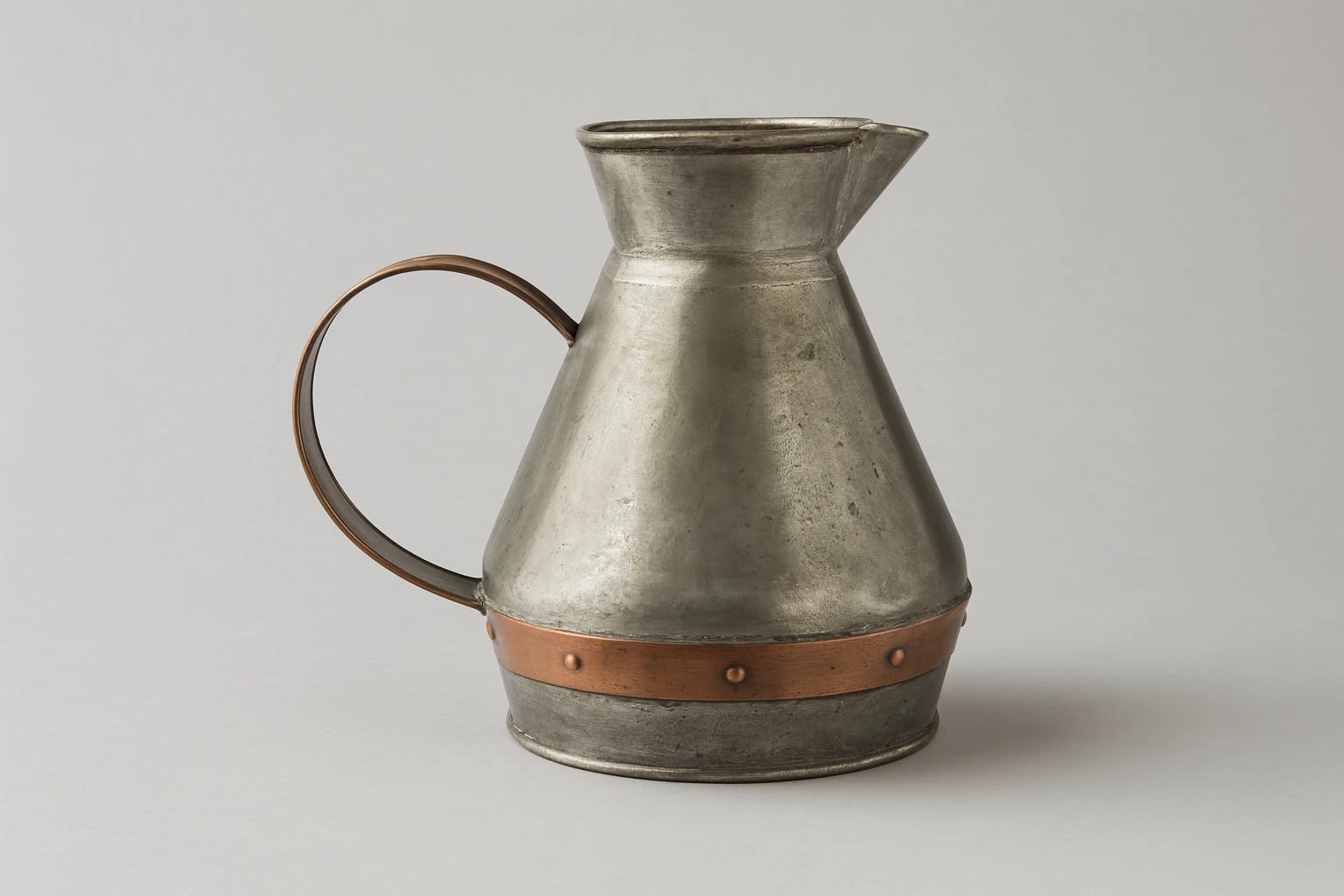
Spratling's tin pitcher works out its design in the meeting of two humble metals: a body of pale tin and a warm copper band wrapping the lower portion, with a copper handle carrying the same color across the vessel. The band sits low, weighting the form visually toward its base, so the tin body above reads as broad and quiet. This is domestic metalwork conceived with the same clarity of proportion Spratling brought to silver, and it belongs to a side of his production, functional objects for the table and household, that is far less studied than his jewelry.
The pitcher's interest lies in how little it does and how deliberately. Tin gives a soft, matte, cool surface that catches light without the mirror return of silver. The copper band and handle introduce a single warm accent, and Spratling places that warmth where the eye and hand both reach: the copper handle is the point of contact, the copper band the visual anchor. The result is a study in restraint. Color does the compositional work that engraving or applied ornament might otherwise perform. Nothing on the surface competes with the relationship between the two metals and the curve of the body.
Copper and tin carried particular meaning within the Taxco renaissance. Spratling's Taller de Las Delicias, founded in 1931, produced not only silver but objects in copper, tin, and other materials, extending workshop design principles across a range of price points and household uses. The museum's hallmark reference records Spratling marks struck specifically on copper and on tin, distinct from the silver stamps, evidence that these base-metal wares were a recognized part of the shop's output rather than incidental production. Working in tin and copper let the taller apply its sense of proportion and finish to goods that reached a broader market than sterling hollowware, while keeping the same eye for the eloquence of an unadorned surface.
For a collection built around Mexican silver, this pitcher records the fuller reach of a Taxco workshop, the range of materials a single design sensibility governed. It shows Spratling treating tin and copper not as lesser substitutes for silver but as materials with their own color and light, chosen and combined for their contrast. The object clarifies how the design intelligence of the renaissance operated across a household, from the jewelry box to the table.
Museum of Mexican Silver. “Tin Pitcher with Copper Band.” Catalog no. MoMS-000942. https://museumofmexicansilver.com/pieces/spratling-2969
See something wrong with this record? Suggest a correction and the piece details fill in automatically.
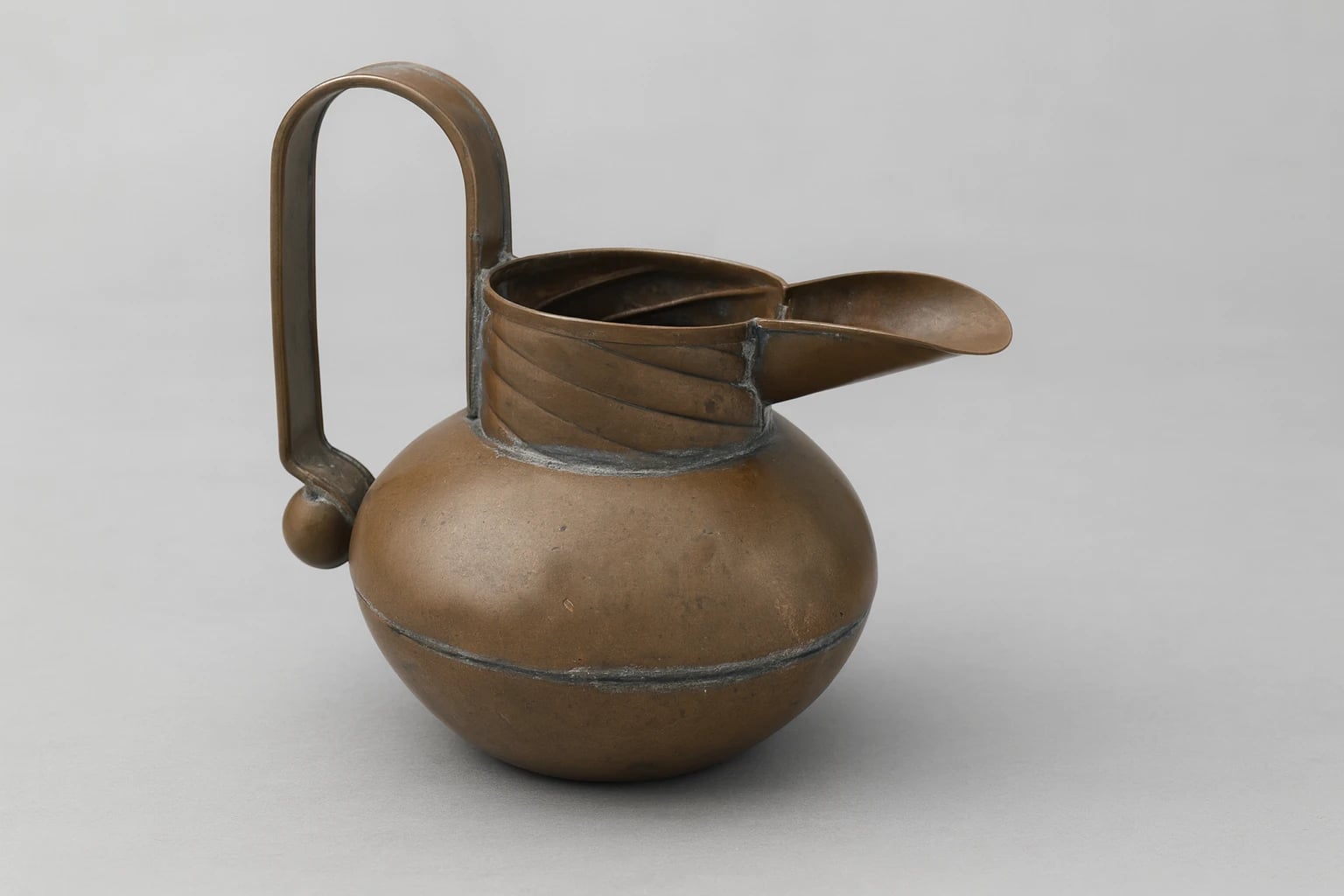
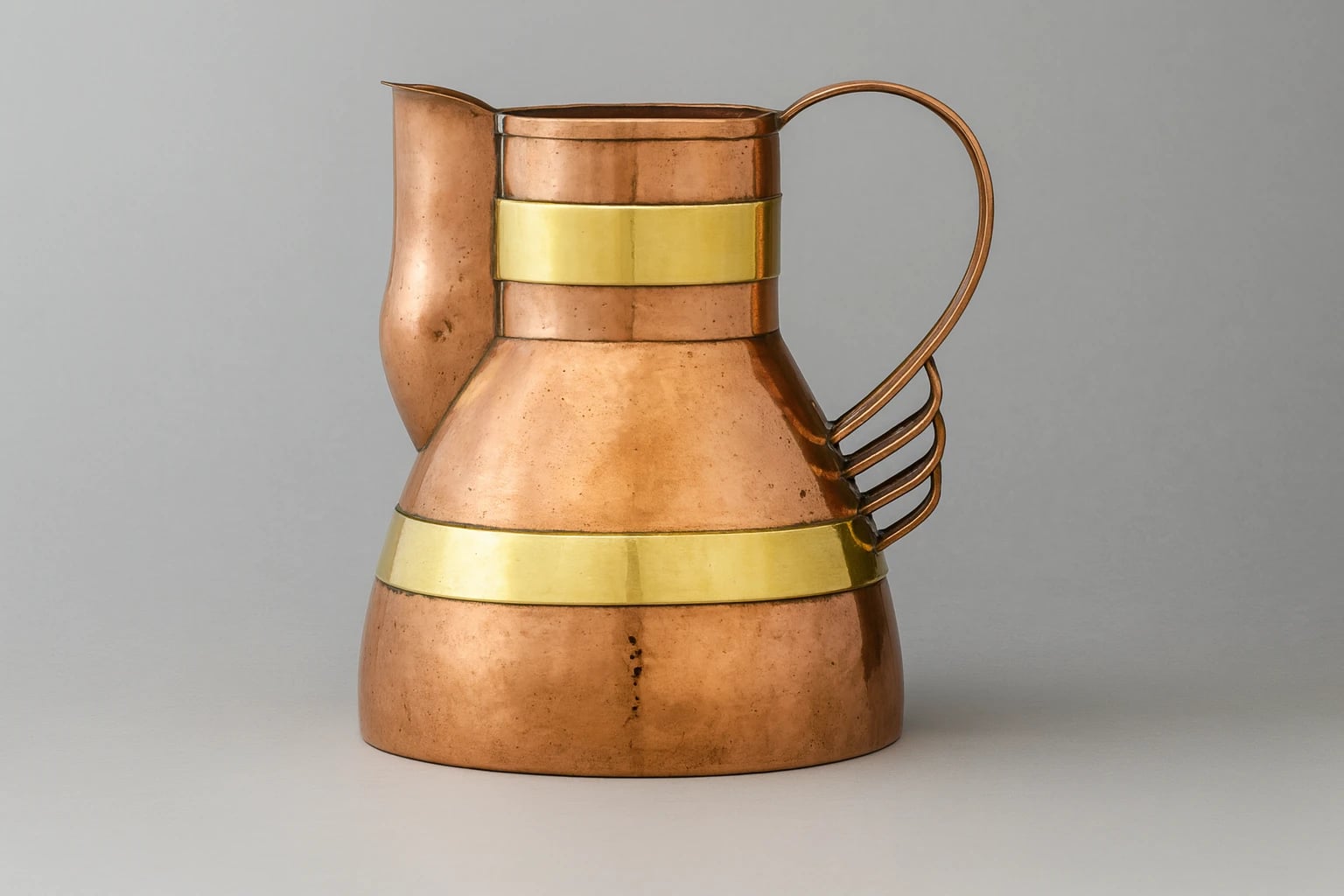
Copper Strap Handle Pitcher
Copper