Saves instantly, no account needed. Already a member? Sign in.
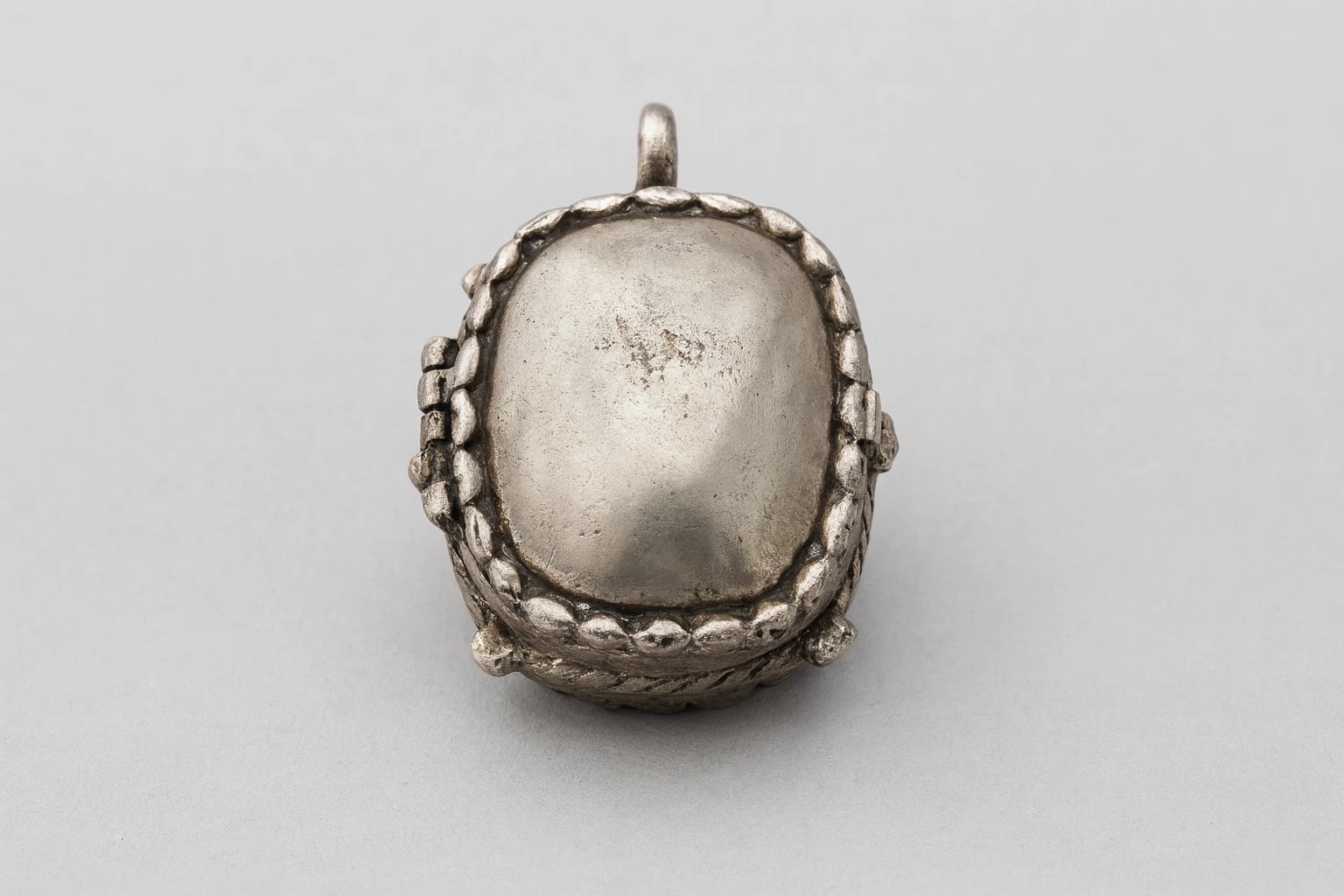
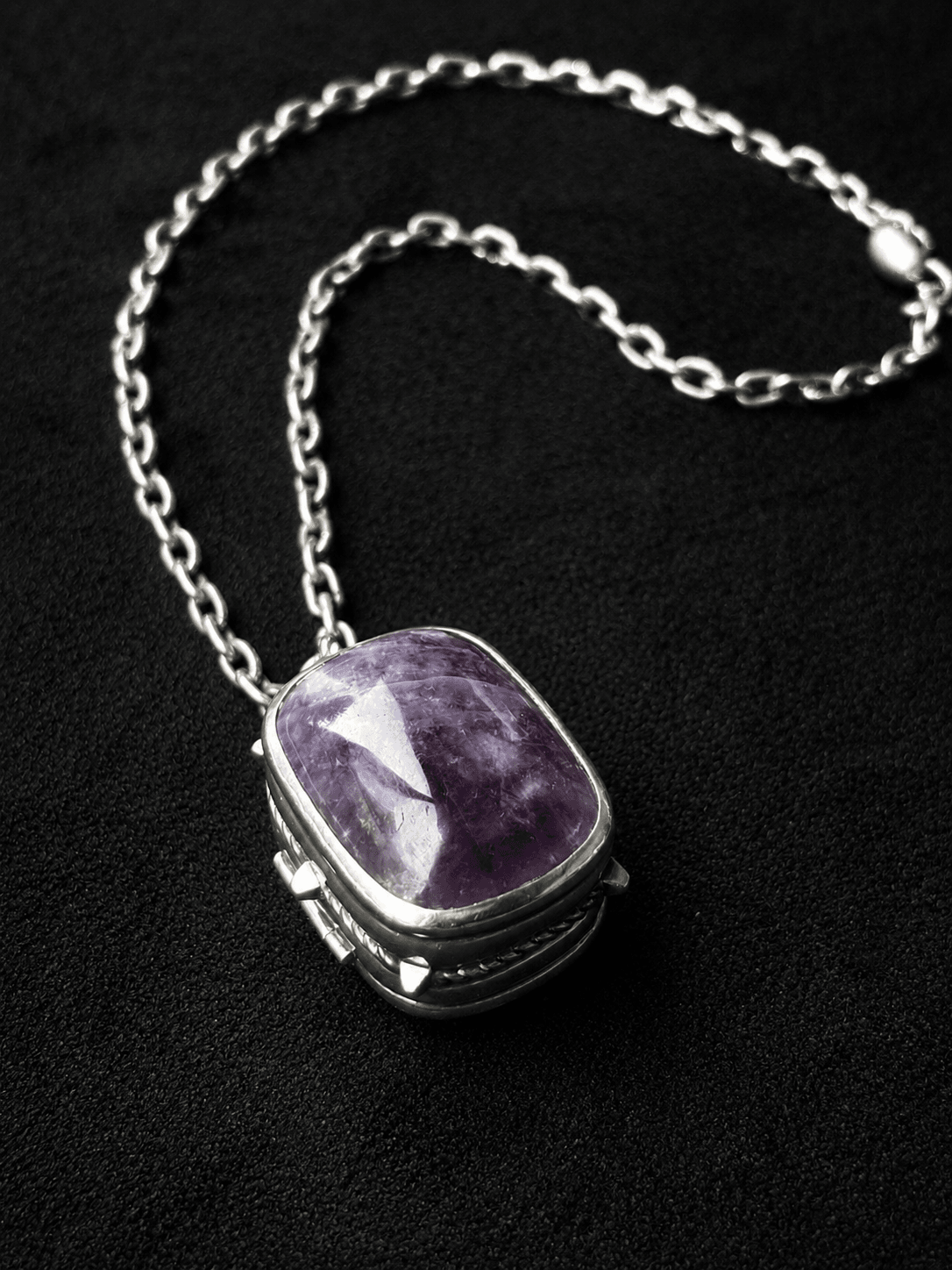
This is not merely a pillbox on a chain. It is a small architectural object made wearable: part jewel, part container, part miniature reliquary. Spratling’s best early work often sits in that border zone between jewelry, hollowware, ethnographic fantasy, and modernist design. This piece does that unusually well.
The form is powerful because it is volumetric. Many early Taxco jewels are essentially flat silhouettes translated from Pre-Columbian or folk motifs. This one is different: it has mass, depth, and interiority. The pendant is conceived almost as a small silver casket, with the amethyst not used as decorative punctuation but as the dominant skin of the object. The stone panels give it a soft, cloudy, mineral presence; the silver creates the armature. The effect is both luxurious and archaic.
The design language is very Spratling: heavy-gauge silver, visible hand construction, ropework, strong bezels, and a willingness to turn a practical object into sculpture. Morrill and Berk note that Spratling used high silver content early for its softer patina and lower tendency to oxidize, and that he incorporated amethyst quartz in his jewelry as a foil to silver’s reflective surface. That observation is directly relevant here: the lavender translucency of the stone softens what would otherwise be a severe, almost mechanical box form.
The most interesting formal device is the tension between containment and display. A pillbox, locket, or pendant box is normally private: it hides something. But here the object advertises its mystery. The hinge, clasp, and banding make the opening mechanism central to the visual identity of the piece. It suggests function without needing the function to matter. That is why “locket” may be the more poetic term, while “pendant box” is probably the more accurate museum term.
As a Spratling object, its importance lies in how it compresses the larger Taxco project into one wearable object. Spratling did not simply revive Mexican silver as jewelry; he helped create a system in which local silversmithing, American modernist taste, Pre-Columbian reference, colonial craft memory, and luxury tourism all collided. The Taxco literature emphasizes that his early workshop, Las Delicias, became the nucleus for systematic training of silversmiths and for the emergence of the Taxco School. This necklace belongs to that origin story.
Museum of Mexican Silver. “Carved Amethyst Pill Box Necklace.” Catalog no. MoMS-000287. https://museumofmexicansilver.com/pieces/spratling-317
See something wrong with this record? Suggest a correction and the piece details fill in automatically.
Silver Clouds Necklace
First Design Period: 1931 - 1946
Silver