Saves instantly, no account needed. Already a member? Sign in.
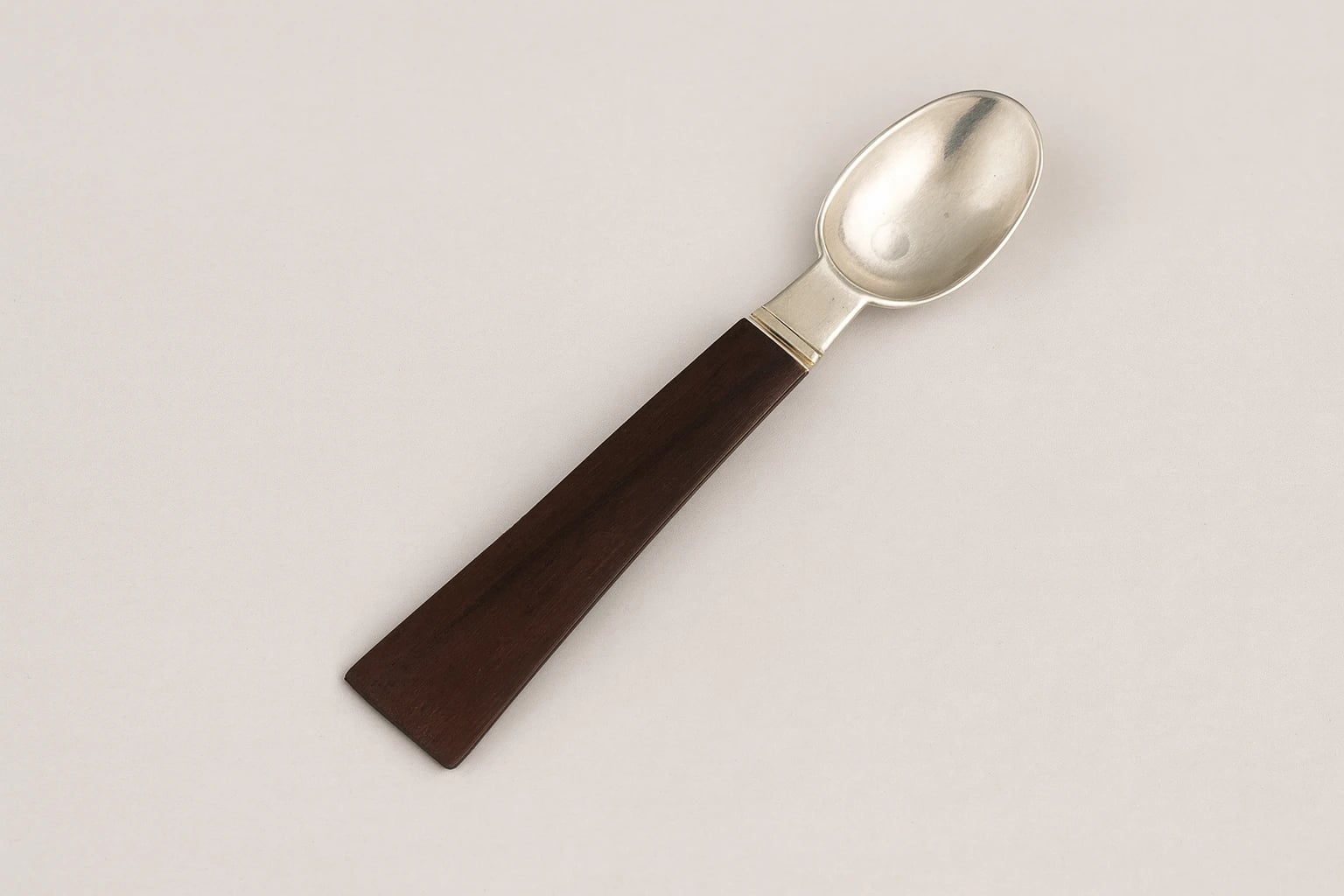
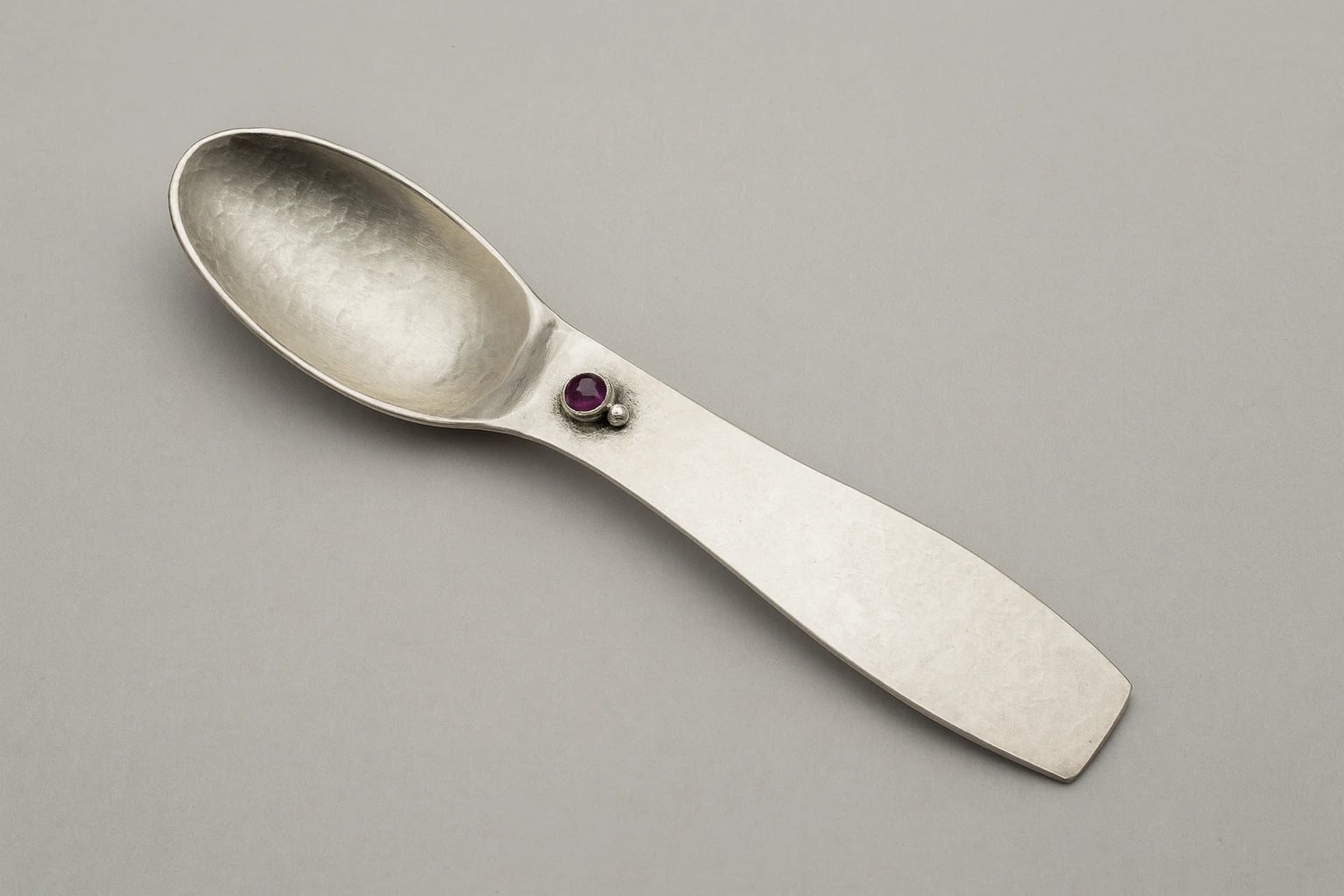
An amethyst set at the neck lifts this teaspoon out of the everyday: a single stone marking the junction of bowl and handle on an otherwise clean silver form, made as part of complete place settings. The amethyst was a stone Spratling returned to, and its violet against polished silver is among the most recognizable color notes in his work.
That the design extended to entire place settings reflects the ambition of Spratling's First Design Period, dated here to 1931 to 1946, when he was building not just jewelry but a full vocabulary of Mexican modern tableware. Stone-set flatware was an unusual reach, treating the dinner service with the attention more often reserved for jewelry.
The piece is recorded in Penny Morrill's William Spratling and the Mexican Silver Renaissance: Maestros de Plata and in Goddard's field guide, the scholarship that documents Spratling's role as the founder of the Taxco silver revival.
Stone-set flatware in full settings is among the rarer survivals from the early years and comes to auction only occasionally.
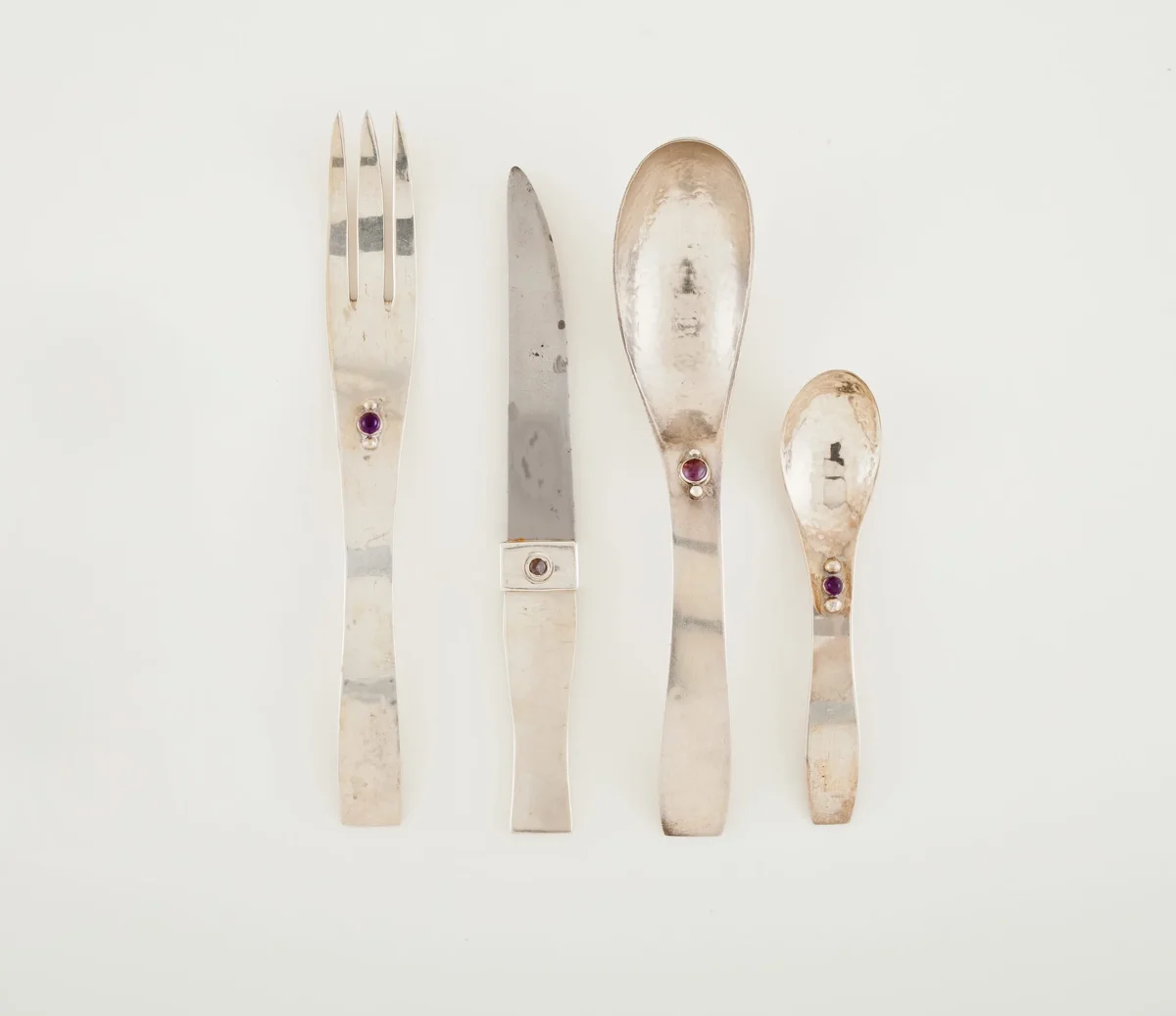
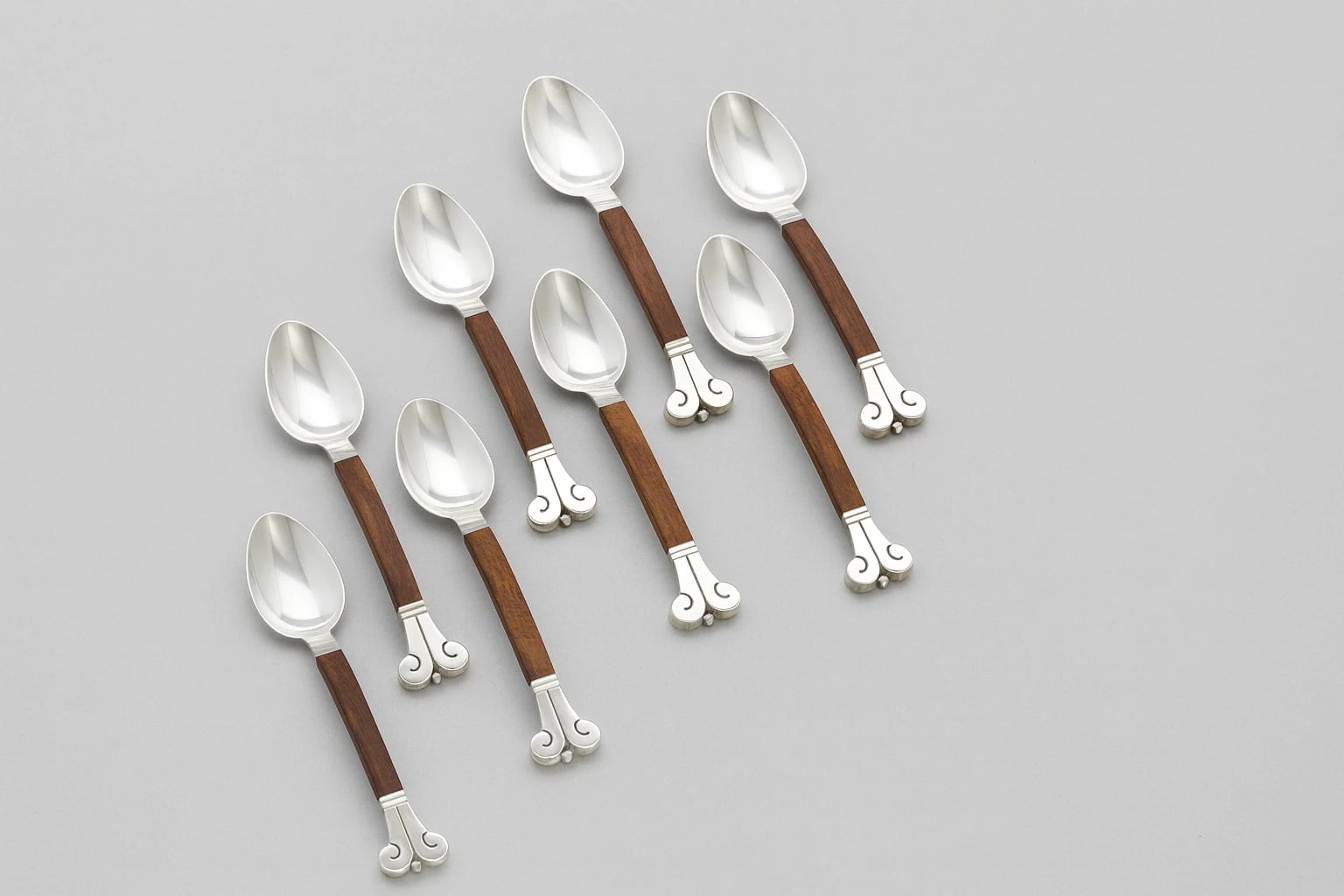
Silver and Amethyst Flatware, 1935-1940
Accession M.2013.4.5a-q. Official museum record Photo: Los Angeles County Museum of Art.
Verified against each institution's own collection records. All museum collections
Museum of Mexican Silver. “Teaspoon with Amethyst Set at Neck.” Catalog no. MoMS-000338. https://museumofmexicansilver.com/pieces/spratling-425
See something wrong with this record? Suggest a correction and the piece details fill in automatically.
Caddy Spoon of 1820 Design
First Design Period: 1931 - 1946
Silver