Saves instantly, no account needed. Already a member? Sign in.
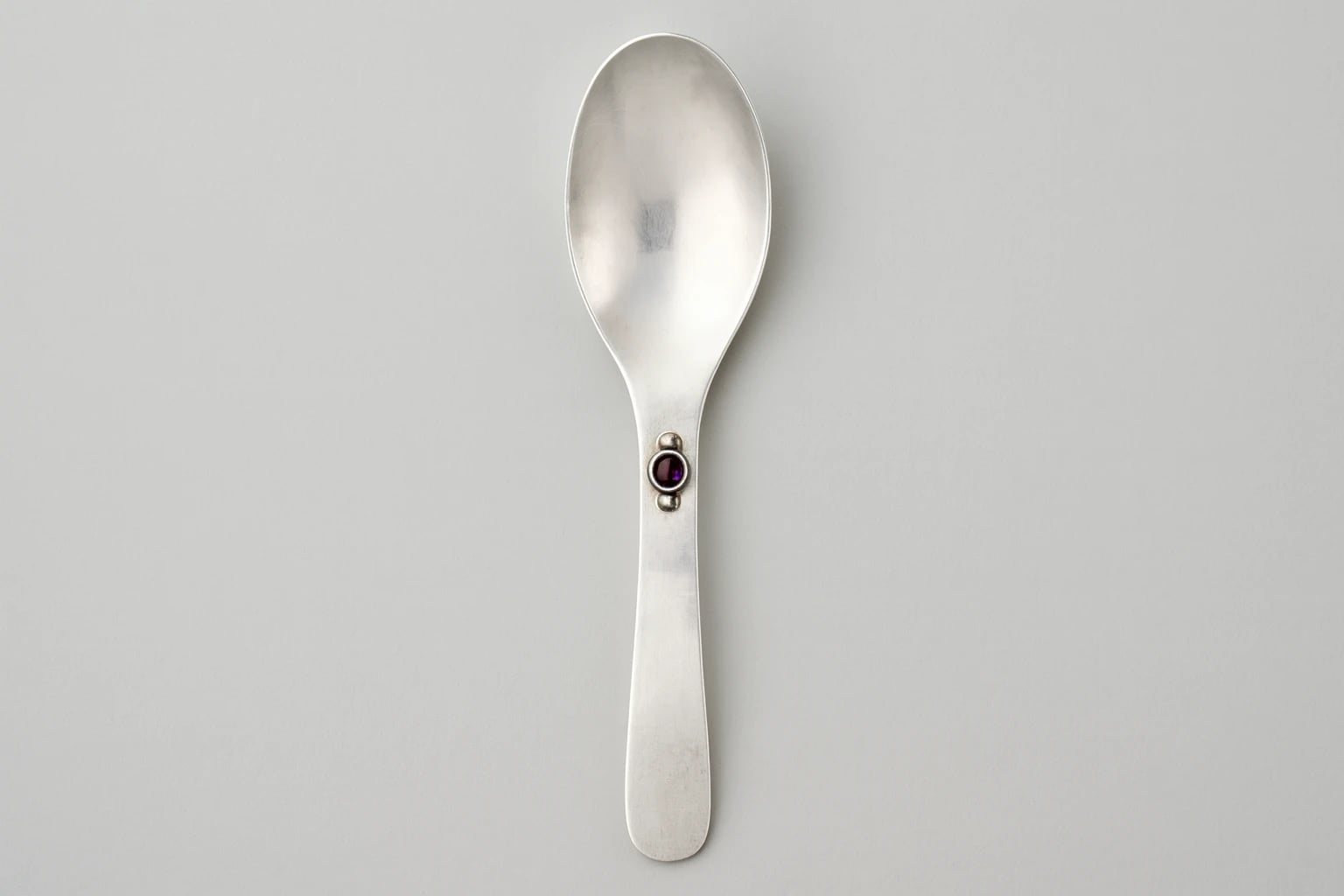
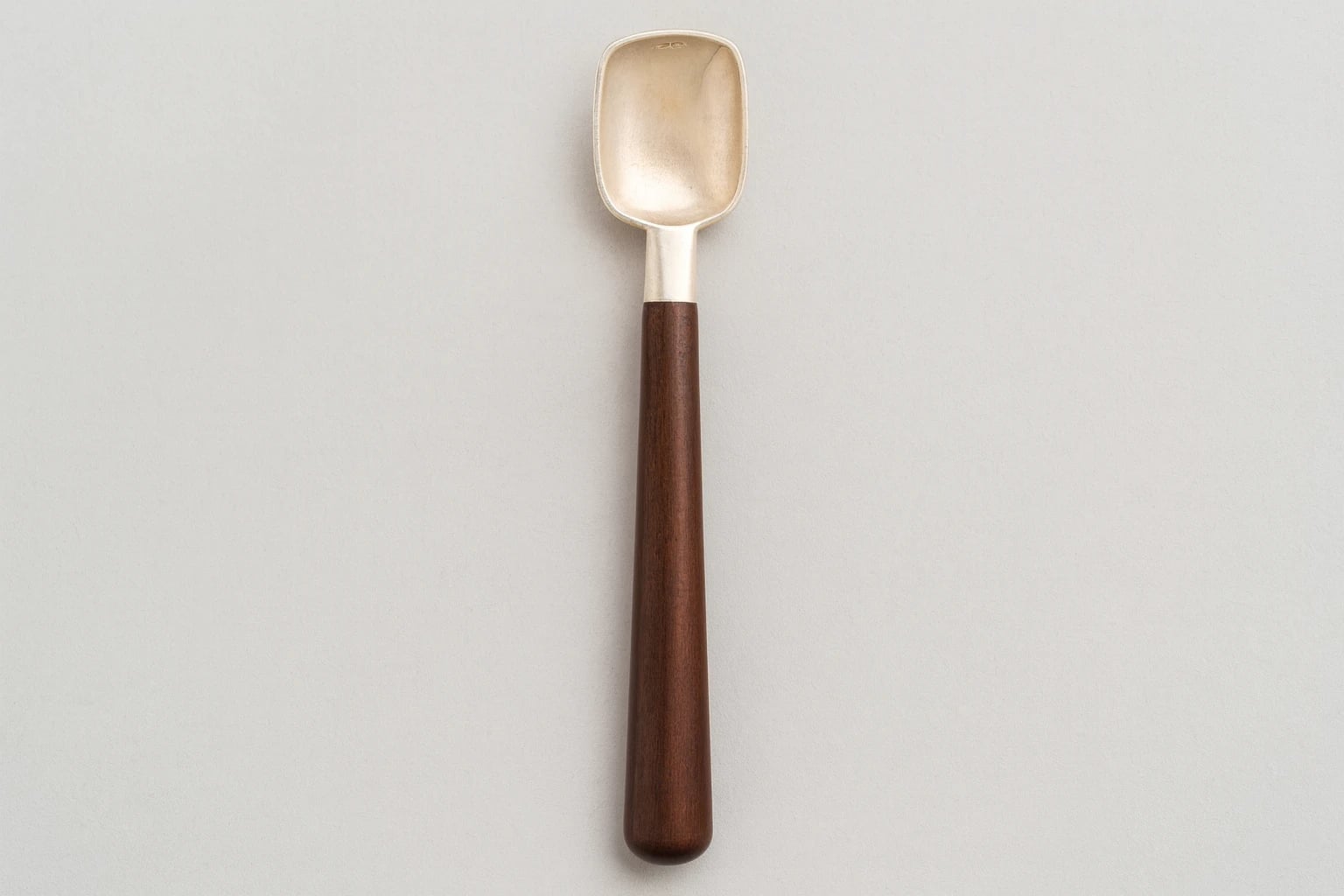
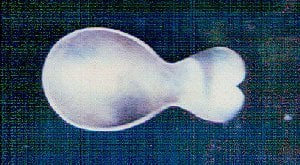
A caddy spoon reduces the silversmith's problem to its essentials: a small bowl, a short handle, and the transition between them. This example, made in William Spratling's first design period between 1931 and 1946, belongs to a category of tea equipage rarely associated with Taxco, whose reputation rests largely on jewelry and hollowware. The caddy spoon, used to measure loose tea from its caddy, carries an Anglo-American domestic history, and its appearance under Spratling's mark shows how the Taller de Las Delicias extended beyond ornament into the fittings of the table.
The form concentrates attention on proportion. A caddy spoon has a short handle because it never leaves the tea caddy, so the bowl becomes the dominant element and the handle exists mainly to lift and pour. In silver of this period, Spratling's workshop tended toward clean surfaces and controlled weight rather than applied decoration, and a small utensil of this kind depends entirely on the relationship between the curve of the bowl and the line of the handle. Photographs establish the object's silhouette and its material, but they cannot confirm gauge, method of forming, or whether the bowl was raised, cast, or worked from sheet. Those questions matter for a spoon, where the thickness of the metal governs both the balance in the hand and the way the bowl holds its shape.
Spratling founded Las Delicias in 1931 and organized a workshop system in which designers set the formal direction while master smiths and specialists executed the work. Gobi Stromberg and others have described how this taller structure freed the designer to concentrate on form while trained smiths handled fabrication, and a modest tea implement would have passed through the same division of labor as a more ambitious piece. The presence of the caddy spoon in the first-period production suggests that Spratling's early market included the domestic and gift trade that connected Taxco to visiting Americans, the tourists and expatriates whose growing presence Stromberg's scholarship links directly to the development of Taxco's silver age.
Within a collection dominated by necklaces, bracelets, and serving pieces, this spoon documents a quieter side of the workshop's output: the small functional objects that carried Spratling's design sensibility into everyday use. It records that the first design period addressed the tea table as well as the body, and it preserves a form more often found in English and North American silver, here produced in Mexico under one of the founding marks of the renaissance.
Museum of Mexican Silver. “Caddy Spoon.” Catalog no. MoMS-000180. https://museumofmexicansilver.com/pieces/spratling-765
See something wrong with this record? Suggest a correction and the piece details fill in automatically.
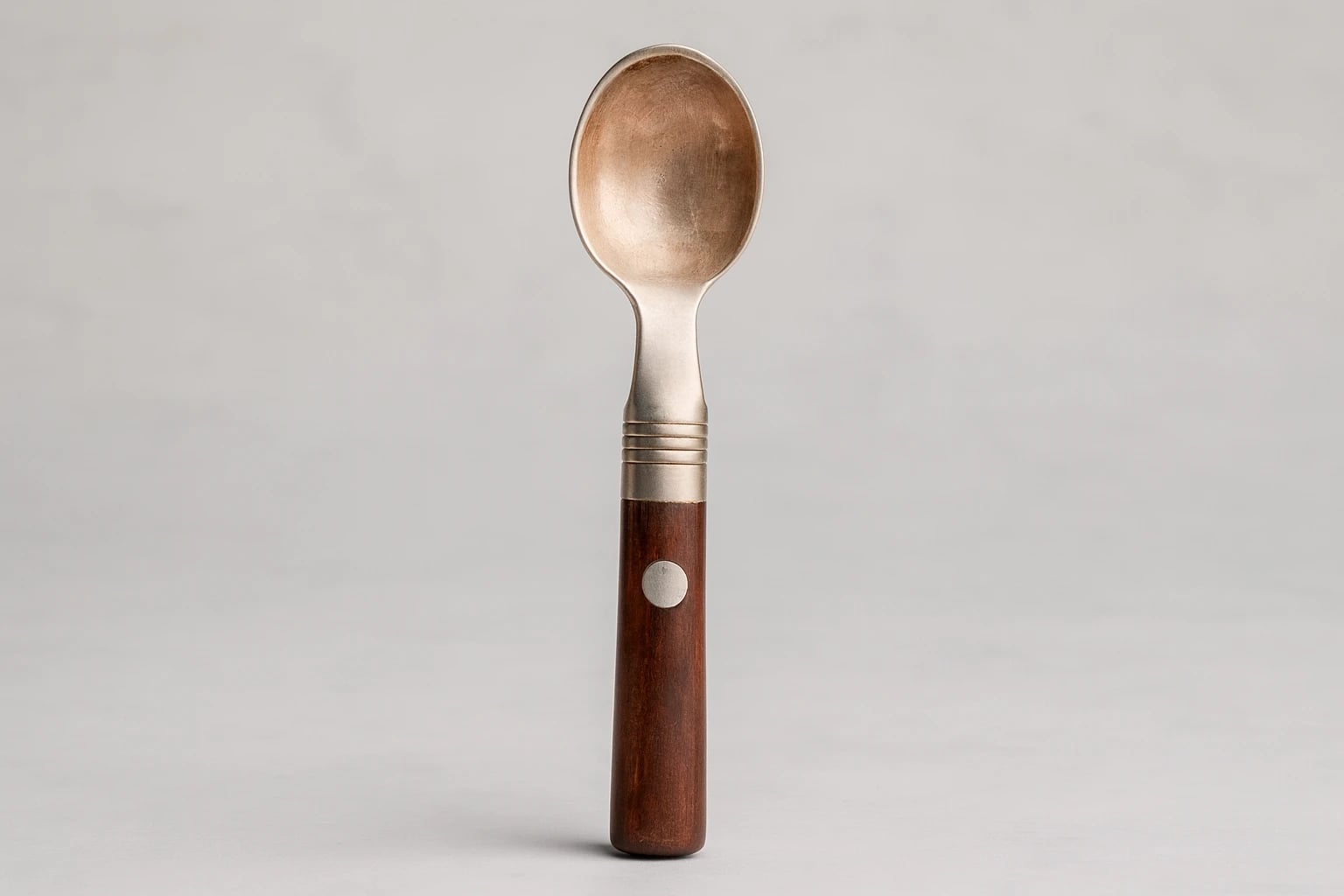
Silver Disc Rosewood Spoon
Silver