Saves instantly, no account needed. Already a member? Sign in.
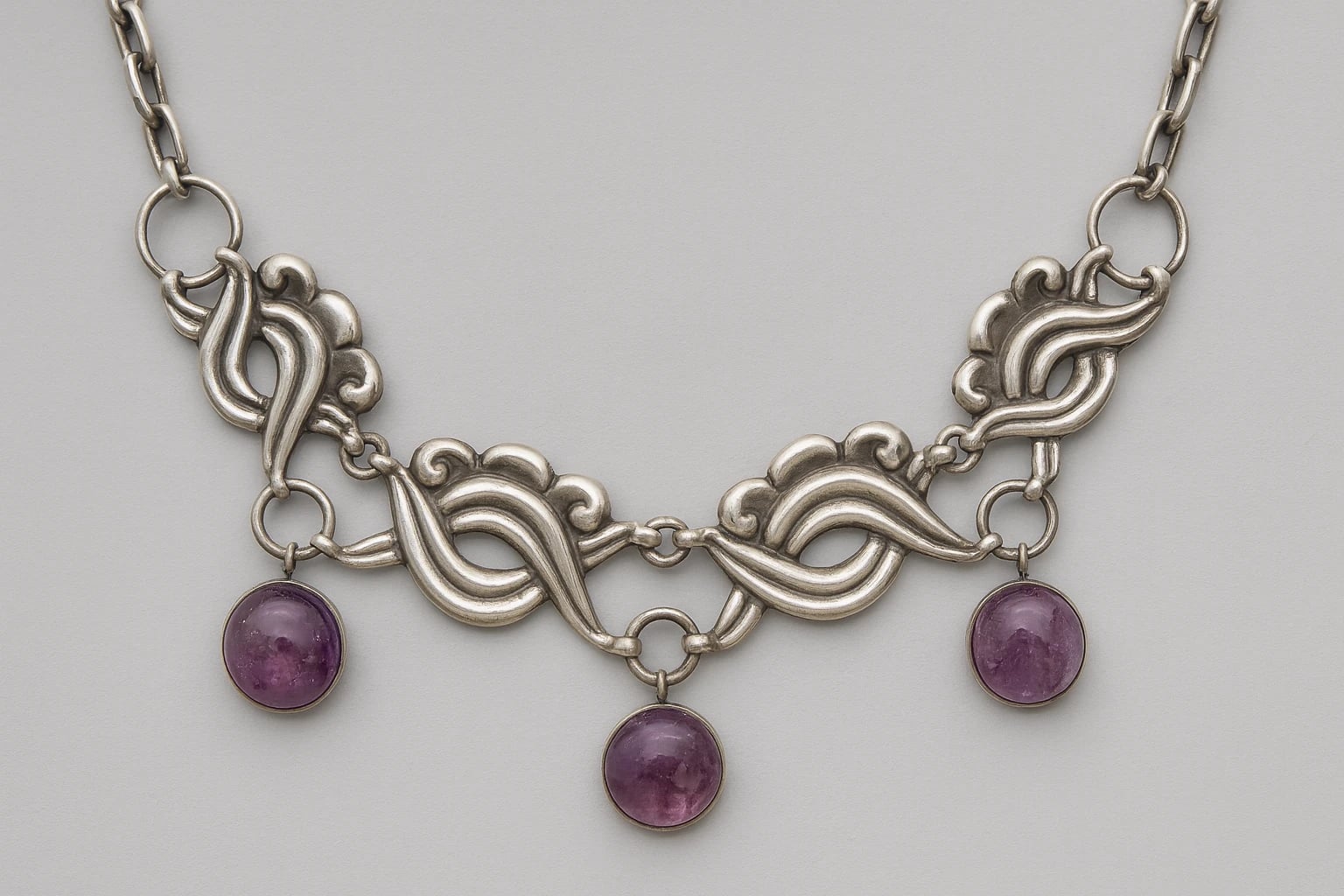
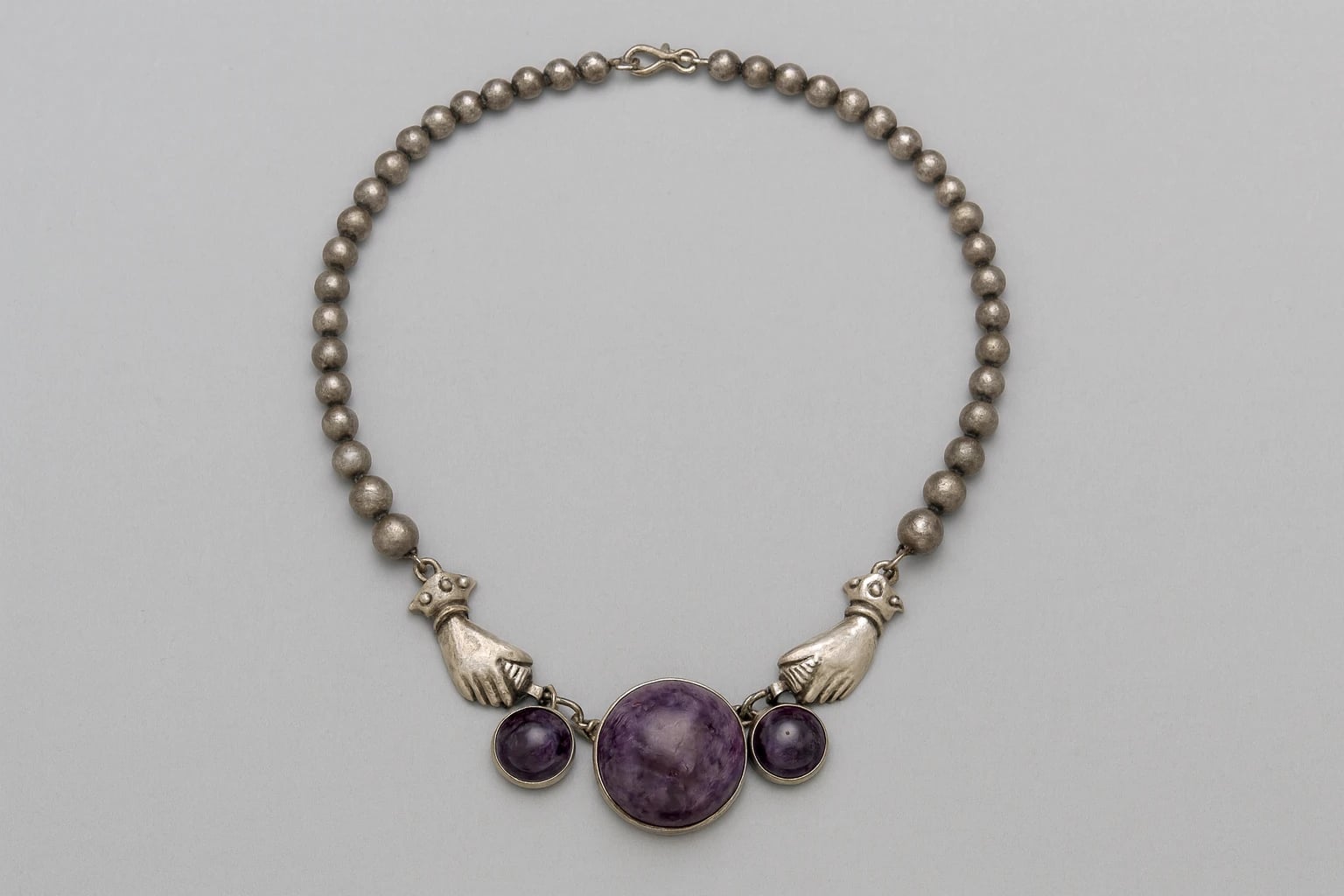
This necklace is organized around the "hands" motif, a clasped-hands emblem Spratling used across several pieces, here anchored by three cabochon amethysts whose violet color punctuates the silver. The recurring hands device gives the necklace a clear iconographic identity, while the trio of native Guerrero amethysts supplies the warmth and weight that balance the metalwork.
The piece dates to Spratling's First Design Period, 1931 to 1946, the years when the Las Delicias workshop was forging the pairing of silver with regional stones that became a hallmark of Taxco silver. The hands motif and the amethyst cabochon together place the necklace firmly in that early, formative vocabulary.
The necklace is recorded in the literature, appearing in Morrill and Berk's Mexican Silver: 20th Century Handwrought Jewelry and Metalwork, the standard reference for the field. Its inclusion there documents the hands motif as a recognized element of his early design language.
Spratling, who founded the Taxco silver revival in 1931, built his early work on motifs that could read as both modern and rooted in Mexico, and a hands-and-amethyst necklace is a clear example of that synthesis. The combination of an emblematic motif with native stone is the early Spratling formula in concentrated form.
Museum of Mexican Silver. “Amethyst Hands Necklace.” Catalog no. MoMS-000309. https://museumofmexicansilver.com/pieces/spratling-961
See something wrong with this record? Suggest a correction and the piece details fill in automatically.
William Spratling
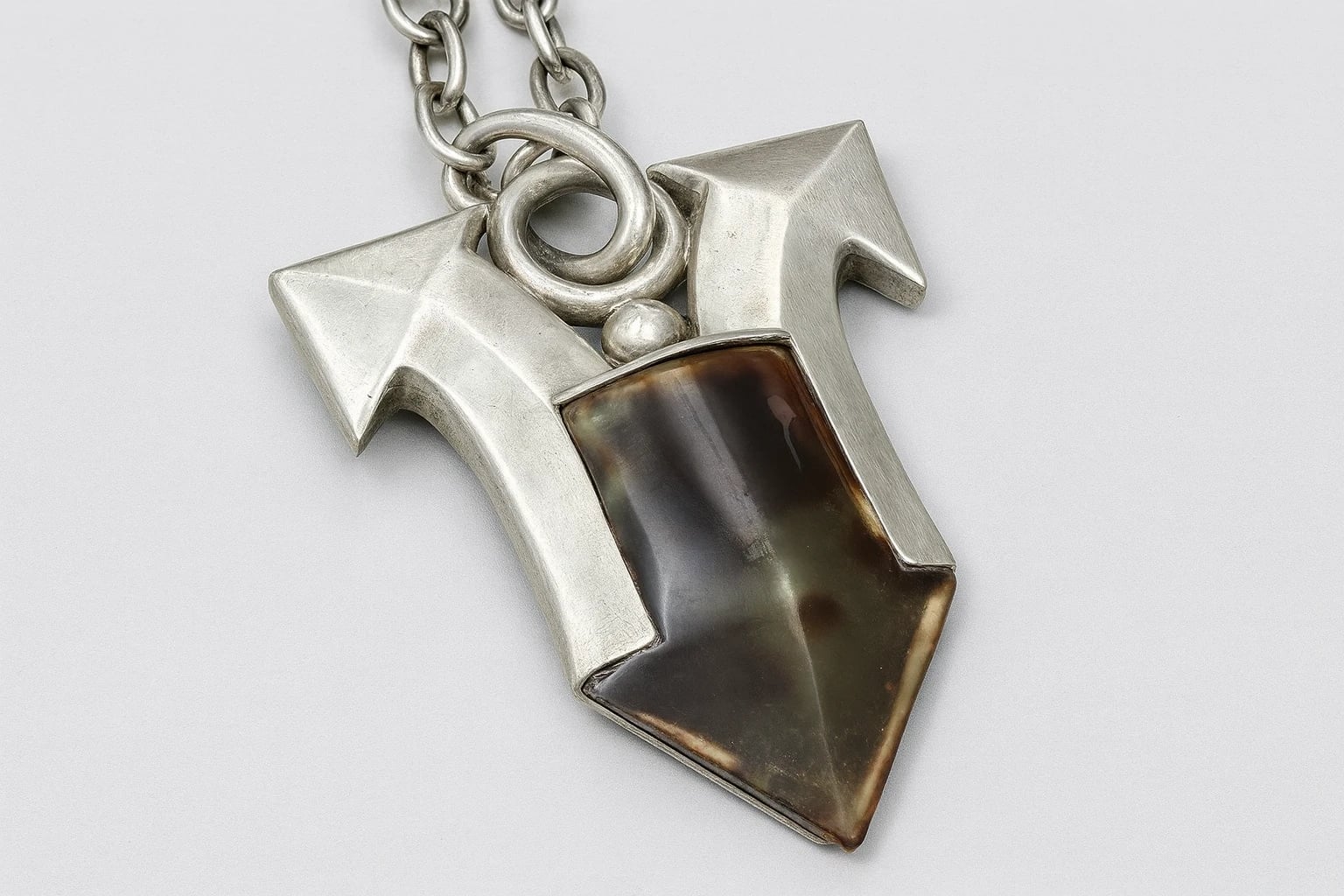
Tortoise Shell Arrow Necklace
Sterling silver