Saves instantly, no account needed. Already a member? Sign in.
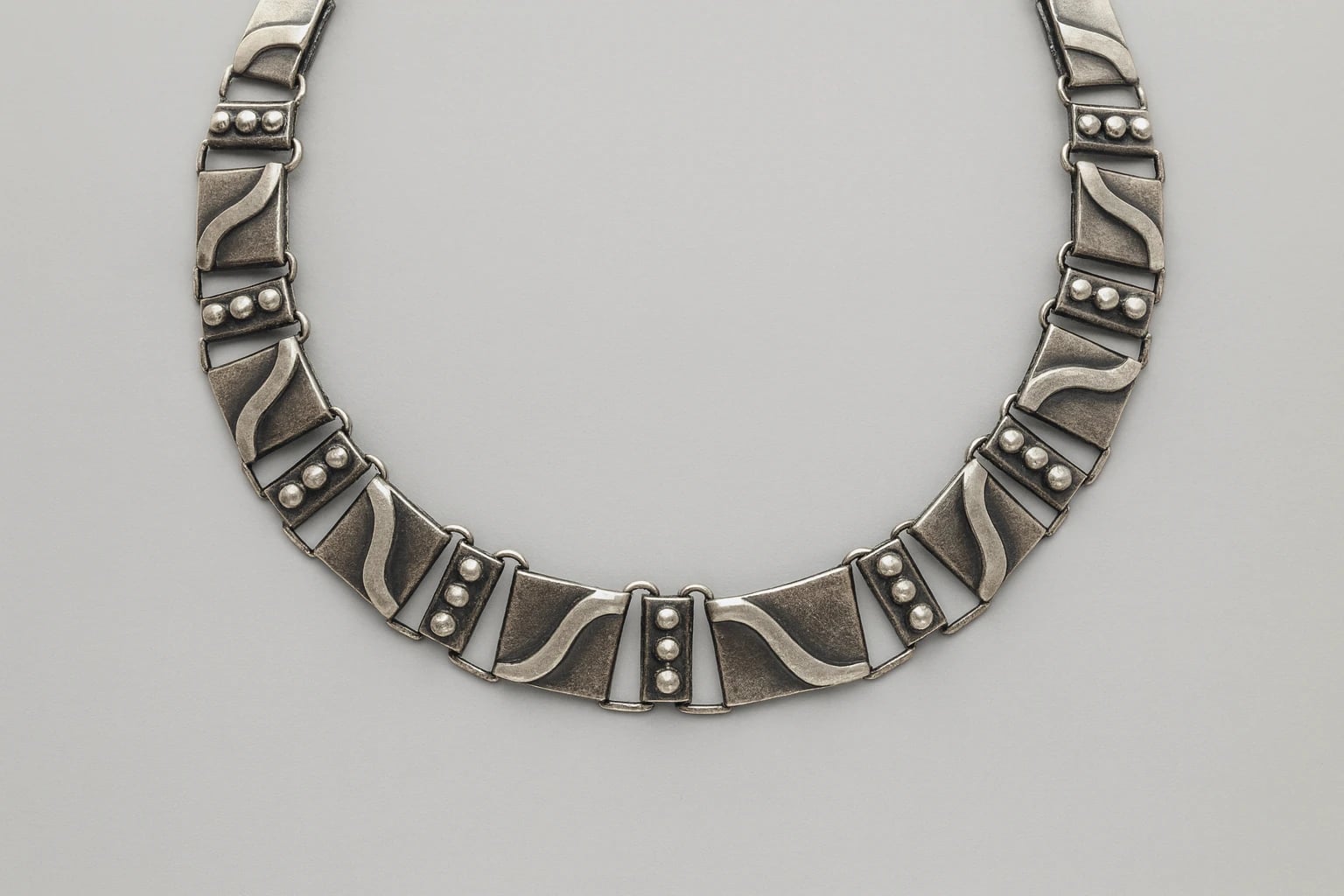
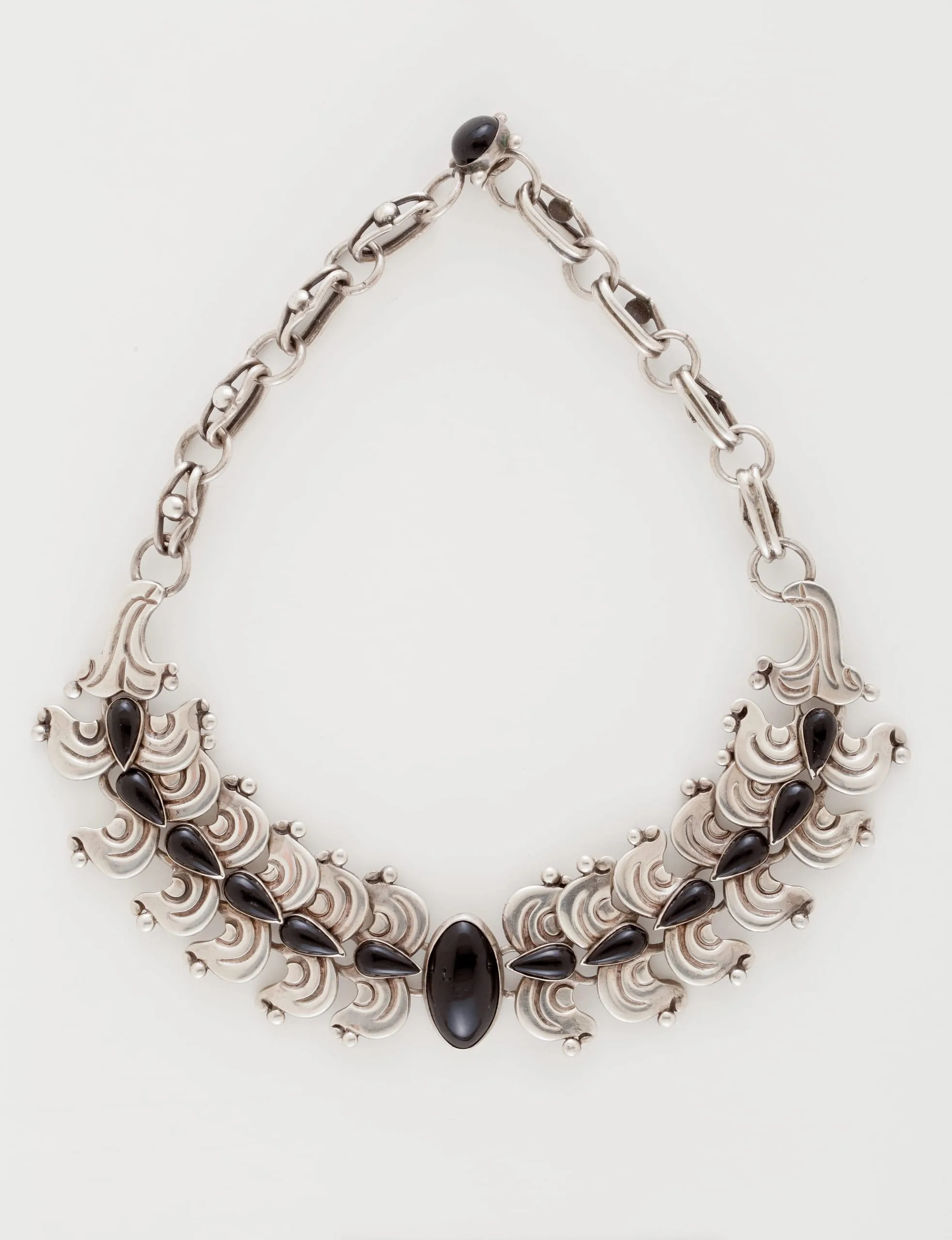
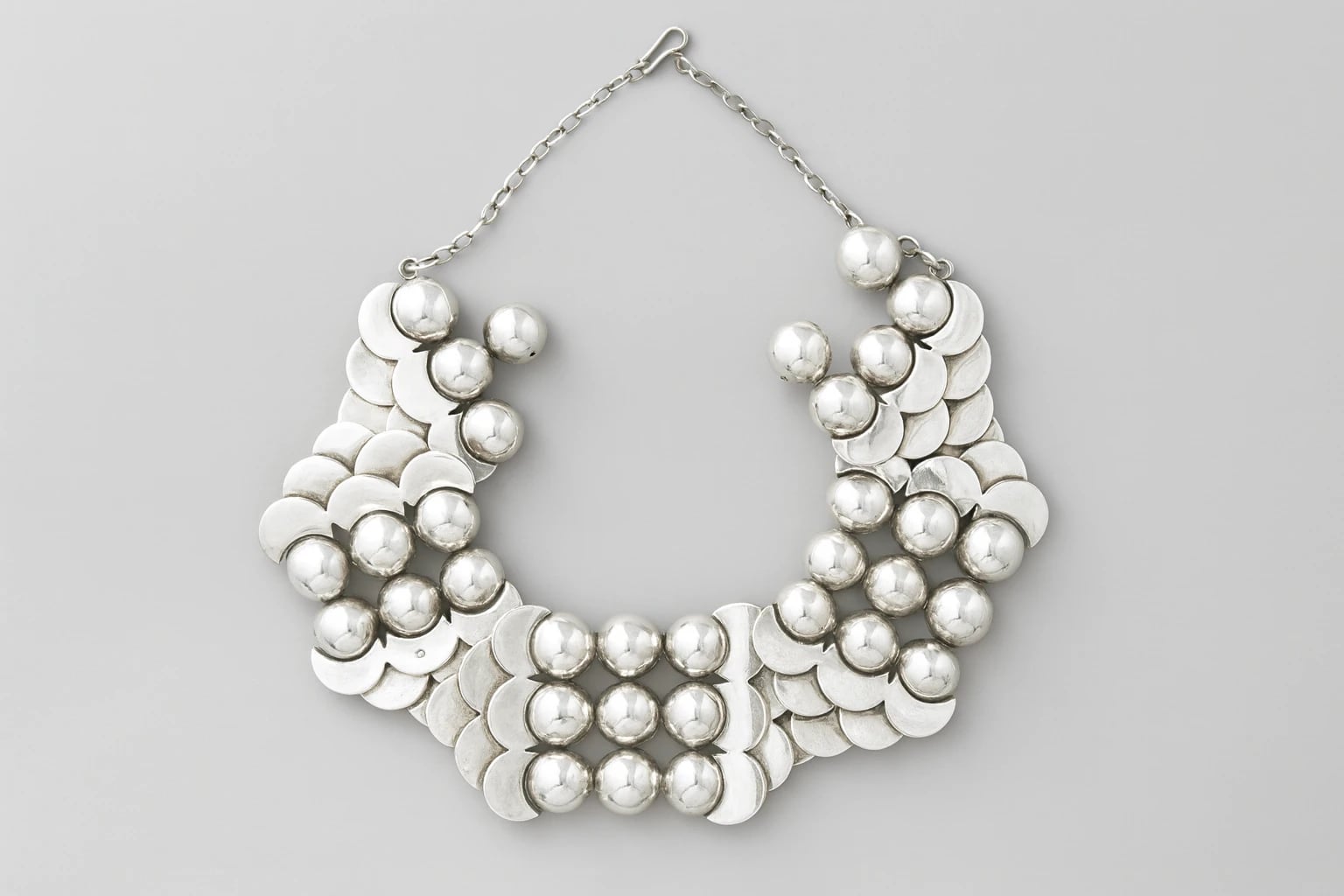
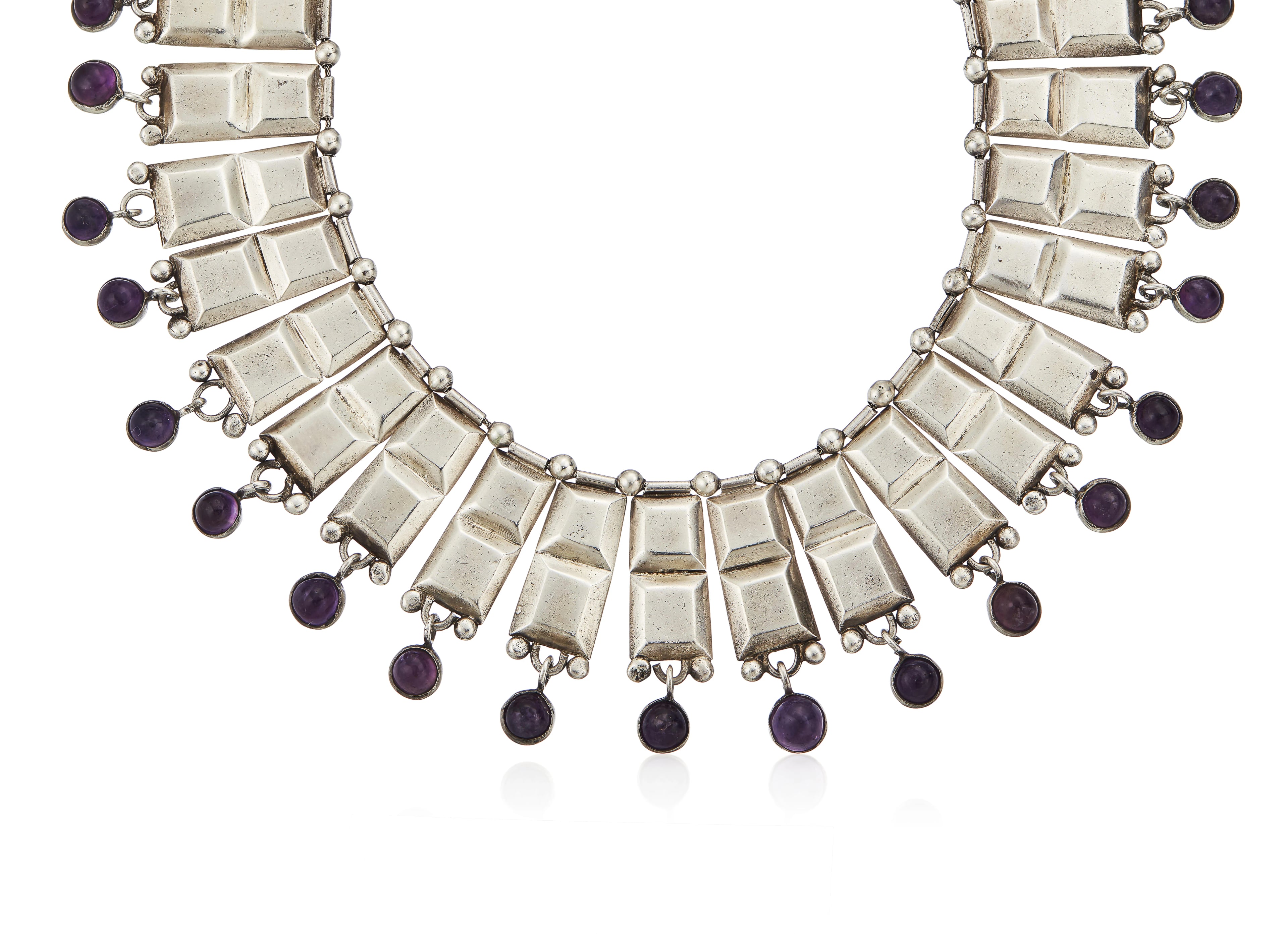
A broad silver collar from the height of the Taxco Silver Age, this necklace shows the early Spratling workshop working at full ambition: a continuous fringe of domed, gently raised rectangular plaques, graduated to fall deepest at the throat, each link punctuated by clustered silver granules and terminating below in a swinging row of amethyst cabochons. The "SPRATLING SILVER" mark places it in the first design period, the years around 1940 to 1946 when the taller in Taxco grew into a true manufactory and its output reached an American audience hungry for handmade luxury during the war. Necklaces of this scale and density of handwork are the pieces in which Spratling's project is most legible: not jewelry borrowed from European fashion, but a Mexican modern idiom built from weight, repetition, and the play of light across hand-raised silver.
The construction is characteristically direct. Each plaque is domed and articulated to its neighbors so the collar drapes as a single supple band, and the small silver beads flanking the links are the workshop's signature softening of an otherwise architectural rhythm, a vocabulary that grows out of the granulated and beaded ornament of Spratling's early production, where silver beads were made in quantity and tiny soldered balls were a staple of the bench (Morrill & Berk, Mexican Silver, 1994). The amethysts hang as cabochons rather than faceted stones, set low and free to move, so the violet reads as color and motion against the matte and bright silver above. The pairing of sterling with amethyst is one Spratling returned to repeatedly in these years, the same plaque-fringe-and-cabochon idea recurring across surviving necklaces of the 1940 to 1946 period, and it is fitting that the authors open their history of the field by recalling a "chunky" Spratling amethyst-cabochon necklace of the 1940s as the object that first introduced them to Mexican silver (Morrill & Berk, Mexican Silver, 1994).
The collar belongs to the moment when Spratling's workshop, employing hundreds of artisans, was supplying Neiman Marcus, Saks Fifth Avenue, and the Montgomery Ward catalog, and the "MADE IN MEXICO" stamp beside the maker's mark is the literal record of that export ambition. The substantial heft of the piece and the labor in its many raised links mark it as a more serious statement than the lighter amethyst pendant necklaces; this is a presentation collar, the kind of object that carried the workshop's reputation. Its importance lies less in any single rare element than in how completely it embodies the early Spratling program at full confidence, a Mexican modernism made of silver weight and indigenous stone.
Museum of Mexican Silver. “Kit Kat Amethyst Necklace.” Catalog no. MoMS-002060. https://museumofmexicansilver.com/pieces/william-spratling-amethyst-necklace
See something wrong with this record? Suggest a correction and the piece details fill in automatically.
William Spratling
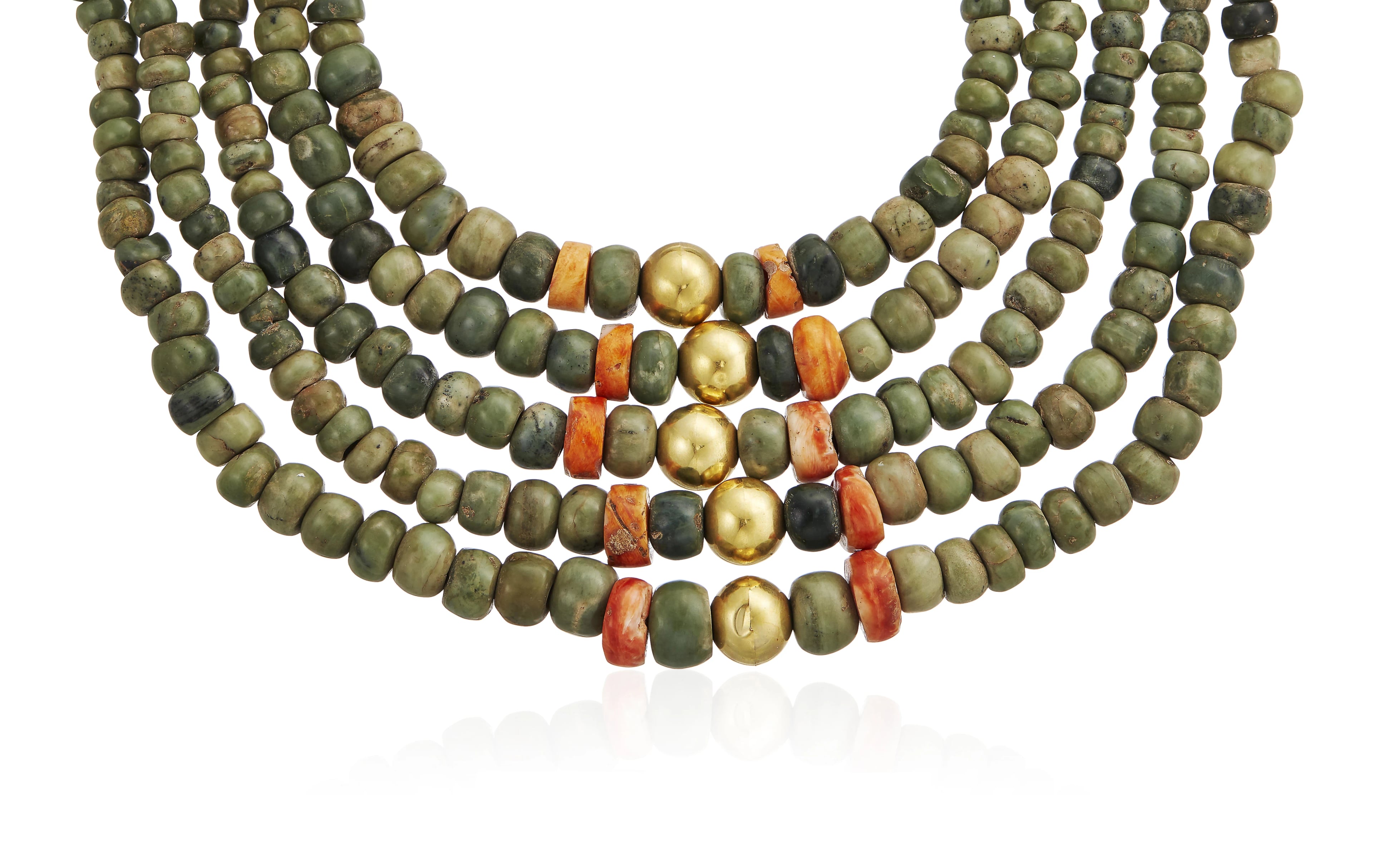
Hardstone and Spiny Oyster Necklace
18k yellow gold