Saves instantly, no account needed. Already a member? Sign in.
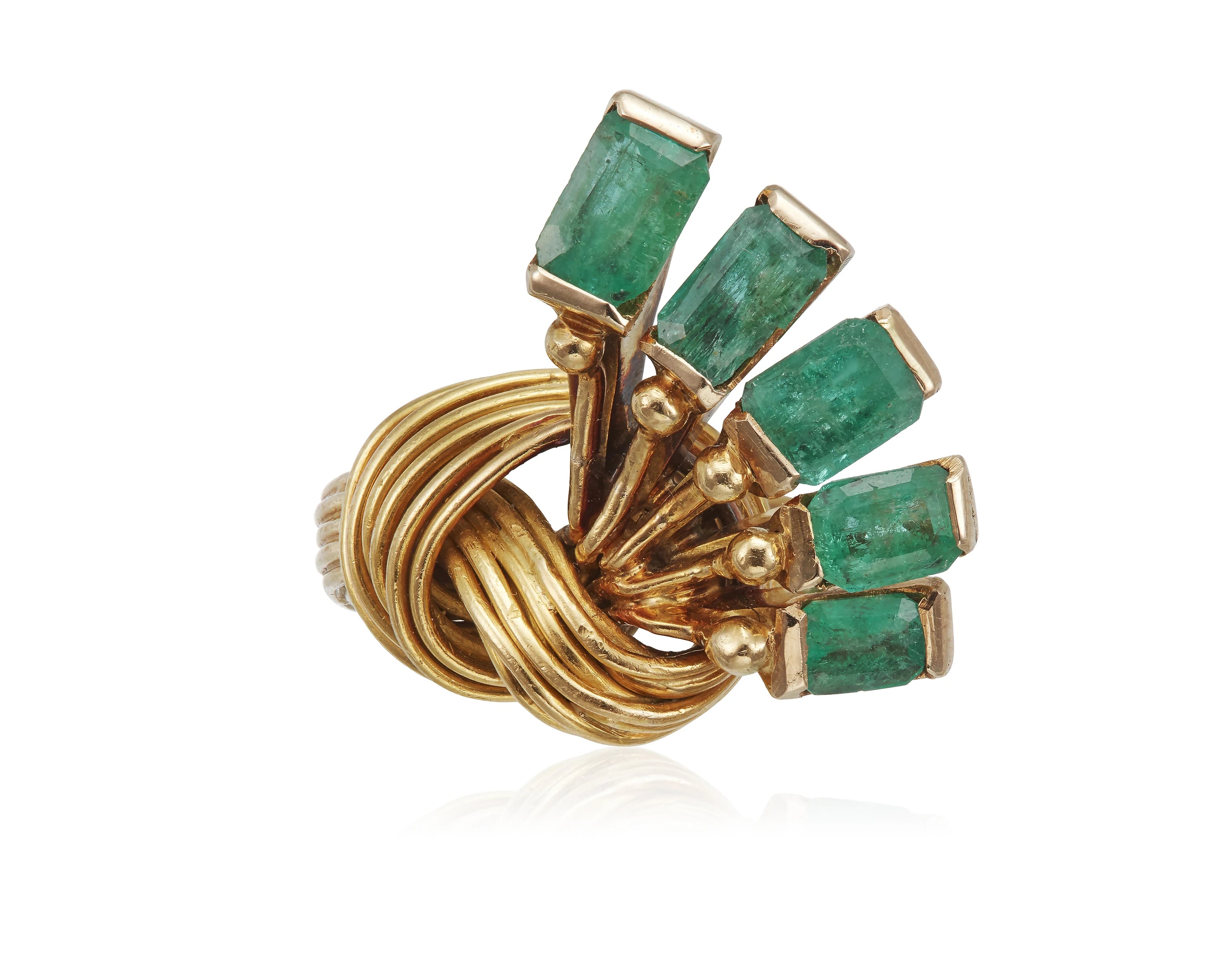
A gold ring by Antonio Pineda is a rare thing. His reputation, and the entire market that has grown up around him, rests on silver: he was the most ambitious of the Taxco modernists in his handling of the metal and the stones set into it, and gold pieces from his workshop surface only occasionally. That alone gives this ring an unusual standing within his output. It also shows, in miniature, the quality that made his name. A twist of heavy gold wire is knotted at the shank and then released upward into a spray of five graduating emerald-set baguettes, each lifted on its own stem and punctuated by a small gold bead, so the stones appear to fan and float free of the body of the ring rather than sit flush against it. That tension between a securely engineered structure and an airborne, weightless effect is exactly the trait for which Pineda is celebrated.
The ring carries the "ANTONIO TAXCO" signature with the crown device, the hallmark Stromberg records as Pineda's own mark (Stromberg, Antonio Pineda, 2008, p. 81). The metal is tested as 18k yellow gold, and the five rectangular emeralds graduate in scale across the fan; the piece has a compact, sculptural presence rather than great width, rising to roughly 2.4 cm at its widest point in a US size 5.75 band. The wire knot at the base is a characteristically Pineda gesture, geometry handled as something organic and alive, and the prong-set, floating stones echo the technique the Fowler Museum singles out in his work, where gems are held securely while achieving a free or floating look.
Pineda was a master silversmith before he was anything else, and he used costly stones more lavishly and set them more skillfully than any of his Taxco contemporaries. To see that sensibility executed in gold, with emeralds rather than the semiprecious stones of his best-known silver, is to see a maker reaching for his most luxurious register. Surviving examples in gold are scarce enough that each one carries weight in understanding the full range of what came out of his taller, and this ring belongs to that small, telling group.
Museum of Mexican Silver. “Emerald and Gold Ring.” Catalog no. MoMS-002094. https://museumofmexicansilver.com/pieces/antonio-pineda-emerald-and-gold-ring
See something wrong with this record? Suggest a correction and the piece details fill in automatically.
Antonio Pineda
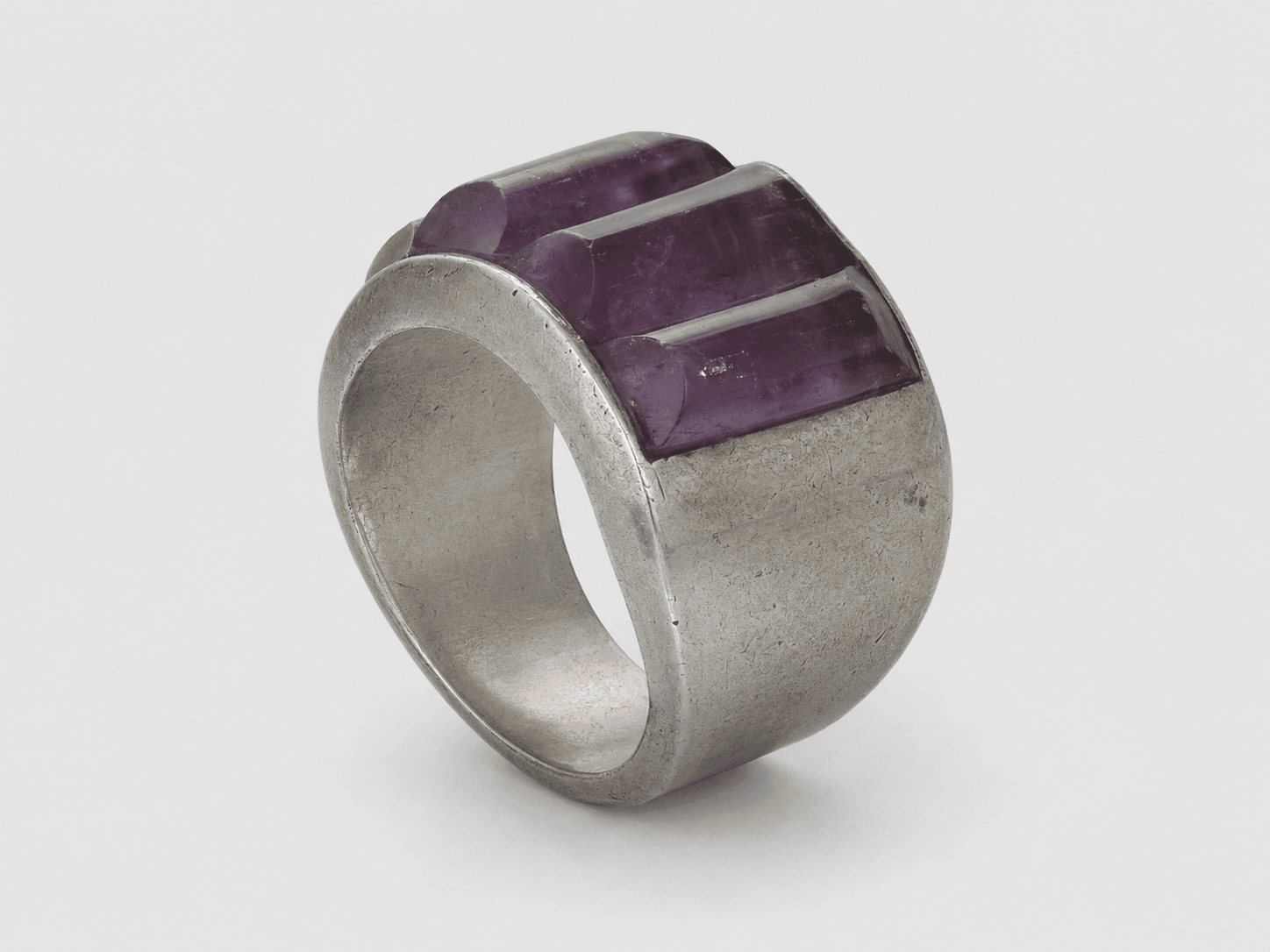
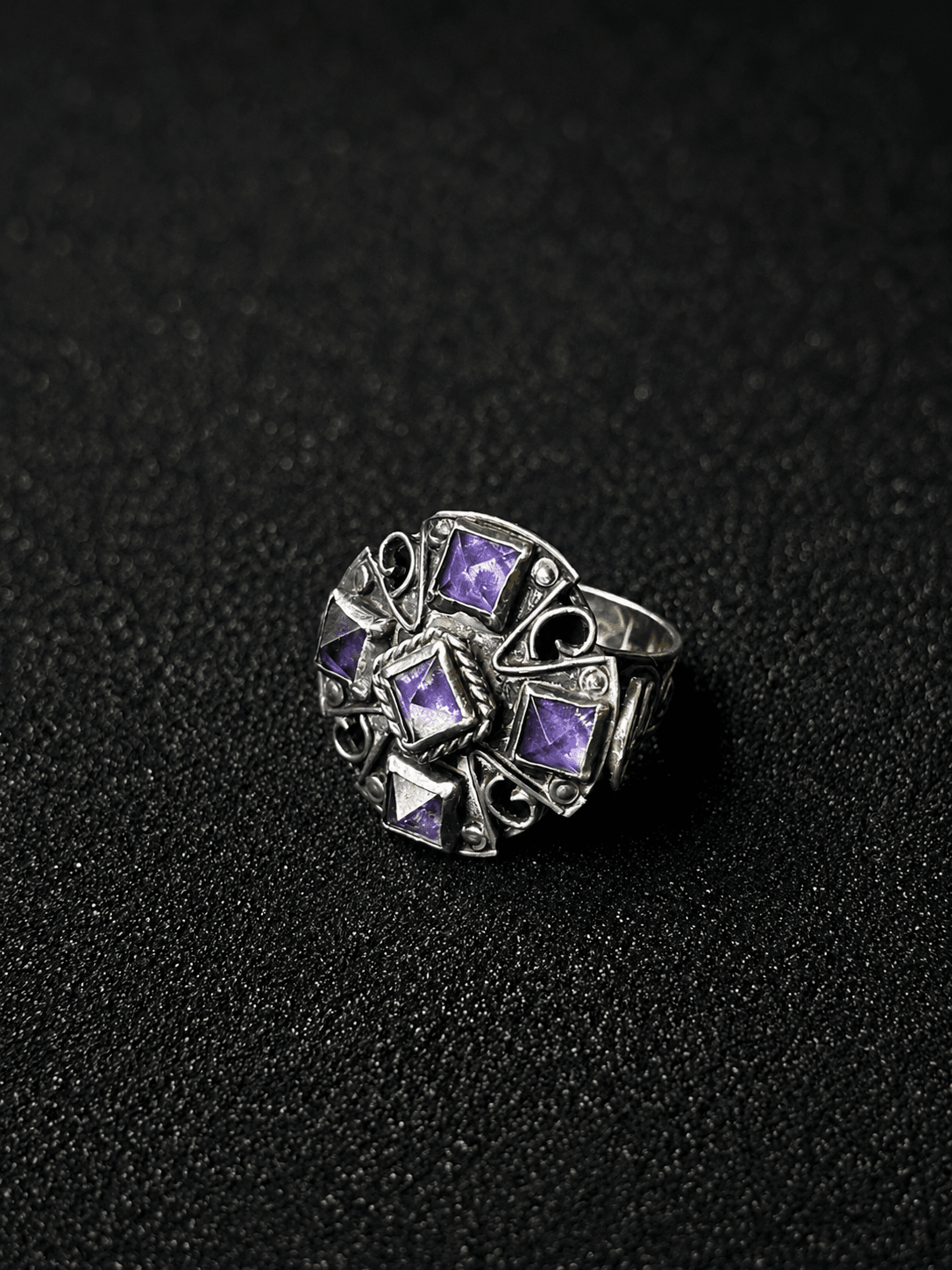
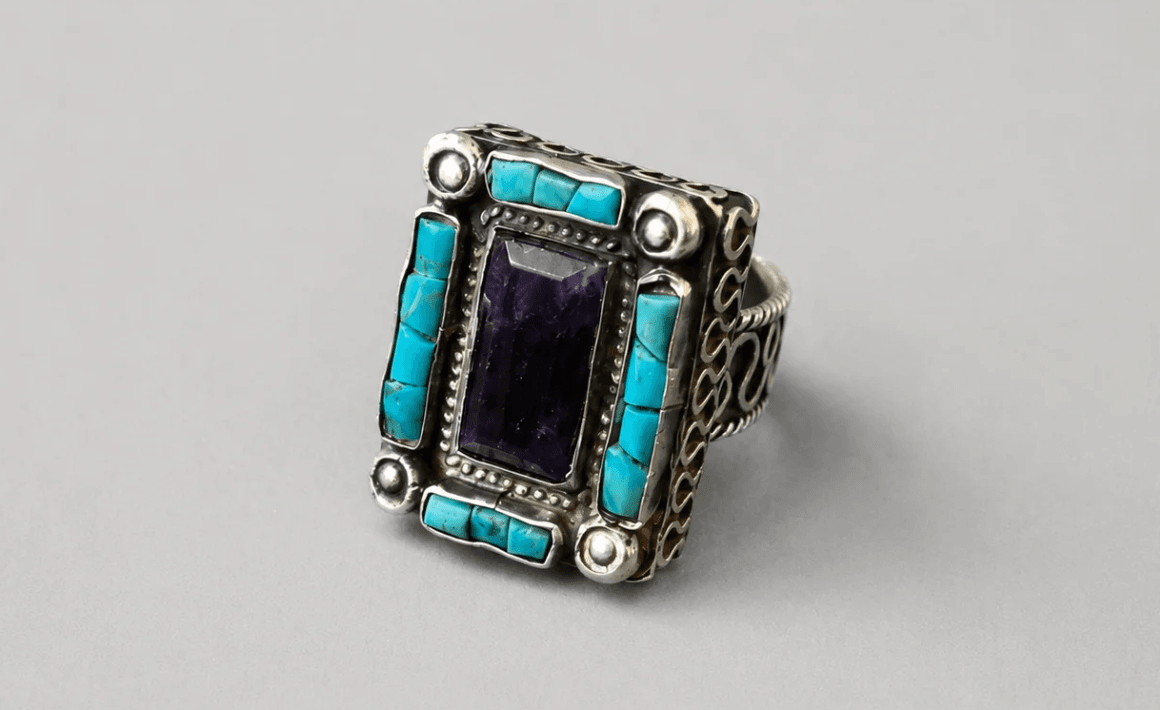
Amethyst Panel Ring
1953 or later
Silver