Saves instantly, no account needed. Already a member? Sign in.
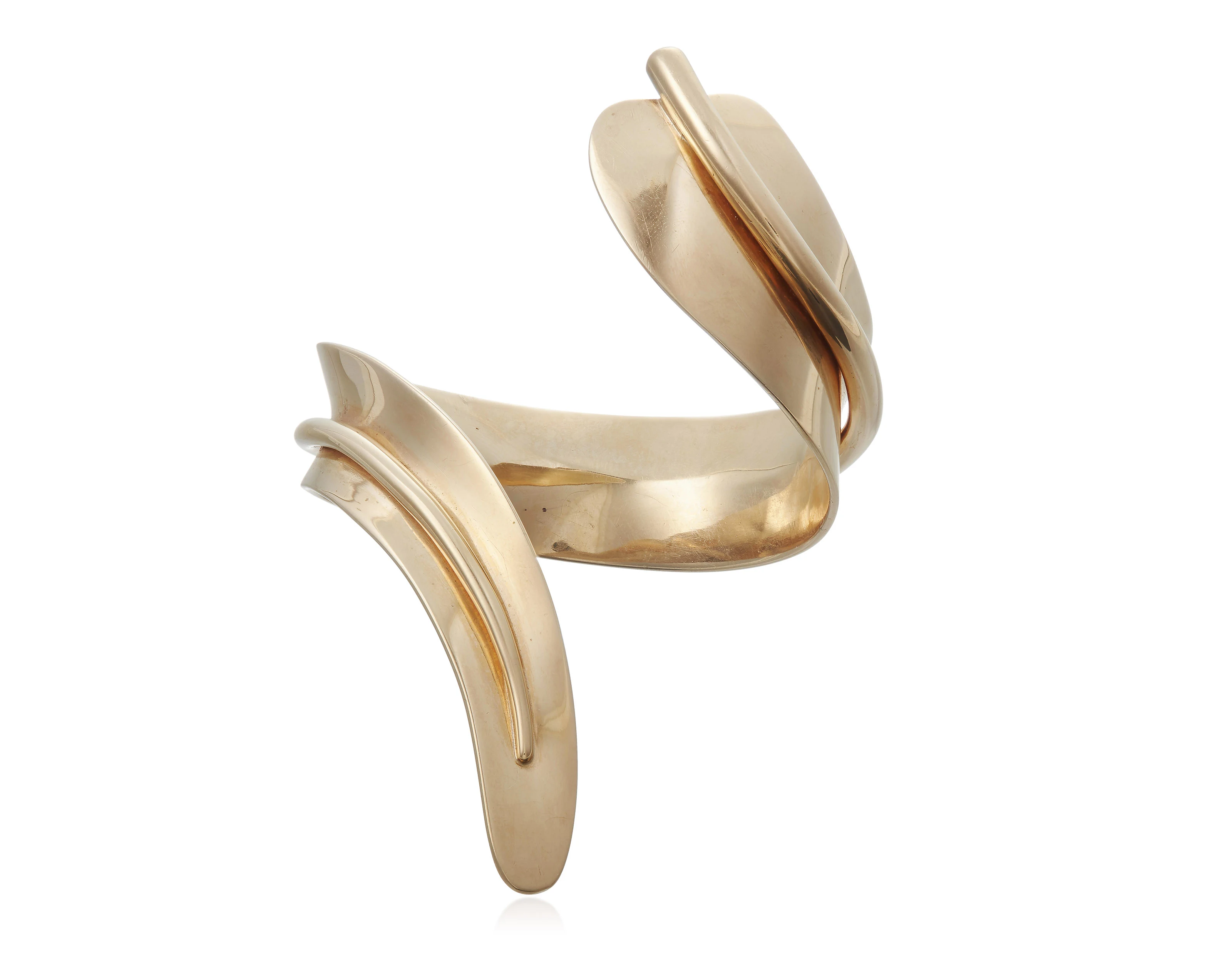
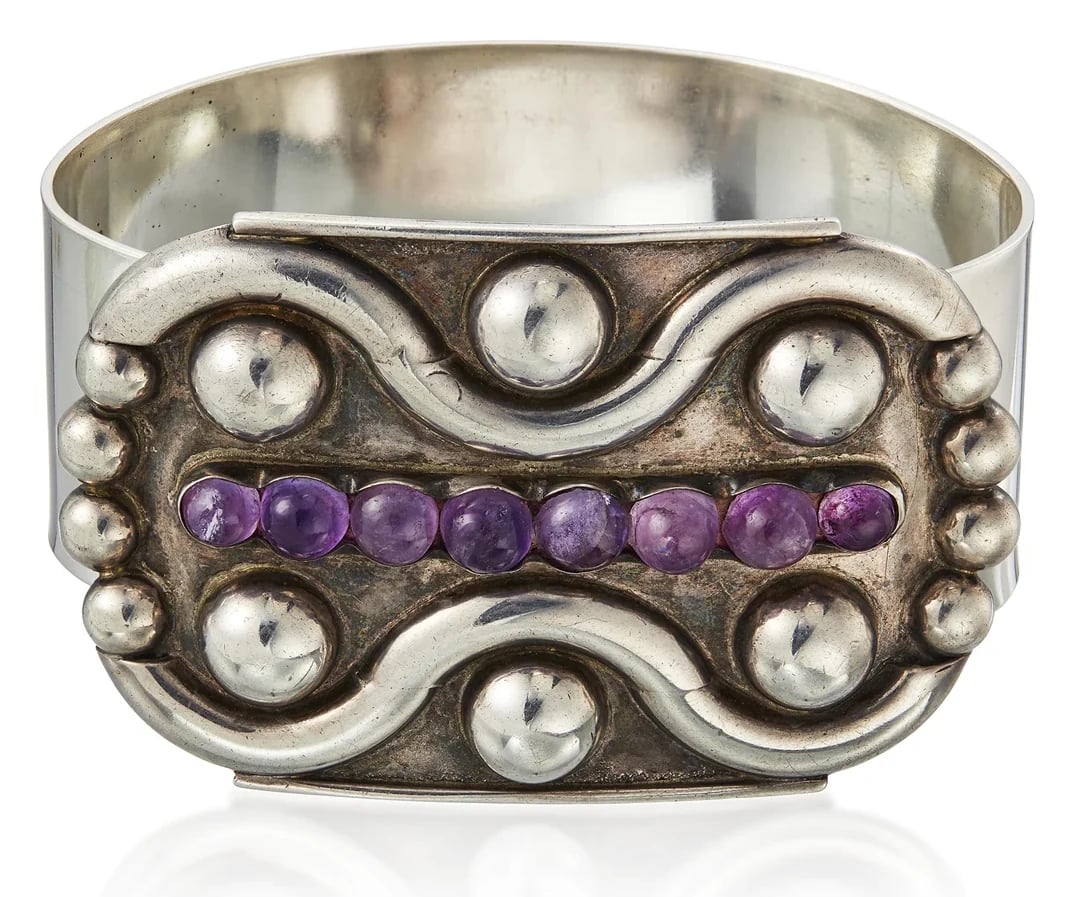
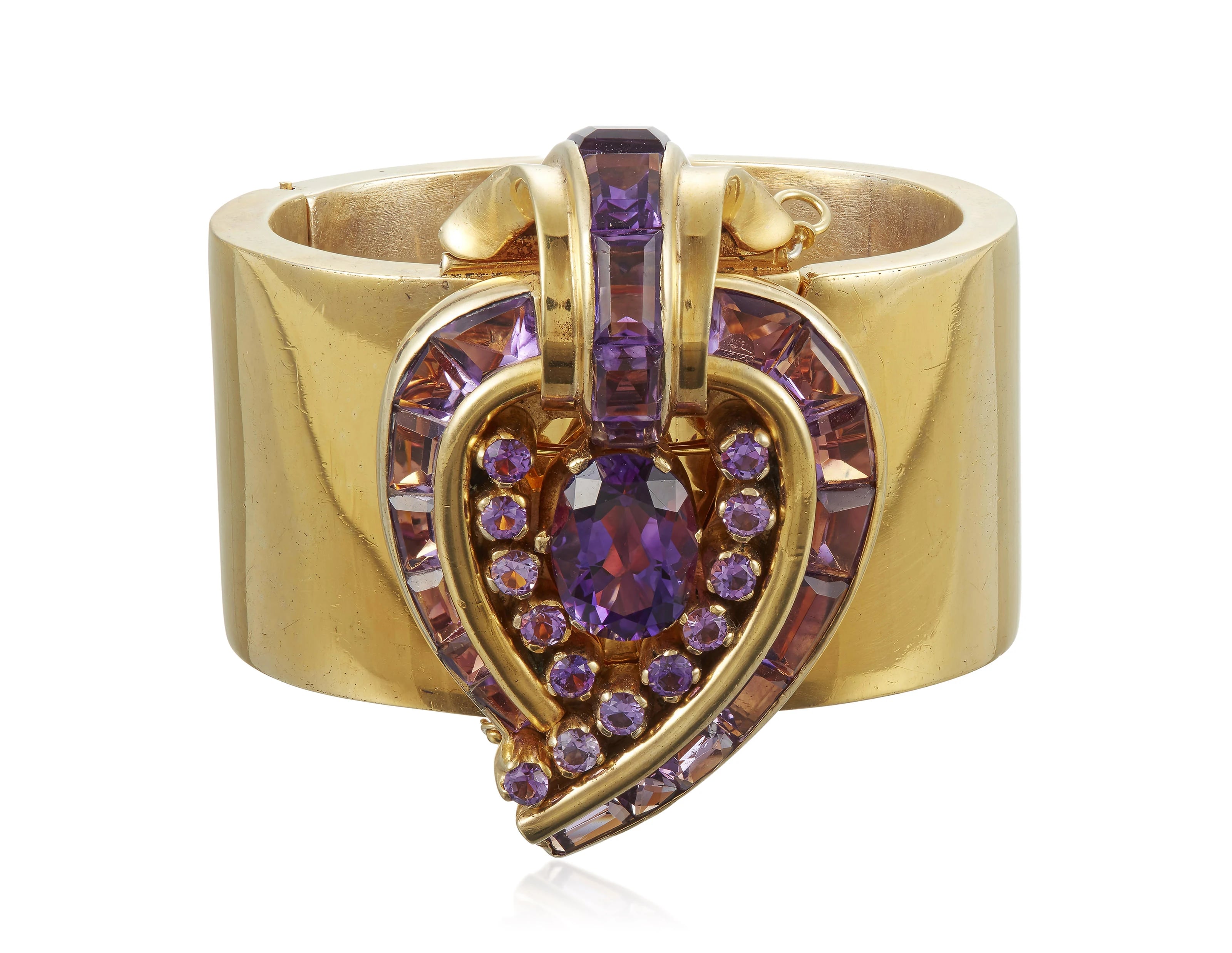
A wide cuff of gilt silver, hinged to open, with a buckle-form clasp built up into a heart of channel-set amethysts that lifts off to be worn on its own: this convertible bangle-and-brooch belongs to the narrow, telling window when Antonio Pineda was signing "Jewels by Antonio," a mark dated to roughly 1949 to 1953 and one that predates the crowned "Antonio" hallmark by which he is usually known. It is an early piece, made before the lean, sculptural modernism that later defined him, and it shows him working in the warm, theatrical retro idiom that made Taxco silver a luxury during the postwar years. As such it is a useful document of how a designer arrives at a style rather than a specimen of the style itself.
The object reads the period plainly. The broad gilded band, the buckle motif, the heart packed with rectangular and round amethysts in graduated rows, the gold tone standing in for the unobtainable or simply unfashionable yellow gold of wartime and just after: all of this is the Hollywood-facing glamour that drew stars like Bette Davis, Rita Hayworth, and Marlene Dietrich to Taxco in exactly these years, when the town had become a vacation favorite for the film set. The marks support an early dating. The bangle is struck SILVER, MEXICO, and TAXCO, without the .970 fineness stamp, the eagle assay number, or the crowned Antonio device that run through his mature production, all of which appear consistently in the documented bracelets of the mid-1950s and after. The amethysts are set thickly and frontally rather than in the spare, architectural mounts of his later work, and the construction is heavy and substantial in the hand. The convertibility, a bracelet that yields a brooch, is itself a retro conceit of versatility aimed at a dressing-table clientele.
What gives the piece its interest is precisely that it sits before the turn. Pineda apprenticed in the Spratling orbit and worked for Los Castillo before founding his own taller, and within a few years of this bangle he would push toward the bold, clean, hollow-built abstraction that earned him a 2008 retrospective at the Fowler Museum at UCLA and a place at the center of Mexican silver modernism. This bracelet catches him still speaking the older language of buckles and hearts and massed colored stones. It is not a major modernist statement, and it should not be read as one, but as an early, well-made, fully marked example of the "Jewels by Antonio" period it carries real documentary value for understanding how one of the school's most important figures got from postwar glamour to the work that made his name.
Museum of Mexican Silver. “Gilt Silver and Amethyst Brooch Bangle Bracelet.” Catalog no. MoMS-002089. https://museumofmexicansilver.com/pieces/antonio-pineda-gilt-silver-and-amethyst-brooch-bangle-bracelet
See something wrong with this record? Suggest a correction and the piece details fill in automatically.
Antonio Pineda
Native Warrior Silver Cuff Bracelet
Silver