Saves instantly, no account needed. Already a member? Sign in.
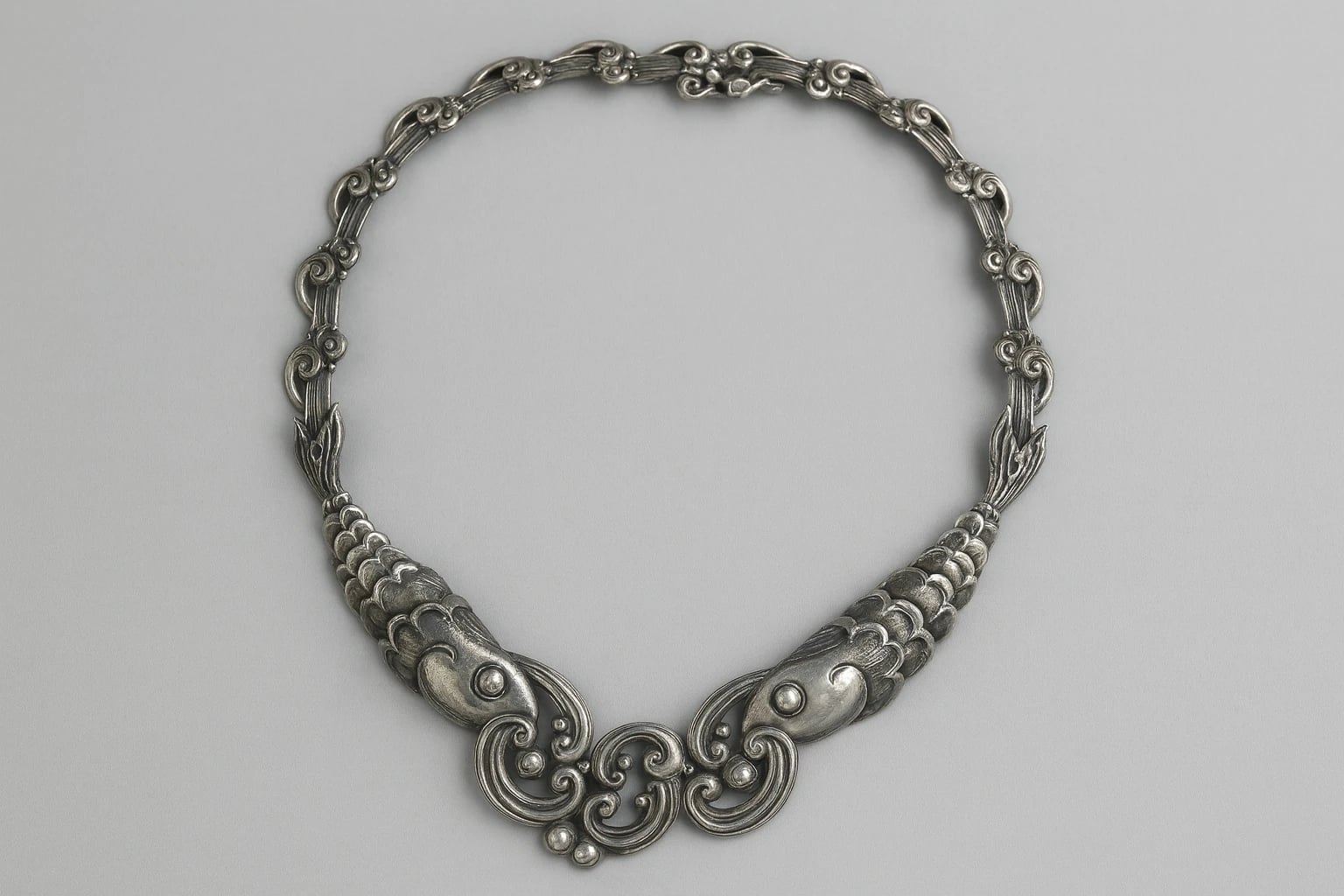
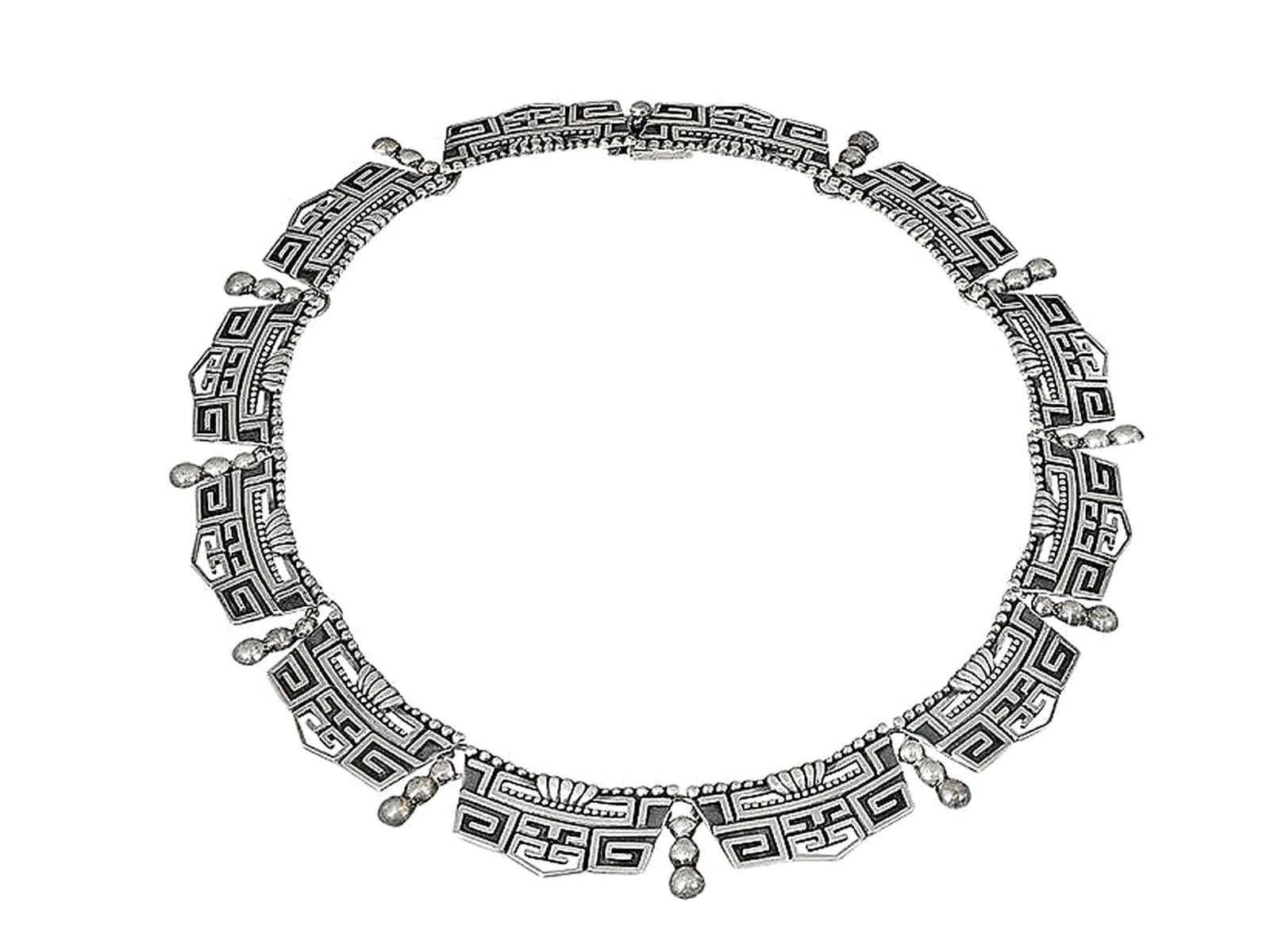
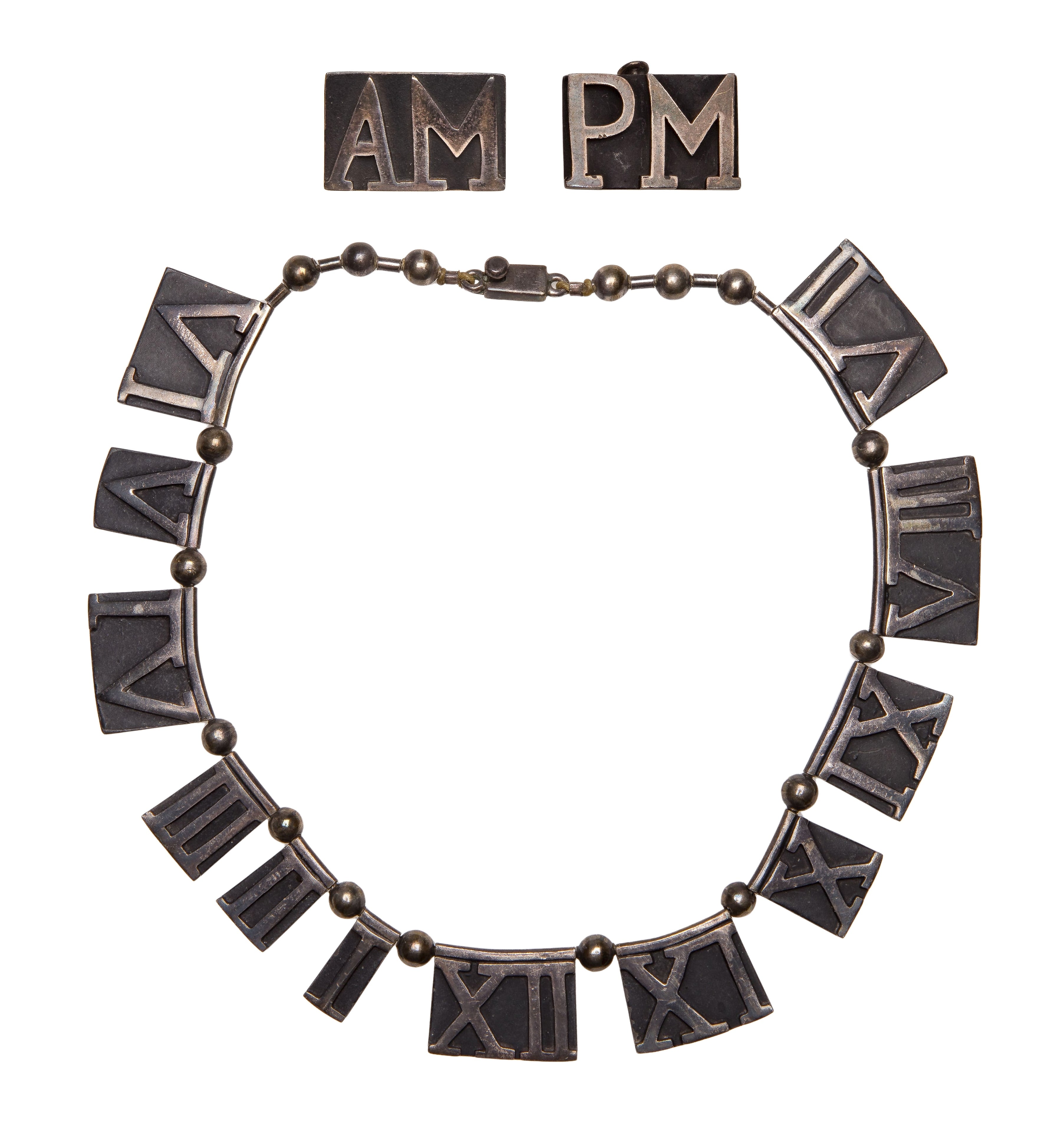
Margot de Taxco design 5201 belongs to the numbered sequence that Margot van Voorhies developed after she opened her own shop, and its number places it early within her output rather than among the enamel work for which she became best known. The design falls into the band of sterling designs that carry her 5100 and 5200 numbers, the range Hougart records on silver rather than on the champlevé enamel she began producing in 1955. As a necklace worked in sterling with enamel, 5201 sits at the point where her metalwork and her color work meet, before enamel came to dominate the identity of the shop.
The pairing of silver and enamel is the design's central concern. Margot's enamel was champlevé, in which recessed cells cut or built into the metal are filled with vitreous color and then leveled, so that the enamel reads as inlay set flush within a silver ground rather than as applied surface. In a necklace this construction asks the metal to do two things at once: to carry the color in stable, defined fields, and to remain flexible enough to follow the neckline. The result depends on how the enameled elements are jointed and repeated along the length, and on the balance between reflective silver and the opacity or translucency of the color she chose. Where the sterling frames the enamel, the two materials define each other, the metal giving edge and structure to color that would otherwise have no boundary.
Margot van Voorhies came to her own shop with an unusual foundation. Born in the United States, she designed many of the early pieces for Los Castillo, the taller founded by Antonio Castillo and his brothers, before that marriage ended in 1946 and she opened Margot de Taxco in 1947. Her enamel work was distinctive enough that Hougart notes other Taxco makers, Castelan among them, produced sterling-and-enamel pieces reminiscent of hers. That observation measures her influence: her handling of color on silver became a recognizable standard within Taxco. Design 5201 shows the sterling foundation from which that enamel reputation grew, the craft of jointed metalwork that later carried her champlevé.
The recorded marks for Margot de Taxco place designs in the 5100 through 5600 range across roughly three decades, with the enamel numbers concentrated from 1955 onward, and the reference also documents a crude counterfeit mark, evidence that her name carried enough value to be forged. Design 5201 records a specific moment in her practice, a silver-and-enamel necklace numbered near the start of her independent sequence. It documents how her signature material relationship took shape in wearable form, and it preserves the early stage of a body of work whose later enamel has too often stood in for the whole.
Museum of Mexican Silver. “Design 5201 Necklace.” Catalog no. MoMS-001052. https://museumofmexicansilver.com/pieces/margot-necklace-5201
See something wrong with this record? Suggest a correction and the piece details fill in automatically.
Design 5240 Necklace
Sterling silver