Saves instantly, no account needed. Already a member? Sign in.
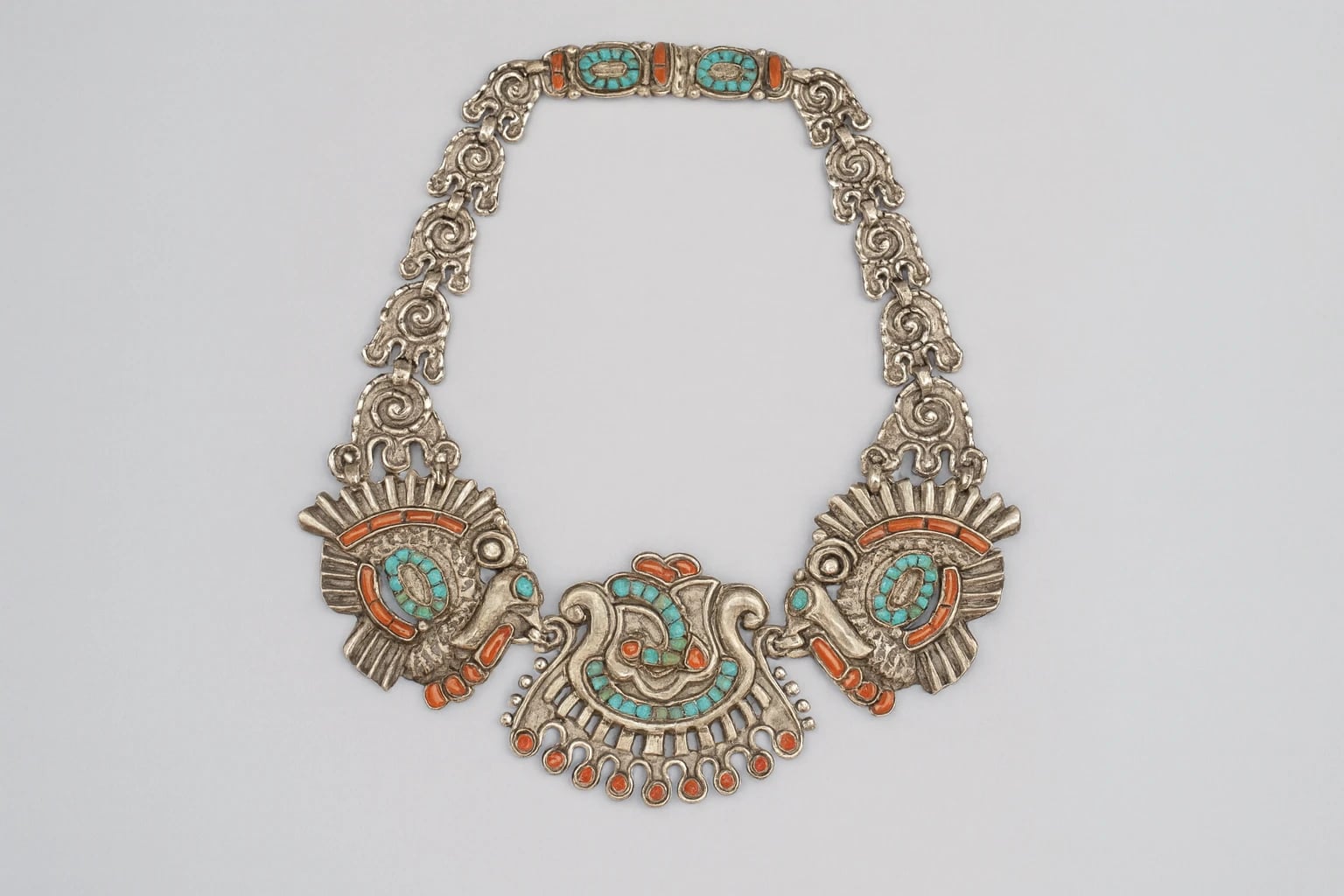
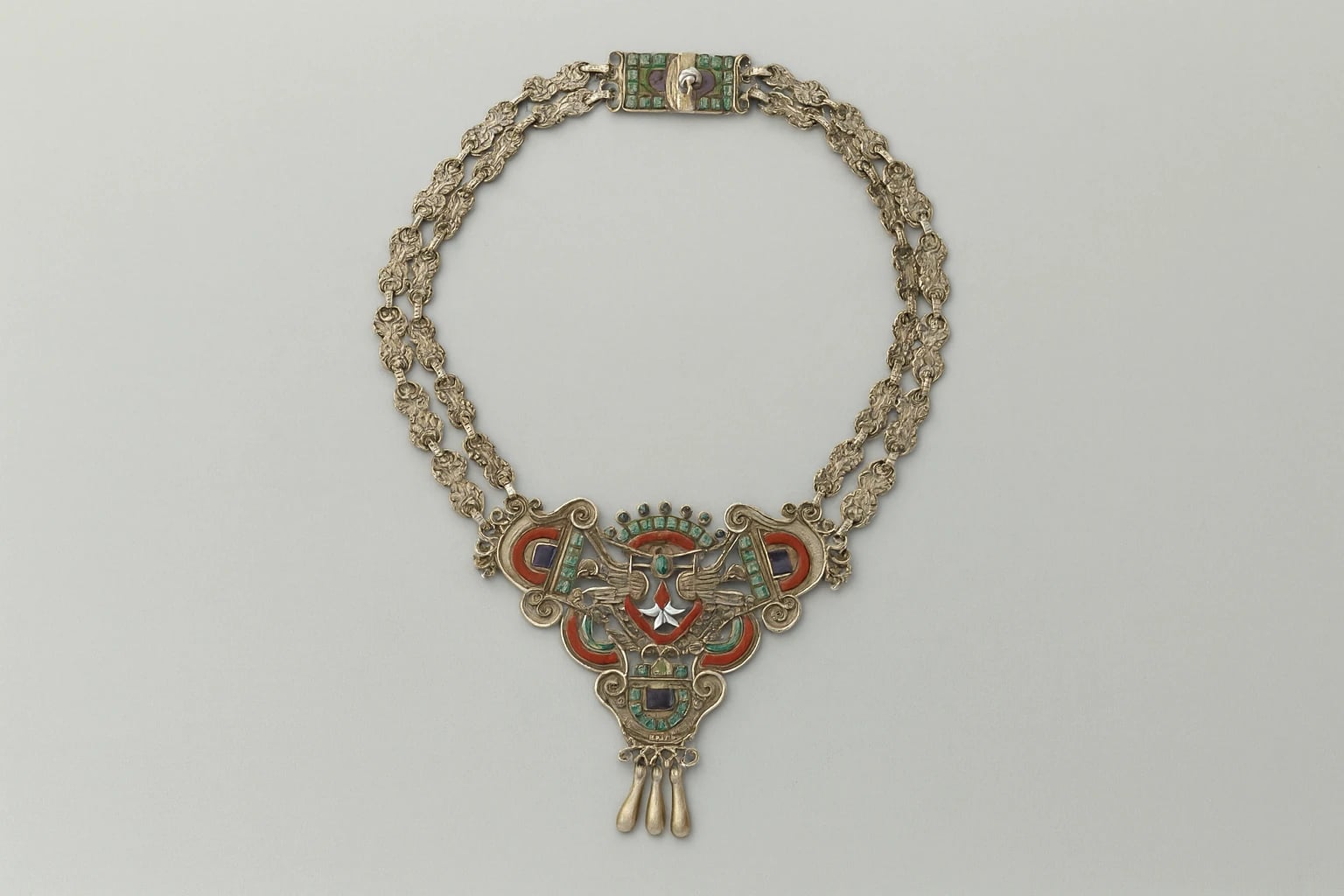
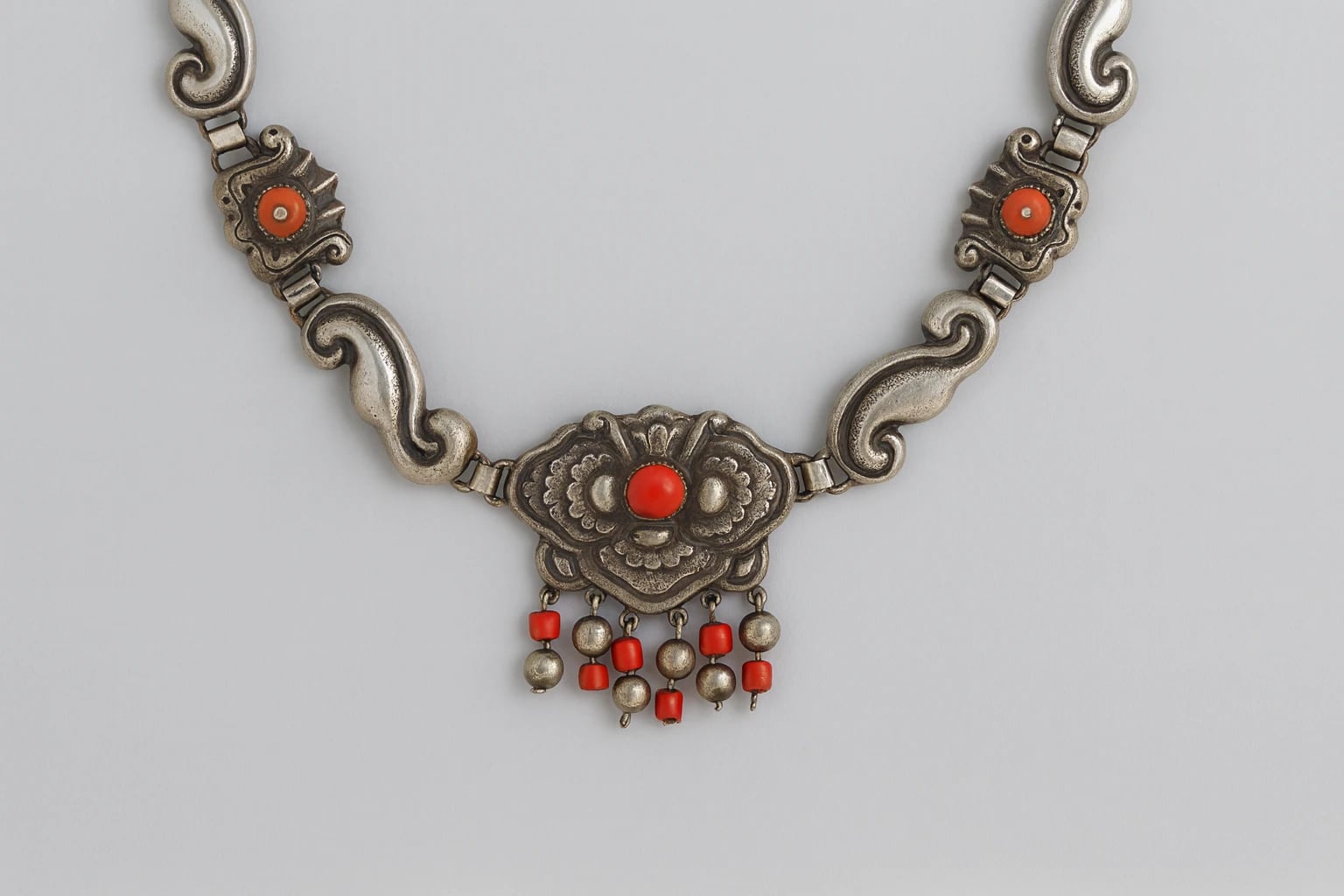
Coral set against silver is one of the recurring signatures of the MATL workshop, and on a necklace it carries the warm color and dense ornament that collectors associate with the mark. The piece belongs to the shop's polychrome tradition, in which carved and set stones animate the baroque silverwork.
Colored-stone setting was a defining craft of the taller. Ricardo Salas, who worked beside Matilde Poulat from boyhood, was noted for perfecting the carving of coral, turquoise, and other stones used in the jewelry (Morrill, p. 216). The workshop's output was vast, Salas recalled some three thousand types of jewelry, and coral pieces were a steady part of it (Morrill, p. 216).
MATL jewelry emerged from the post-Revolution cultural moment, when Mexican artists rejected European subjects for Pre-Conquest and pueblo sources. Poulat introduced the "MATL" mark in 1934 and won international notice in 1941, when she was invited to show in an exhibit of Latin American silver at the Pan American Union in Washington (Morrill, p. 216).
Coral necklaces are among the more frequently encountered MATL forms, making them an accessible entry point into the workshop's colored-stone production.
Museum of Mexican Silver. “Scroll-Link Fringe Necklace with Coral.” Catalog no. MoMS-001419. https://museumofmexicansilver.com/pieces/matl-coral-necklace
See something wrong with this record? Suggest a correction and the piece details fill in automatically.