Saves instantly, no account needed. Already a member? Sign in.
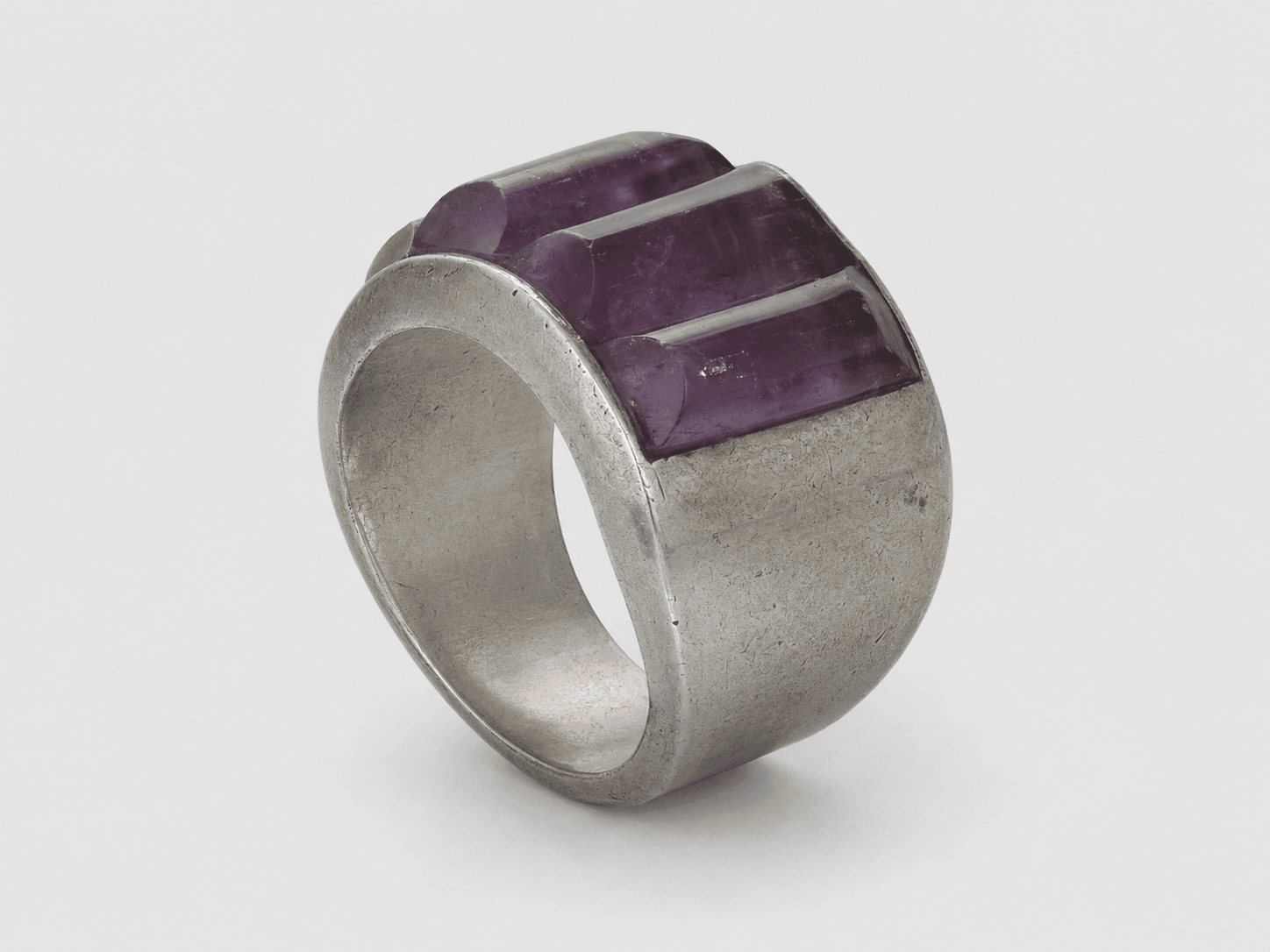
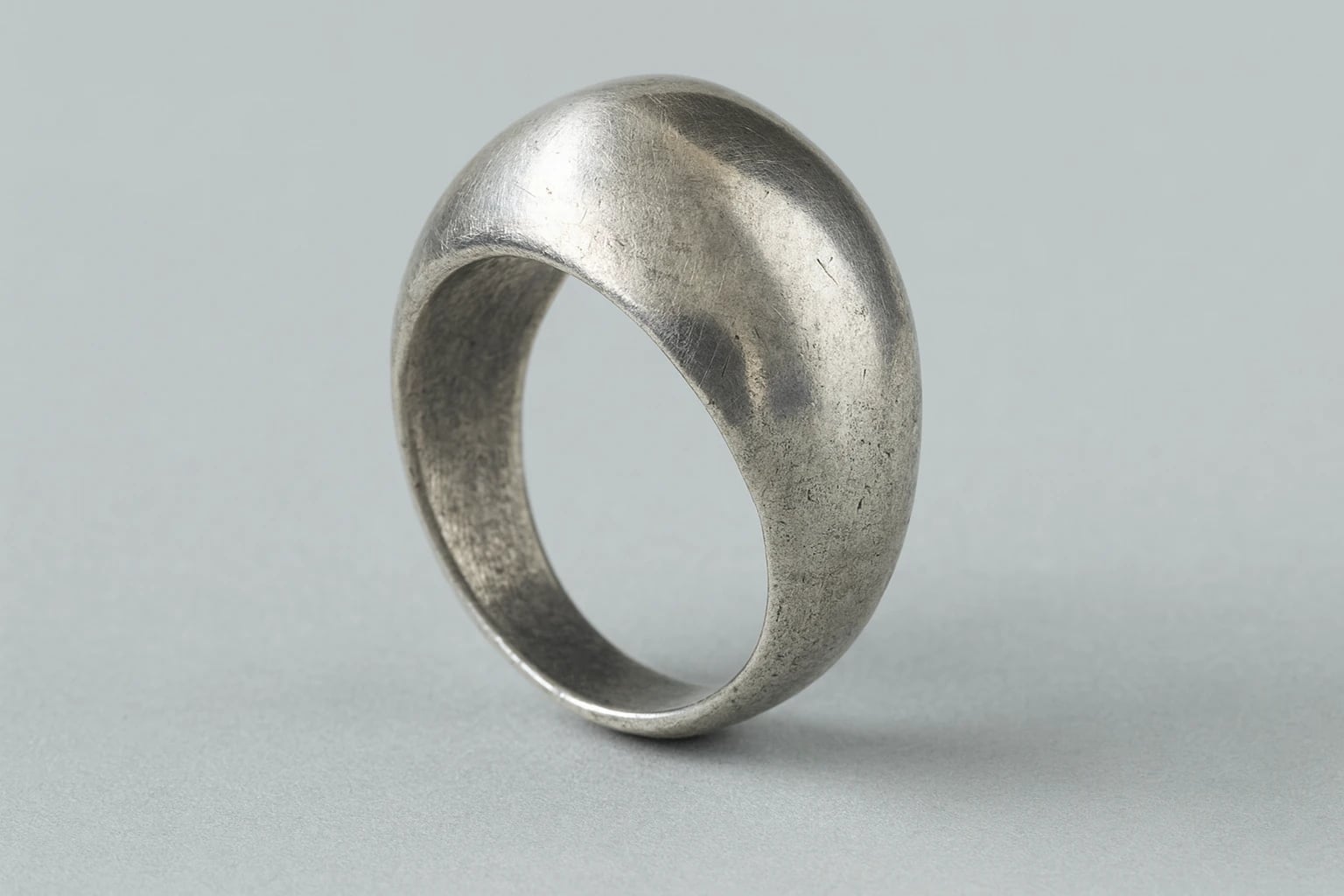
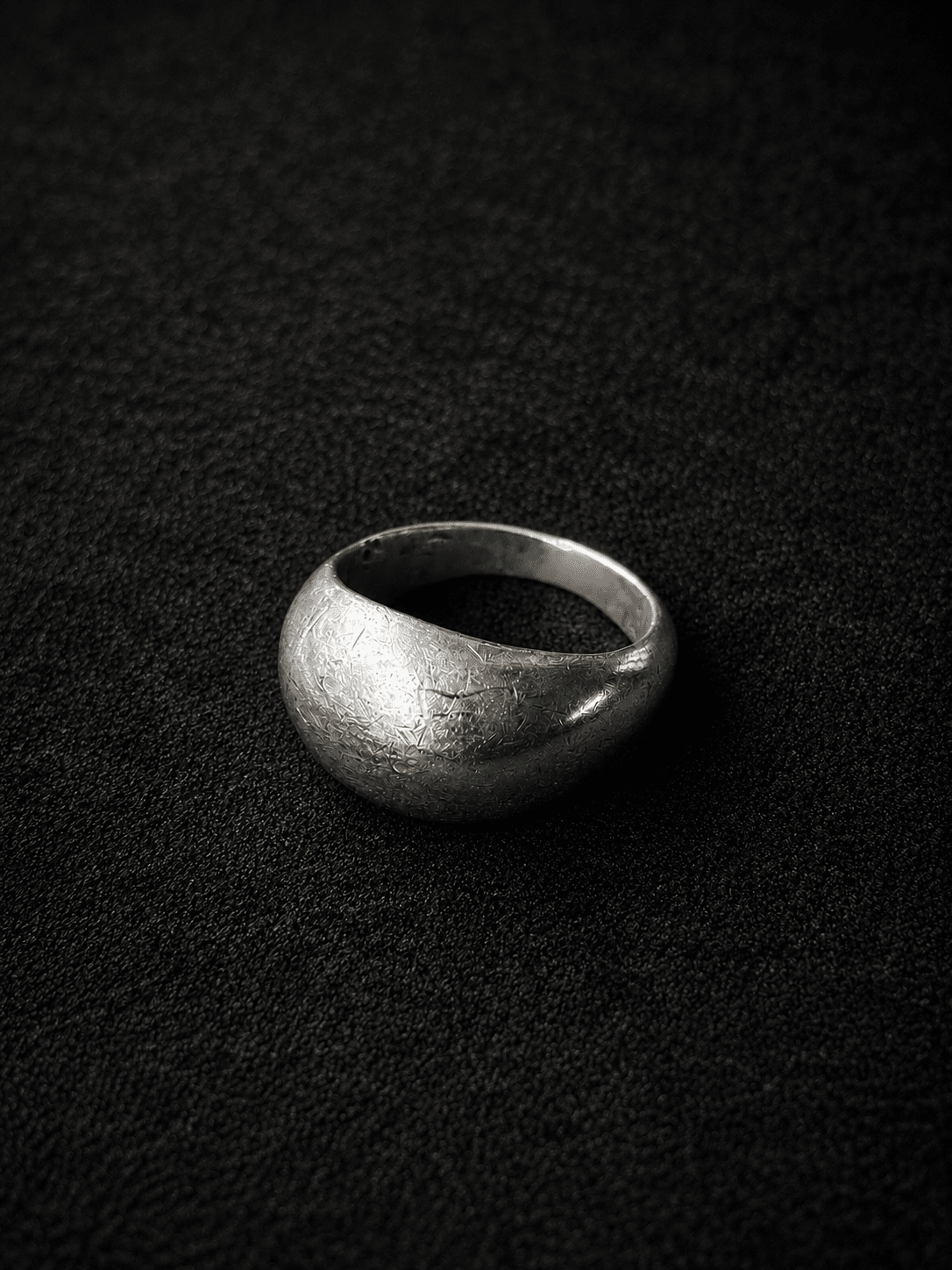
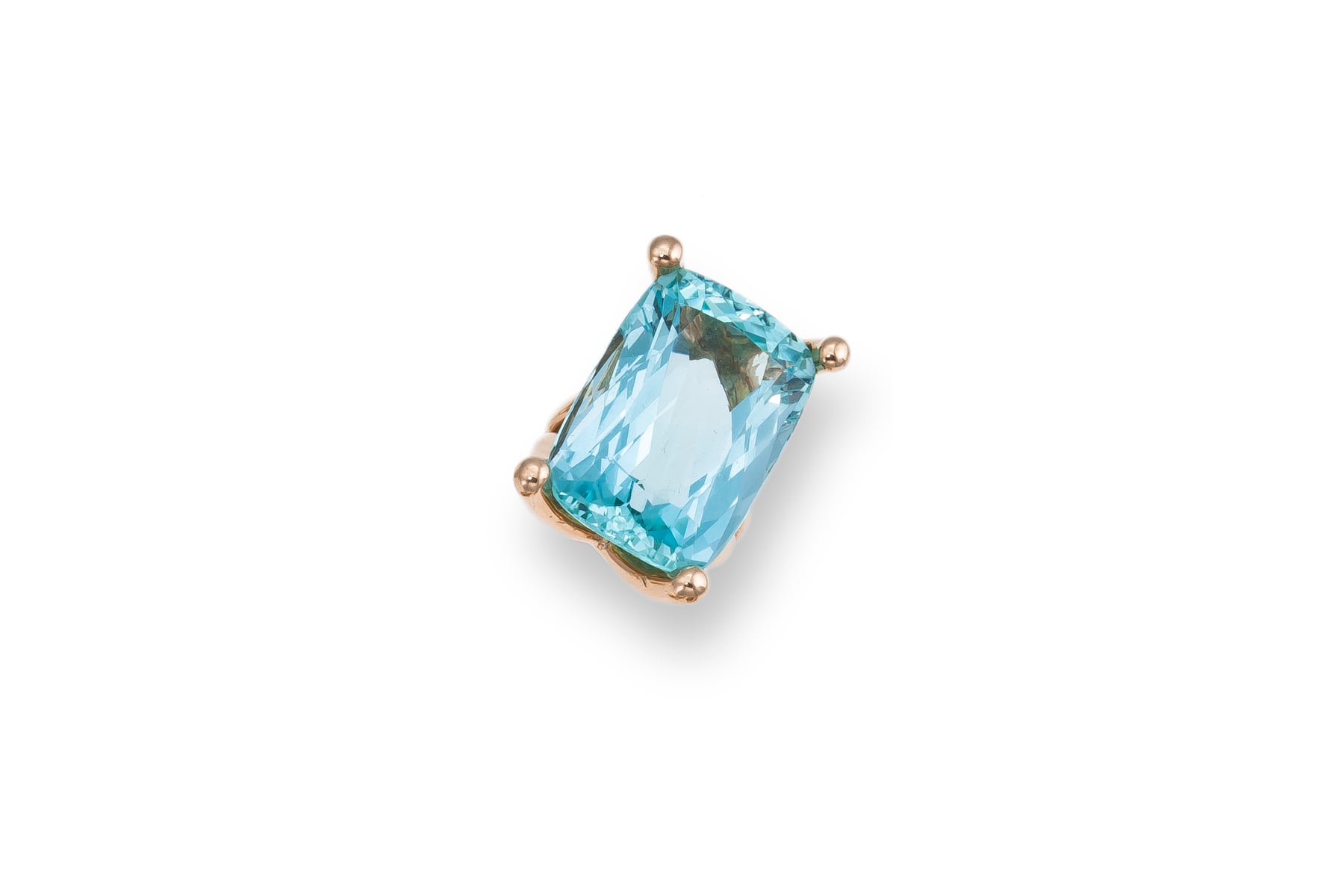
A single aquamarine, cool and transparent, sits at the center of this ring by Antonio Pineda, and the silver around it does very little to compete. Pineda organizes the design around the stone's clarity, letting the pale blue-green crystal carry the color while the metal provides structure and a frame that reads more as architecture than as ornament. This is a characteristic move in his mature jewelry: restraint in the setting, confidence in the material, and a willingness to let one well-chosen stone govern the entire object.
Aquamarine, a beryl, ranges from near-colorless to a soft marine blue, and its value in a design like this comes from transparency rather than saturation. Pineda uses that transparency deliberately. Where a denser stone would sit on the surface, the aquamarine draws light through it, so the ring changes as the hand moves and the color deepens or thins with the angle. The silver setting supports the stone without crowding it, and the contrast between the reflective, opaque metal and the clear crystal is the essential relationship the ring is built upon. Pineda understood the difference between a stone that decorates and a stone that becomes the subject, and here he treats the aquamarine as the subject.
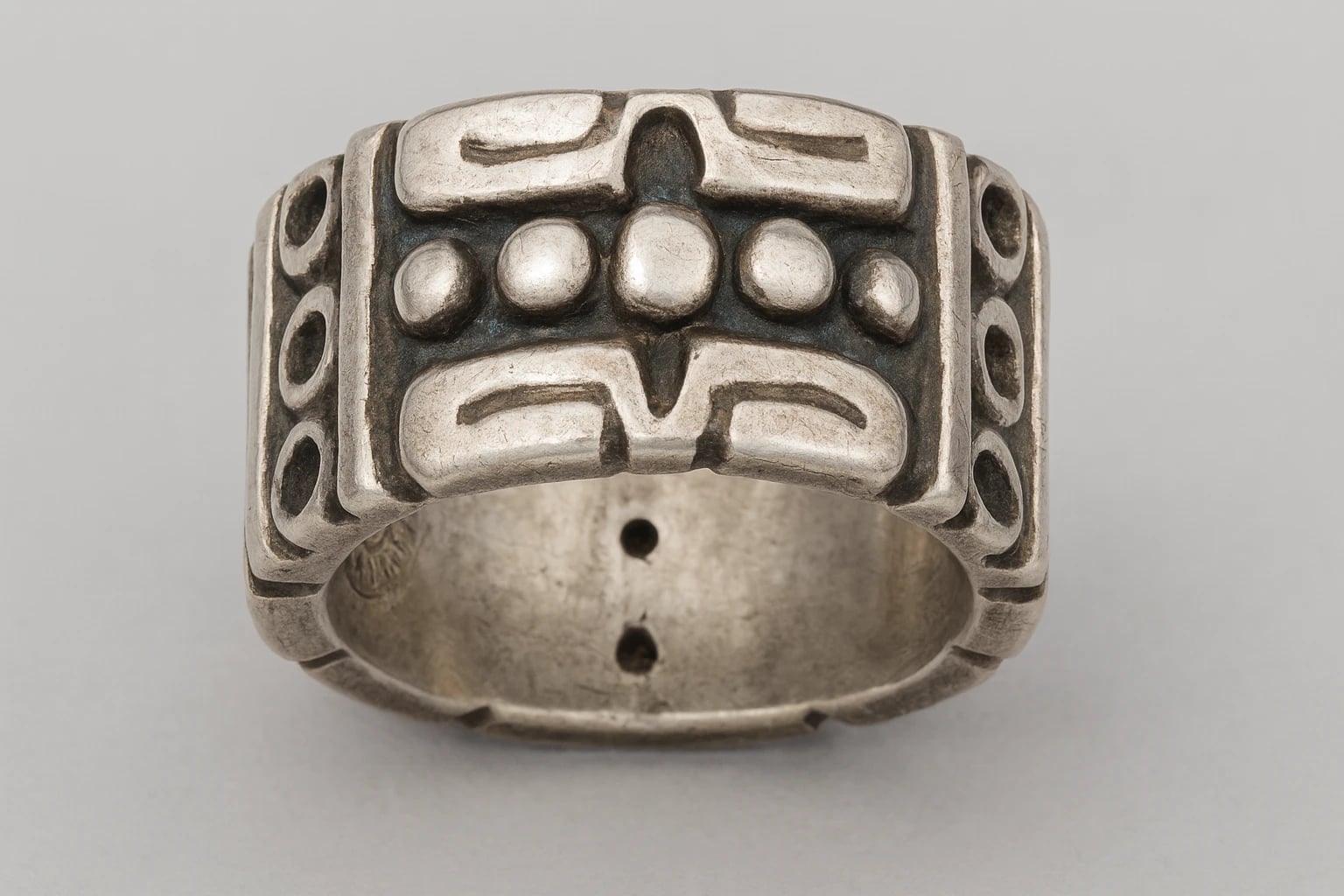
Pineda worked at the head of one of Taxco's most ambitious talleres, where he conceived designs that master silversmiths then executed in metal, marking their own work alongside his. His crown hallmark reading "Antonio" with "Taxco," used from about 1953 onward, identifies the shop's mature period, when eagle number 17 was assigned to him and his rings carried inventory numbers in his own system. That structure, a designer directing skilled maestros such as Fortino Mota and Filiberto Gómez, allowed Pineda to pursue clean, resolved forms in quantity without surrendering design control. The reduction visible in this ring, where the metal is pared back to essentials, belongs to that phase of his practice and to the broader modernist current within the Mexican silver renaissance that valued clarity of form over applied decoration.
Among the tallers that emerged from Taxco's mid-century silver economy, Pineda's is distinguished by exactly this kind of material discipline, the pairing of a fine transparent stone with a spare silver setting that trusts the viewer to see the stone. The ring records how a leading Taxco designer approached color, transparency, and the relationship between stone and metal, and it shows the modernist restraint that separated his work from more heavily ornamented Taxco production of the same years.
Museum of Mexican Silver. “Silver and Aquamarine Ring.” Catalog no. MoMS-001925. https://museumofmexicansilver.com/pieces/pineda-silver-and-aquamarine-ring
See something wrong with this record? Suggest a correction and the piece details fill in automatically.
Antonio Pineda
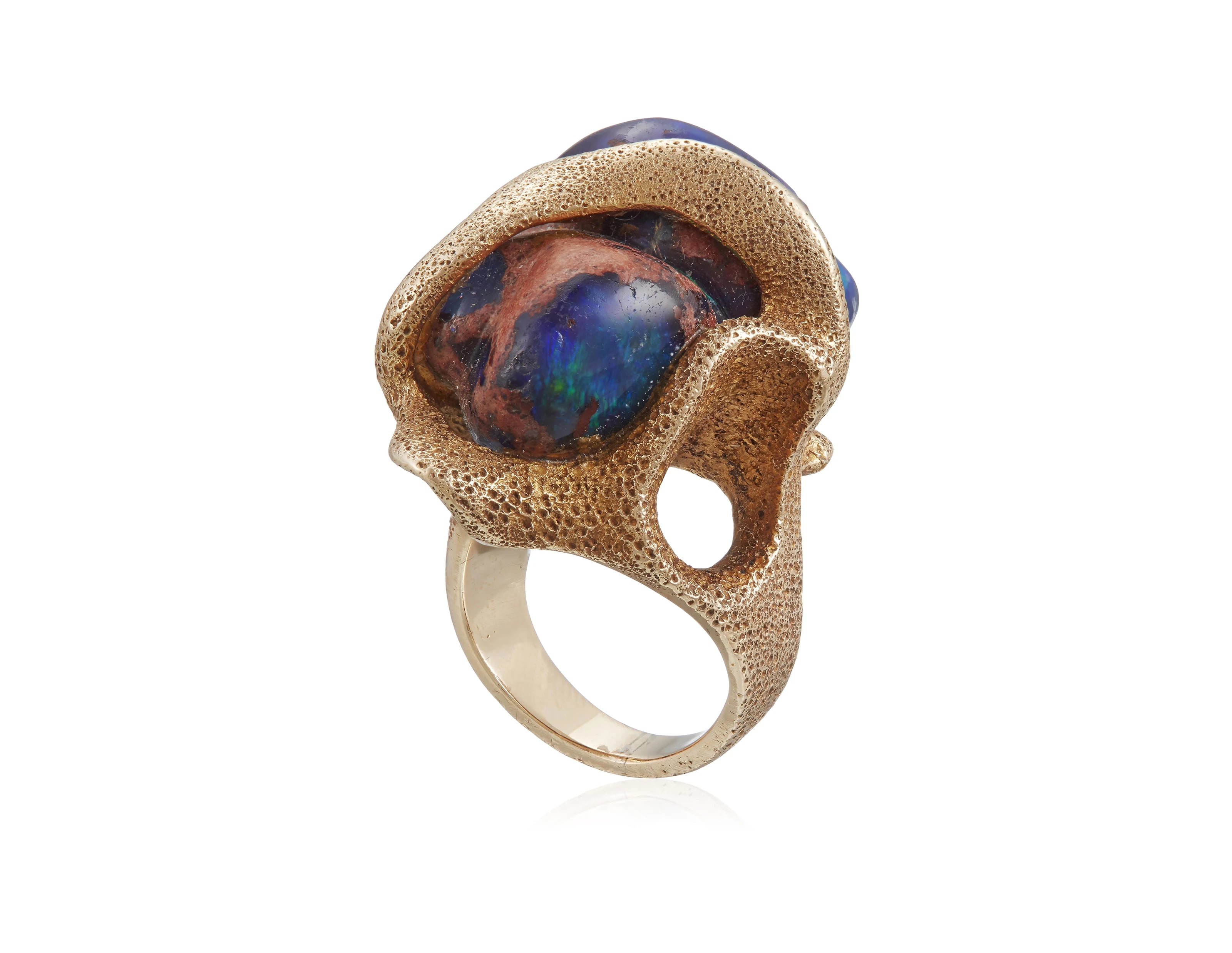
Opal and Gold Ring
14k yellow gold