Saves instantly, no account needed. Already a member? Sign in.
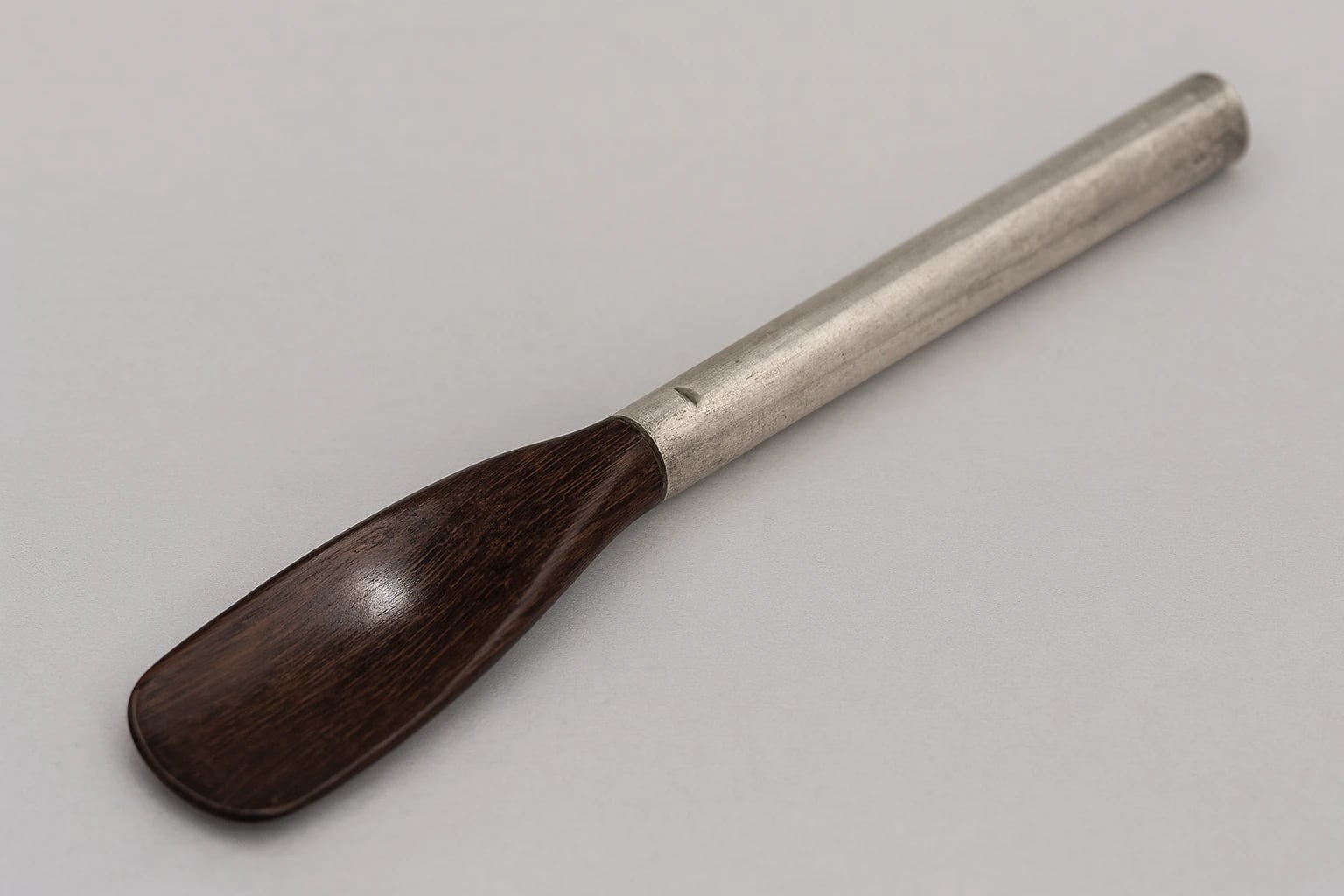
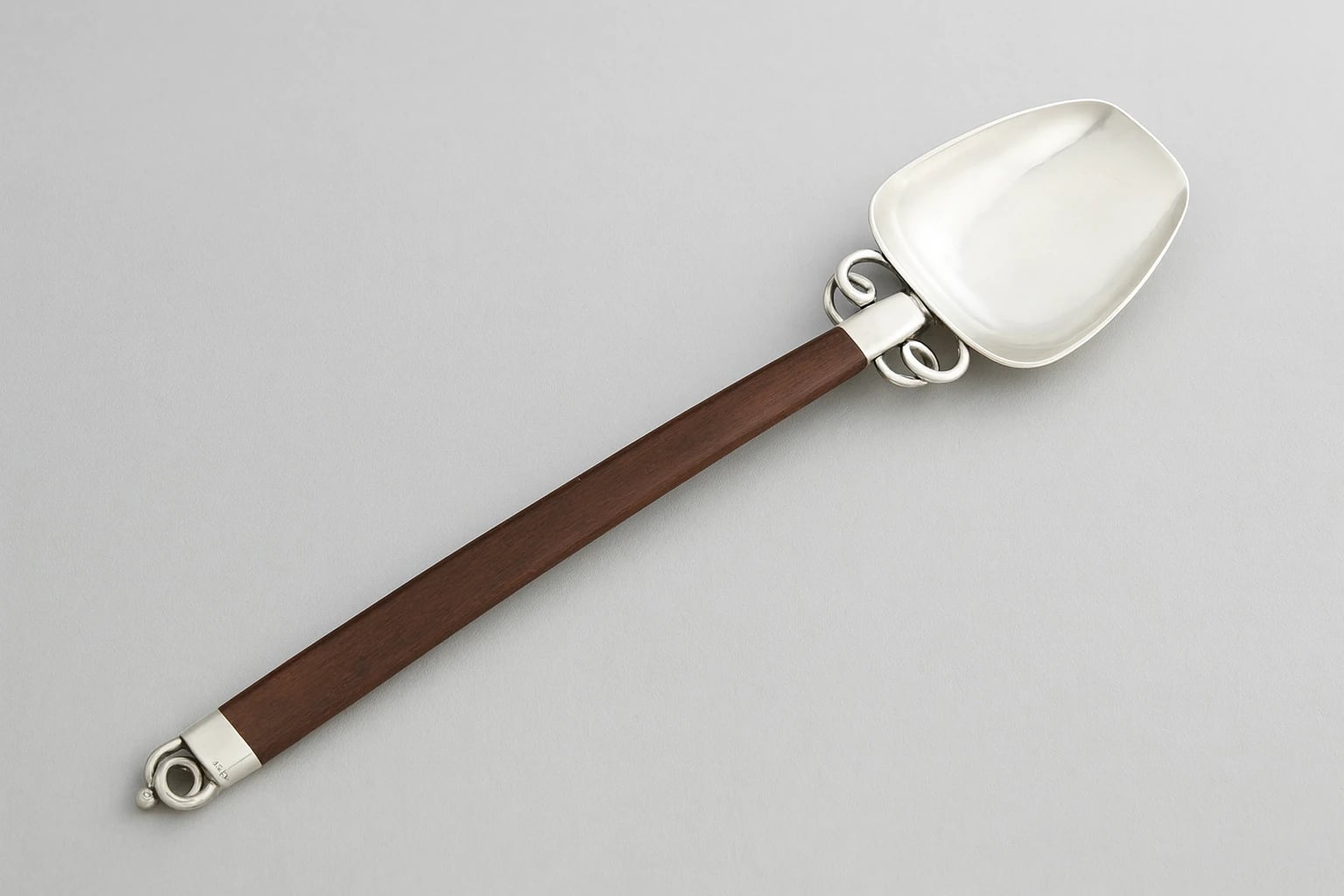
A serving spoon that treats a rosewood handle and a silver bowl as equal partners rather than treating the wood as a substitute for costlier metal. The bowl is silver, wide and shallow in the way a salad server needs to be, and the long handle is turned from rosewood and finished at the end with a silver cap. That cap is the detail that organizes the whole object. It closes the wooden shaft with a note of the same metal that forms the bowl, so the eye reads the piece as a single designed line from tip to tip rather than as a silver head attached to a wooden stick.
The material pairing is the point. Rosewood carries a dense, dark, close grain and a natural warmth against the hand, and Spratling used it here for the long axis of the object where a diner's fingers actually rest. Silver is reserved for the two ends, the working bowl and the terminal cap, where the metal does visible service and catches light. The proportion favors the wood, which keeps the server light in the hand and quiet on a table, while the silver states the object's quality without covering it. This is a designer thinking about how a serving piece is held and used, not only about how it looks in a drawer. The contrast of a pale reflective bowl against a dark matte handle is a deliberate color and texture relationship, not a cost-saving compromise.
Spratling worked steadily in silver-mounted rosewood and other tropical woods across his flatware and serving lines, and this salad server belongs to that current of his production rather than to his jewelry or his heavier hollowware. The design was in the catalogs at the end of the 1950s and again in the 1960s, listed at $24.80 in the 1958 to 1959 catalog and at $30 by 1967, which places it among the accessible, repeatable serving pieces the workshop offered to a broad table-setting market. It appears in Cederwall and Riney's Spratling Silver and in Mexican Interiors, and it has been reissued, so it should be understood as a durable production design that Spratling and later hands kept in service rather than a one-off. The wide range of documented Spratling marks from the 1950s and 1960s, including the round William Spratling Taxco Mexico legend used with eagle 30, reflects the workshop context in which such catalog pieces were made and stamped.
Serving flatware occupies a modest place in most accounts of the Mexican silver renaissance, which tend to foreground jewelry and sculptural hollowware, and that is exactly why this spoon is useful in a collection. It shows Spratling applying the same material intelligence that governs his more famous work to an everyday implement meant for use, joining silver and rosewood so that each does what it does best. It records the reach of Las Delicias production into the ordinary table and preserves, in a single serving piece, the workshop's habit of making restraint and good proportion carry the design.
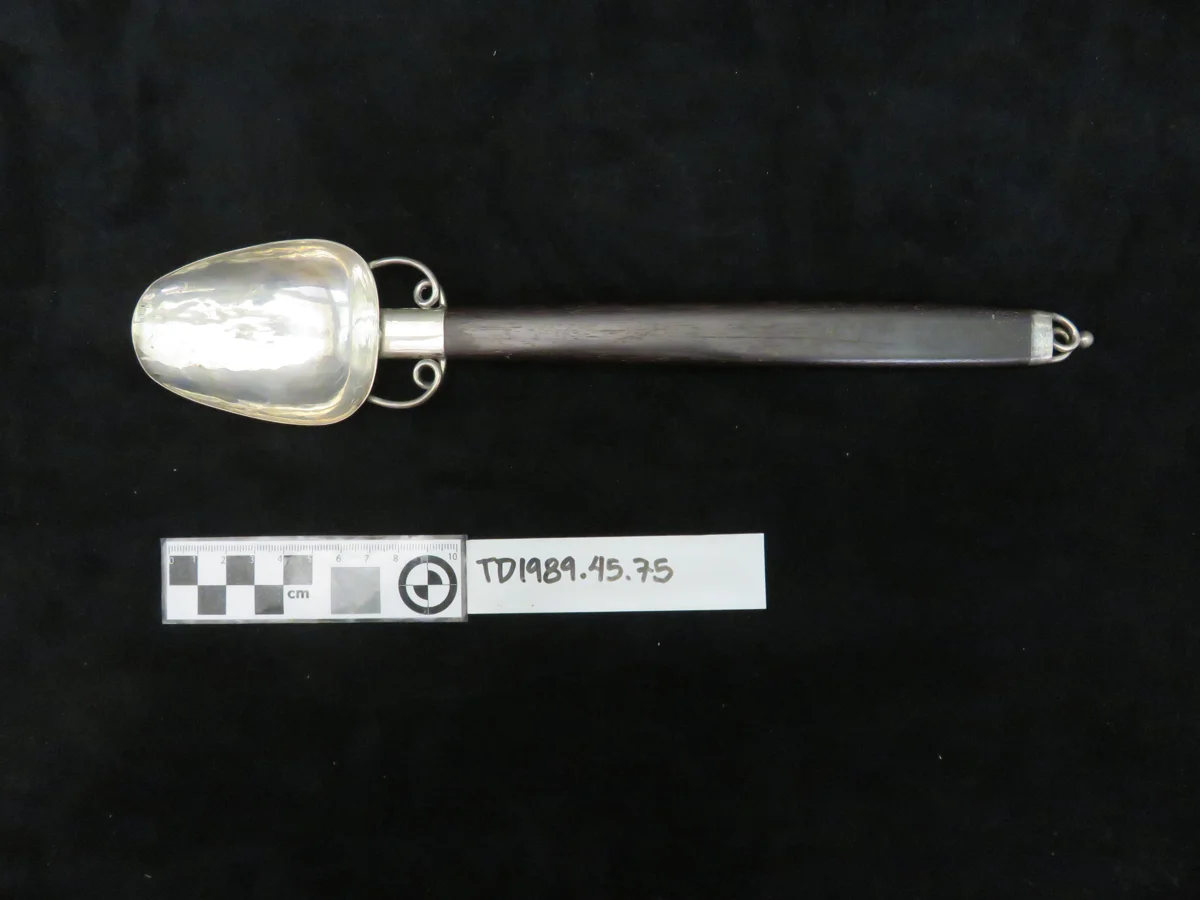
Salad spoon, 1949-1950
Accession TD1989.45.75. Official museum record Photo: The Wolfsonian-FIU.
Verified against each institution's own collection records. All museum collections
Museum of Mexican Silver. “Salad Server Spoon with Silver Bowl.” Catalog no. MoMS-000629. https://museumofmexicansilver.com/pieces/spratling-505
See something wrong with this record? Suggest a correction and the piece details fill in automatically.
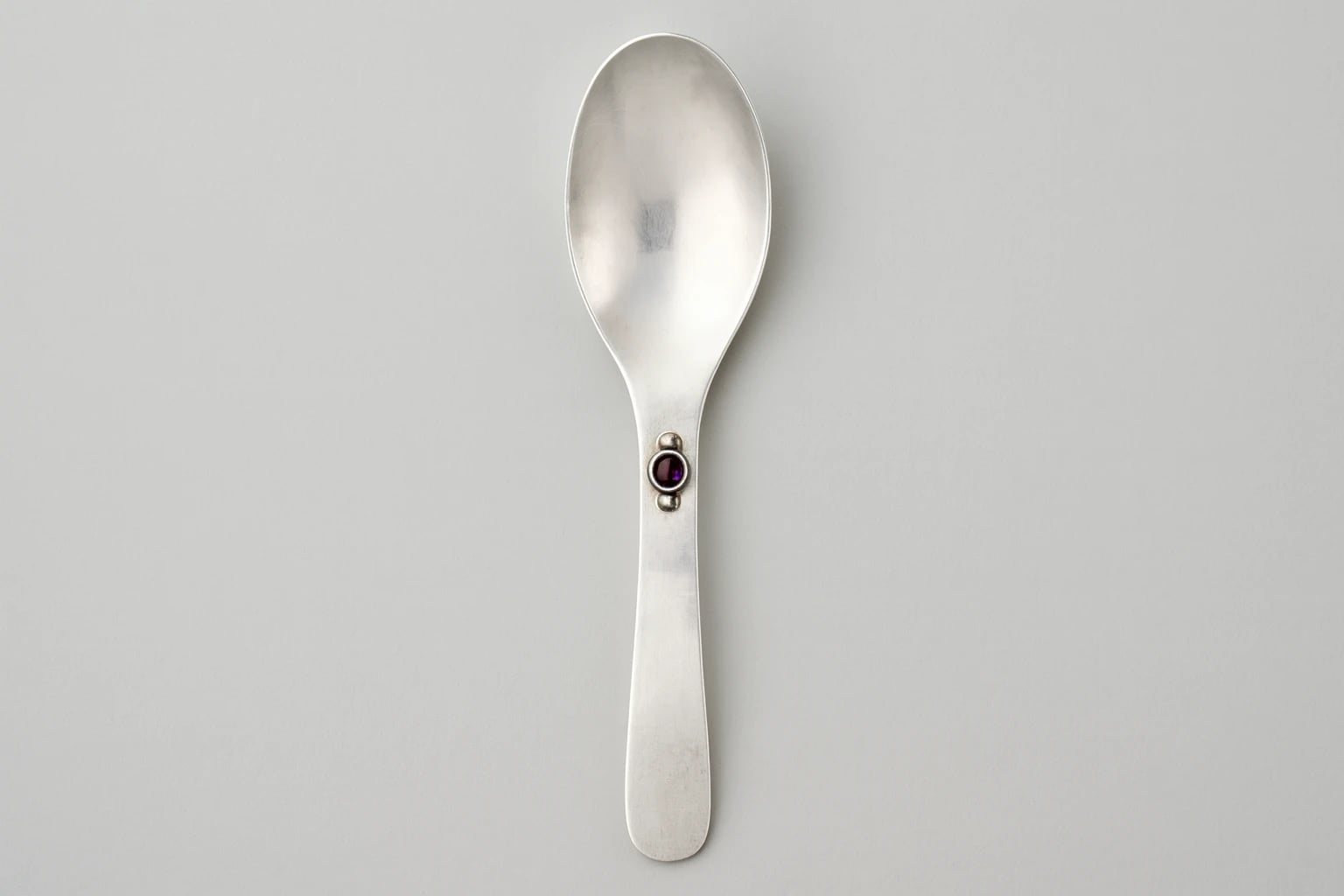
Amethyst Inset Soup Spoon
First Design Period: 1931 - 1946
Silver